From small farms to your cup: What it takes to make that one cup of fresh coffee
Advertisement
Read this article for free:
or
Already have an account? Log in here »
To continue reading, please subscribe:

Digital Subscription
One year of digital access for only $205*
- Enjoy unlimited reading on winnipegfreepress.com
- Read the E-Edition, our digital replica newspaper
- Access News Break, our award-winning app
- Play interactive puzzles
*First annual payment billed as $205.00 + GST for one year. This annual subscription will automatically renew at $233.00 + GST every 52 weeks (10% off the regular annual price of $259.35). Offer available to new and qualified returning subscribers only. Cancel any time.
To continue reading, please subscribe:
Add Free Press access to your Brandon Sun subscription for only an additional
$1 for the first 4 weeks*
- Enjoy unlimited reading on winnipegfreepress.com
- Read the E-Edition, our digital replica newspaper
- Access News Break, our award-winning app
- Play interactive puzzles
*Your next Brandon Sun subscription payment will increase by $1.00 and you will be charged $17.95 plus GST for four weeks. After four weeks, your payment will increase to $24.95 plus GST every four weeks.
Read unlimited articles for free today:
or
Already have an account? Log in here »
Hey there, time traveller!
This article was published 29/12/2025 (290 days ago), so information in it may no longer be current.
OAKVILLE – As a stream of roasted coffee beans drops into a barrel, it fills an Oakville, Ont., roastery with a smell practically strong enough to caffeinate you.
The roasted beans, now a rich, deep brown, were once small and green, bagged in large burlap sacks and shipped to Canadian ports from the coffee-producing countries of Ethiopia, Colombia and Brazil.
It’s at Reunion Coffee Roasters where they find their defining character. The strength of your brew and whether it will taste fruity or earthy is methodically decided at the roastery’s lab, where they sample various beans and perfect the taste.
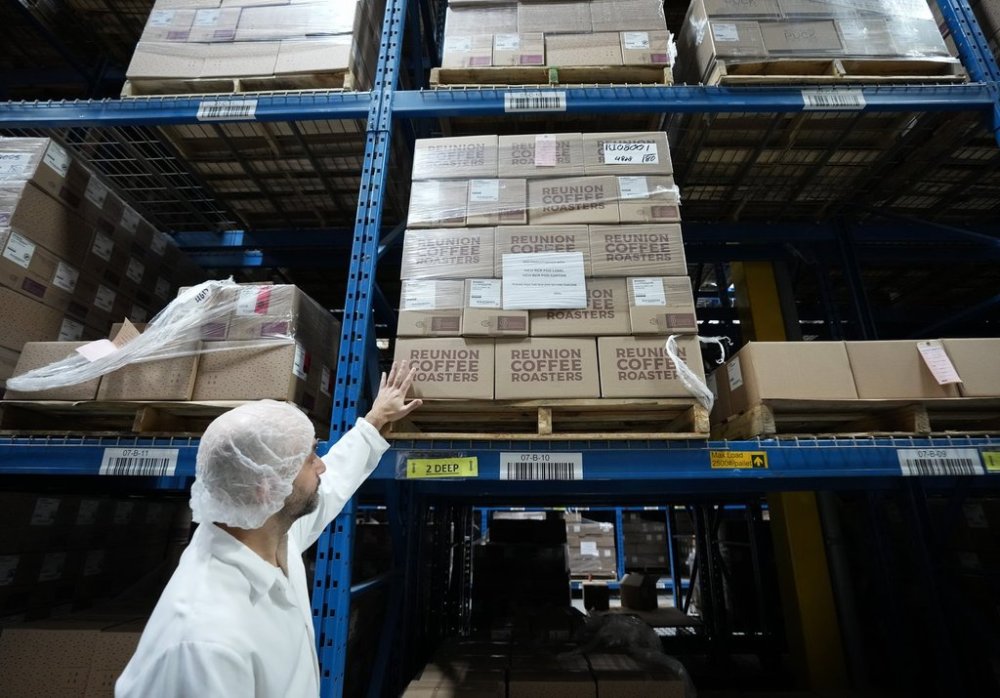
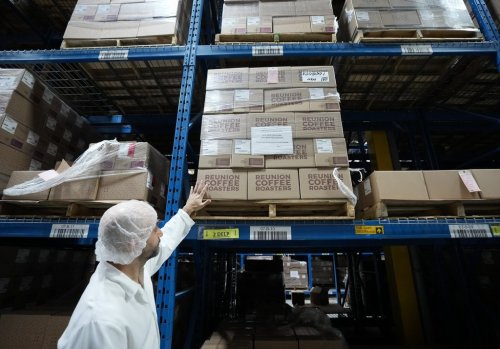
Walking through his roughly 50,000 sq. ft. roastery, Reunion president Adam Pesce points out industry-scale machines where the green beans are washed, weighed and roasted to get the preferred colour, flavour and aroma.
“Coffee roasting is a lot like baking,” said Pesce, a second-generation coffee roaster. It’s all about perfecting the temperature, roast time and airflow.
Each batch of beans, weighing about 460 pounds, is roasted at 450 degrees in a rotating drum for a period of time, usually a little more than 10 minutes, before being dumped into a cooling chamber to preserve their flavour. The roastery processes 37,500 pounds of coffee a week.
While the roasting process hasn’t changed drastically over the years, the coffee industry has.
Import prices for unroasted coffee beans have more than doubled over the past three years, according to an analysis from KPMG, as a combination of factors led to supply shortages. The rising cost is forcing importers, roasters, retailers and consumers to adapt.
Statistics Canada data shows shoppers paid 27.8 per cent more for coffee at the grocery store in November compared with a year earlier — greatly outpacing overall food inflation, which was 4.7 per cent year-over-year.
“This is by far the most difficult time that the industry has ever seen,” said Pesce, who said that 20 years ago when he got into the business, a seven or eight per cent price fluctuation would have been considered meaningful.
Put another way, he said, a pack of mediocre coffee today sells for more than the best quality coffee did two years ago.
“Think about how disruptive that can be.”
Coffee is grown in rainforests and hand-picked primarily by small-scale farmers. Often, farmers who don’t have an export license sell to collectors by the roadside in small batches, which are then bundled for international buyers.
Beans are sold by smaller operators to processors, importers, roasters and other intermediaries before reaching the consumer, said Ted Salter, executive director of supply chain at KPMG in Canada.
But climate change, drought and crop disease have disrupted the global supply at the source, hurting many small farmers, Salter said.
With limited crops, global demand for coffee has outpaced supply. The trend is expected to continue unless the highly fragmented global farmers’ community is able to implement costly irrigation solutions.
While climate change is a big factor in coffee price increases, importer Jeff Fleming said farmers are dealing with an affordability crisis alongside the high costs of operating small coffee farms. Often, changing government policies on exports in the origin countries also push the prices higher for coffee — something an importer can’t control.
Fleming, founder of Calgary-based Apex Coffee Imports, works directly with farmers and exporters across 11 countries to buy their coffee, which is then shipped to Canada.
The tug-of-war between lower crop yields and higher prices is straining many relationships in the supply chain.
Fleming, who deals in specialty coffee from micro-farms, saw demand for specialized beans fade as prices went up.
“Any time there’s a price shock through the market that we saw, it’s (been) bad for everybody,” he said.
For example, if a pound of coffee went up from five dollars to eight dollars, a roastery may be hesitant to pass such a significant cost on to its customers immediately. Instead, it might reduce its overall purchase or pivot away from pricier options, which trickles back to the farmer.
Meanwhile, Fleming said demand for less expensive coffee blends has gone up. He said he is constantly communicating with farmers about the demand and whether there are margins that can be adjusted on his end to continue importing the best-quality beans.
“It’s caused us to have to pivot and re-evaluate and get a bit more creative than we used to,” he said.
When someone questions Pesce about coffee prices, he pulls up commodities exchange data on his phone and shows where prices are at — and how little control he has over the fluctuations.
It takes about 13-18 weeks for coffee beans to get from a farm to grocery store shelves. The price of that packaged coffee was set weeks ago on the publicly traded commodity market for coffee futures, which is a way of measuring prices based on contracts for future delivery. Other resources are also traded this way, including oil, gold and wheat.
Futures trading means a surge in coffee prices today won’t be felt by consumers for at least another three months.
The market has been volatile amid ongoing geopolitical tensions, changing government policies in coffee-producing countries and tariffs that make the commodity market more uncertain, Salter said.
“The market, especially when you’re trading on a commodity, doesn’t like that unpredictability,” Salter said. So, the high prices compensate for that uncertainty, he added.
As prices went up drastically over the last two years, it became harder to manage.
“Exporters, importers, roasters, retailers — everybody’s shrinking their margin because there’s just so much price pressure on everything,” Pesce said. “The industry as a whole has gotten less profitable.”
Add to that shipping costs, roasting and packaging costs, all of which factor into the cost of coffee served to consumers.
The cost of getting green beans into Canada alone makes up more than 70 per cent of the production costs, according to KPMG.
Pesce said he has been absorbing some costs while passing the rest on to his private label clients. So far, he has raised prices by more than 30 per cent in the past year.
But that often opens a floodgate of questions about why it’s happening.
Reunion started sending out reports or newsletters to its clients explaining price surges, hoping to establish transparency about what can and cannot be controlled.
Many relationships in the coffee supply chain are generations old, Salter said.
“You’ve set up your roasting equipment, you’ve set up your production processes in a certain way that it’s very difficult to switch over from one to another,” he said.
“So, what you tend to do is to try to improve the situation you’re in, rather than change the situation you’re in.”
A pound of coffee can brew about 40 cups. If the cost of coffee goes up by a dollar, it barely adds a few cents to a cup.

But the surge in prices has been consistent enough that it’s now dripped into the cups at local cafés and even big chains, such as Tim Hortons, which raised prices by an average of three cents per cup earlier this year.
Still, most consumers notice sticker shock when they buy bulk coffee at a grocery store or their local roastery, and experts say this is likely to continue.
“There’s very little actual price gouging going on that I can see at grocery, at cafés,” Pesce said.
“It’s just expensive.”
This report by The Canadian Press was first published Dec. 29, 2025.