Heart attacks and 911: time is muscle
Advertisement
Read this article for free:
or
Already have an account? Log in here »
To continue reading, please subscribe:
Digital Subscription
One year of digital access for only $1.44 a week*
- Enjoy unlimited reading on winnipegfreepress.com
- Read the E-Edition, our digital replica newspaper
- Access News Break, our award-winning app
- Play interactive puzzles
*Billed as $5.77 plus GST every four weeks. After 52 weeks, price increases to the regular rate of $19.95 plus GST every four weeks. Offer available to new and qualified returning subscribers only. Cancel any time.
To continue reading, please subscribe:
Add Free Press access to your Brandon Sun subscription for only an additional
$1 for the first 4 weeks*
- Enjoy unlimited reading on winnipegfreepress.com
- Read the E-Edition, our digital replica newspaper
- Access News Break, our award-winning app
- Play interactive puzzles
*Your next Brandon Sun subscription payment will increase by $1.00 and you will be charged $17.95 plus GST for four weeks. After four weeks, your payment will increase to $24.95 plus GST every four weeks.
Read unlimited articles for free today:
or
Already have an account? Log in here »
Hey there, time traveller!
This article was published 22/02/2021 (2069 days ago), so information in it may no longer be current.
It sounds like simple advice: if you think you or someone you know is having a heart attack, call 911. Yet, as a cardiologist, I can tell you that there are still far too many people who choose to drive themselves to a health care facility rather than calling 911 for an ambulance.
One reason that happens is denial – grounded, perhaps, in the belief that calling an ambulance might be an overreaction. No one, it seems, is immune. At a recent health education event, an emergency room doctor sheepishly admitted that when he experienced chest pain while off-duty, he made the choice to drive himself to the hospital.
Warning signs
Signs of heart attack can vary and may be different for men and women. If you experience any of these signs, call 9-1-1 or your local emergency number immediately.
• Chest discomfort. Pressure, squeezing, fullness or pain, burning or heaviness.
• Sweating.
• Upper body discomfort. Neck, jaw, shoulder, arms, back.
• Nausea.
• Shortness of breath.
• Light-headedness.
— Source: heartandstroke.ca
It was a poor decision that could have ended in tragedy, even for a person with a medical degree.
To fully understand why you should always call 911, it’s important to know what a heart attack is, and why it’s vital to access the best and quickest possible treatment.
A heart attack occurs due to a sudden blockage of a main artery of the heart. When a blockage occurs – most often due to a clot that forms on a build-up of fatty deposits such as cholesterol (also called plaque) – the portions of the heart muscle fed by the affected artery start to die.
Anyone can be susceptible to a heart attack as that plaque buildup can be present without other common heart attack risks such as stress, obesity, smoking and the presence of other diseases.
The longer it takes to clear this plaque, the more damage that will occur, which is why cardiologists often say, “Time is muscle.”
Since time is of the essence, it only makes sense to call 911.
When you call 911, you are connected with someone who is specially trained to identify the signs of a heart attack. They will ask the right questions and provide advice on what to do while you’re waiting for an ambulance. Often, they will tell you to take an aspirin to assist with blood flow, something many people don’t think to do in the event of a heart attack.
Even if you live near a hospital, there are a number of reasons why you should call 911 for an ambulance, including the fact that there is a greater chance you’ll arrive alive.
Heart attacks can result in an arrhythmia, a problem with the rate or rhythm of the heartbeat. In a minority of cases (about one in 20), an arrhythmia can cause the heart to stop beating altogether, even in cases where the heart attack itself isn’t severe. I can recall an instance where a person went into cardiac arrest and lost consciousness while driving to the hospital, but, by pure chance, had the incredible good fortune of having crashed into an ambulance station.
You might not be so lucky.
Another reason to wait for the ambulance is a much greater chance of being quickly routed to the best treatment possible.
When you call 911, ambulance staff can perform an electrocardiogram (ECG or EKG), a test that measures the electrical activity of the heart. If they see the signs of a heart attack, they can alert the receiving site to ensure appropriate treatment is ready for you the moment you arrive.
There are two types of treatment that can be employed. By far and away the best treatment is to unblock the artery via angioplasty, a procedure in which a balloon-tipped tube (called a catheter) is inserted into the narrowed section of the artery. The balloon is briefly inflated, forcing the plaque back against the artery wall to restore blood flow. St. Boniface Hospital is the only facility in Manitoba where this procedure can take place. Ambulances within a 100-minute transport time from the hospital (both inside and outside the perimeter of the City of Winnipeg) will automatically bring patients straight to St. Boniface Hospital if a heart attack is suspected. On occasion, patients living outside that 100-minute transport area will be transported via STARS air ambulance helicopter.
The second way the artery can be unblocked is by administering intravenous, clot-busting medication. The medication can administered anywhere in the province. In all cases, patients receiving clot-busting medication will be transferred to St. Boniface Hospital for follow-up and to ensure the blockage has been cleared.

Those who still think driving themselves to a health care facility would save time should consider the data collected by the Manitoba Acute Coronary Syndrome (ACS) Network. Their time studies show that if you go to a local hospital or Urgent Care centre, it will take about two hours after first medical contact before your artery will be unblocked, no matter which type of treatment you receive. If you dial 911 and are evaluated by ambulance staff, it’s 68 minutes on average.
As I said, time is muscle. Calling 911 can save your life, and limit the damage caused by a heart attack.
The choice is yours. Be sure to make the right call.
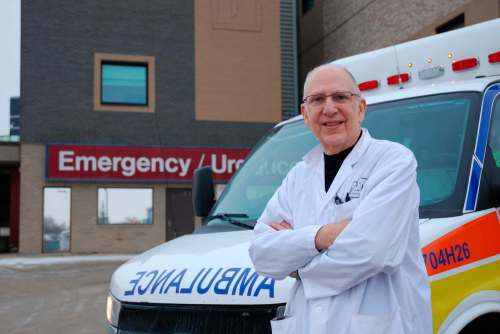
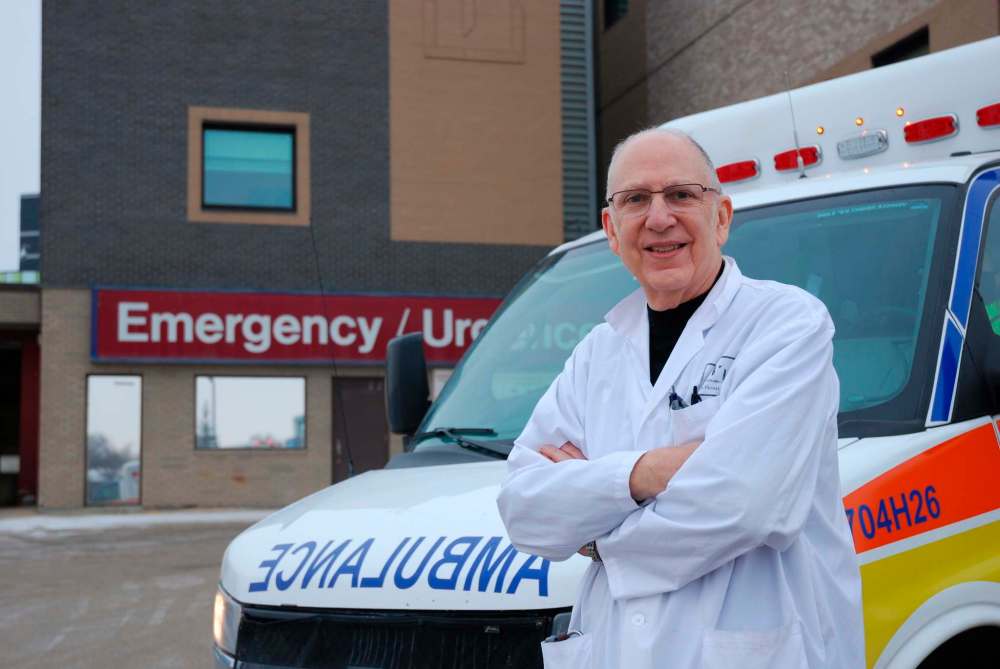
Dr. John Ducas is a Cardiologist at St. Boniface Hospital and Medical Director of the Manitoba Acute Coronary Syndrome (ACS) Network.