Plus size a big minus in the fashion industry
Advertisement
Read this article for free:
or
Already have an account? Log in here »
To continue reading, please subscribe:

Digital Subscription
One year of digital access for only $205*
- Enjoy unlimited reading on winnipegfreepress.com
- Read the E-Edition, our digital replica newspaper
- Access News Break, our award-winning app
- Play interactive puzzles
*First annual payment billed as $205.00 + GST for one year. This annual subscription will automatically renew at $233.00 + GST every 52 weeks (10% off the regular annual price of $259.35). Offer available to new and qualified returning subscribers only. Cancel any time.
To continue reading, please subscribe:
Add Free Press access to your Brandon Sun subscription for only an additional
$1 for the first 4 weeks*
- Enjoy unlimited reading on winnipegfreepress.com
- Read the E-Edition, our digital replica newspaper
- Access News Break, our award-winning app
- Play interactive puzzles
*Your next Brandon Sun subscription payment will increase by $1.00 and you will be charged $17.95 plus GST for four weeks. After four weeks, your payment will increase to $24.95 plus GST every four weeks.
Read unlimited articles for free today:
or
Already have an account? Log in here »
Hey there, time traveller!
This article was published 22/10/2013 (4727 days ago), so information in it may no longer be current.
NEW YORK — When it comes to women’s clothing sizes, there’s some funny math going on.
The average North American woman is about 25 pounds heavier than she was in 1960. Yet women’s plus-size clothing, generally defined as size 14 and up, still makes up only about nine per cent of the $190 billion spent annually on clothes.
What’s wrong with this equation? It’s not that plus-size women aren’t into fashion. Rather, the fashion industry doesn’t seem interested in them.
The fashion industry has long spent more time, money and marketing on clothing for taut bodies than for curvier ones because it’s easier and more profitable to do so. But retail analysts and plus-size women say there’s something else at play: Stereotypes about larger women not wanting to dress fashionably keep companies from making clothes that are flattering to them. And in turn, that discourages them from spending more.
“There is still an interesting stigma attached to plus-size fashion and the woman who wears it,” says Marie Denee, who wears a size 16 and studies the industry via her website TheCurvyFashionista.com. “Many think ‘Oh, she doesn’t want to draw attention, live life, date, be confident, wear fitted clothes with bold colours and patterns,’ when the exact opposite is true.”
To be sure, sizing is an inexact science. Women’s sizes were developed in the 1920s as catalogues became popular and ready-to-wear clothing replaced tailor-made or self-sewn items.
But while a system of men’s standard sizing based on chest sizes in the army had worked well, a similar attempt to base women’s sizes on bust measurements wasn’t as reliable. Women’s bust sizes are more variable.
In the 1930s, retailers began adopting even-numbered sizes commonly ranging from 14 to 24, says Alaina Zulli, a dressmaker who studies costume history. But those sizes bore little resemblance to those used today — a size 24 back then, for instance, would be a size 14 today — so the issues of not having enough plus-size fashions likely was not as pronounced.
The sizes stayed the same but the numbers decreased gradually, Zulli says, about one size a decade. This is known as “vanity sizing” because it gives women the illusion that they’re fitting into a smaller size.
Women’s sizes, which today range from 0 to 24 but vary from store to store, haven’t evolved much for decades. And for the most part, neither have the range of plus-size fashions.
As a result, the amount spent on women’s plus-size clothing annually in the United States has only risen by one percentage point to nine per cent since 2011, the furthest back plus-size data available from research firm NPD Group.
“If the offering becomes stronger, women will spend more,” says Alison Levy, a retail strategist at consulting firm Kurt Salmon. “There’s a significant dollar opportunity in what is currently a very depressed apparel segment that retailers should be looking to exploit.”
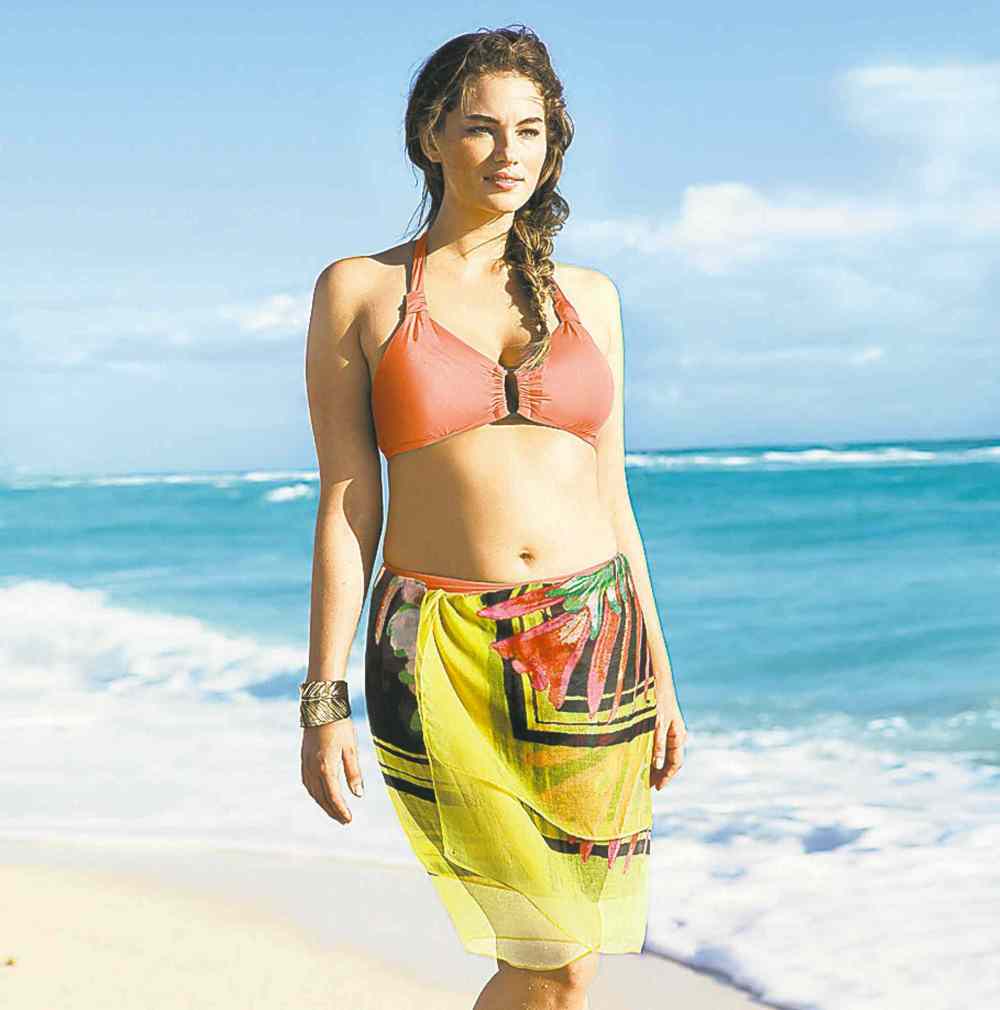
Some retailers have started to do just that. H&M, a European-based retailer that sells trendy clothing in the U.S. equivalent of sizes 1 through 16, last summer featured plus-size model Jennie Runk, who is a size 12 or 14, in its swimsuit ads. “Our aim is not to convey a certain message or show an ideal, but to have a campaign which can illustrate the collection in an inspiring and clear way,” said Andrea Roos, an H&M spokeswoman.
Lane Bryant, a plus size retailer, said earlier this month that it is expanding into higher-end designer clothing. It will debut its first designer collaboration with Isabel and Ruben Toledo on a collection of holiday clothes and later a spring line.
“This is a big deal for us and we’re treating it in that manner in every way we can,” said Linda Heasley, Lane Bryant’s CEO.
And online retailer Asos three years ago launched a plus-size category called Asos Curve with sizes 14 to 24. The company fits everything on a size 16 model to “ensure we are offering the right fit and comfort to our customers,” says Natasha Smith, an Asos Curve buyer. The company wouldn’t disclose sales figures but said they’ve been stronger each season.
“Our customer comes in all shapes and sizes and our range should reflect that,” Smith says.
But for every chain adding to their plus-size offerings, there are many others that continue to cater to smaller sizes. Abercrombie & Fitch, for instance, has been criticized for only offering sizes 0 to 10 and its CEO’s comments that the chain caters to “cool” and “attractive” kids.
The company says it is an “aspirational brand,” which targets a “particular segment of customers.” The comments received widespread backlash online and Abercrombie has since begun anti-bullying initiatives. But it has not begun offering bigger sizes.
Whether to carry plus-size clothing is a risk calculation for most retailers, said Daniel Butler, a vice-president for the National Retail Federation. “Most retailers can’t afford to fit everybody,” he says.
Indeed, Alison Diboll, founder of Gabriella Rossetti, a new high-end line of women’s clothing ranging from size 12 to 22, agrees that it’s a tough choice for retailers. The Gabriella Rossetti line offers plus-size skirts for $250 and jackets for $650. But Diboll acknowledges that designer clothes for plus-sizes can be more complex than smaller sizes. “You can’t just take a size 6 and upsize it for (a size) 20 and expect it to work,” she says.

That’s a challenge ModCloth, an online clothing retailer that sells clothes by indie designers, faced when it decided to start offering plus sizes. ModCloth regularly works with 1,500 designers, but none of them offered plus sizes, says Samara Fetto, a category manager at the San Francisco-based retailer.
“More times than not, they were excited about entering the space but… extremely inexperienced,” she says. But, she added that “they didn’t have plus size knowledge or expertise.”
After ModCloth hired an expert to help the designers learn how to make larger sizes, the retailer started selling plus sizes a year ago and officially launched the category in June. Now, more than 100 vendors offer plus sizes and Modcloth’s sales of plus-size items have quadrupled within the year.
“The plus-size customer definitely feels excluded in many areas of the fashion industry,” says Fetto.
— The Associated Press

Advertisement Advertise With Us
Advertisement Advertise With Us