On the shoulders of iPod
Device that made Apple the most valuable company in the world GONE WITHOUT A CLICK
Advertisement
Read this article for free:
or
Already have an account? Log in here »
To continue reading, please subscribe:

Digital Subscription
One year of digital access for only $205*
- Enjoy unlimited reading on winnipegfreepress.com
- Read the E-Edition, our digital replica newspaper
- Access News Break, our award-winning app
- Play interactive puzzles
*First annual payment billed as $205.00 + GST for one year. This annual subscription will automatically renew at $233.00 + GST every 52 weeks (10% off the regular annual price of $259.35). Offer available to new and qualified returning subscribers only. Cancel any time.
To continue reading, please subscribe:
Add Free Press access to your Brandon Sun subscription for only an additional
$1 for the first 4 weeks*
- Enjoy unlimited reading on winnipegfreepress.com
- Read the E-Edition, our digital replica newspaper
- Access News Break, our award-winning app
- Play interactive puzzles
*Your next Brandon Sun subscription payment will increase by $1.00 and you will be charged $17.95 plus GST for four weeks. After four weeks, your payment will increase to $24.95 plus GST every four weeks.
Read unlimited articles for free today:
or
Already have an account? Log in here »
Hey there, time traveller!
This article was published 14/09/2014 (4344 days ago), so information in it may no longer be current.
It came in with a simple promise, a hefty price tag and a man with something white sticking in his ears bopping around his apartment. Soon, it would transform music as we know it, inspire a business model built around pocket change and turn a struggling computer maker into the most valuable company in the world.
Yet the death Tuesday of the iconic iPod just before its 13th birthday went unacknowledged by that company and by a Silicon Valley crowd that wildly applauded the unveiling of a new phone and a smartwatch — products that stood on the slim, metal shoulders of its predecessor. Instead of an announcement, there was only the sad implication of a redirected online page, sending visitors not to information about the iPod Classic but rather to Apple’s home page.
When the iPod debuted, a few weeks after 9/11, it was the latest testament to the idiosyncrasy of Apple’s chief executive, Steve Jobs. Simplify, he ordered the engineers. A user should be able to do anything with this in no more than three clicks.
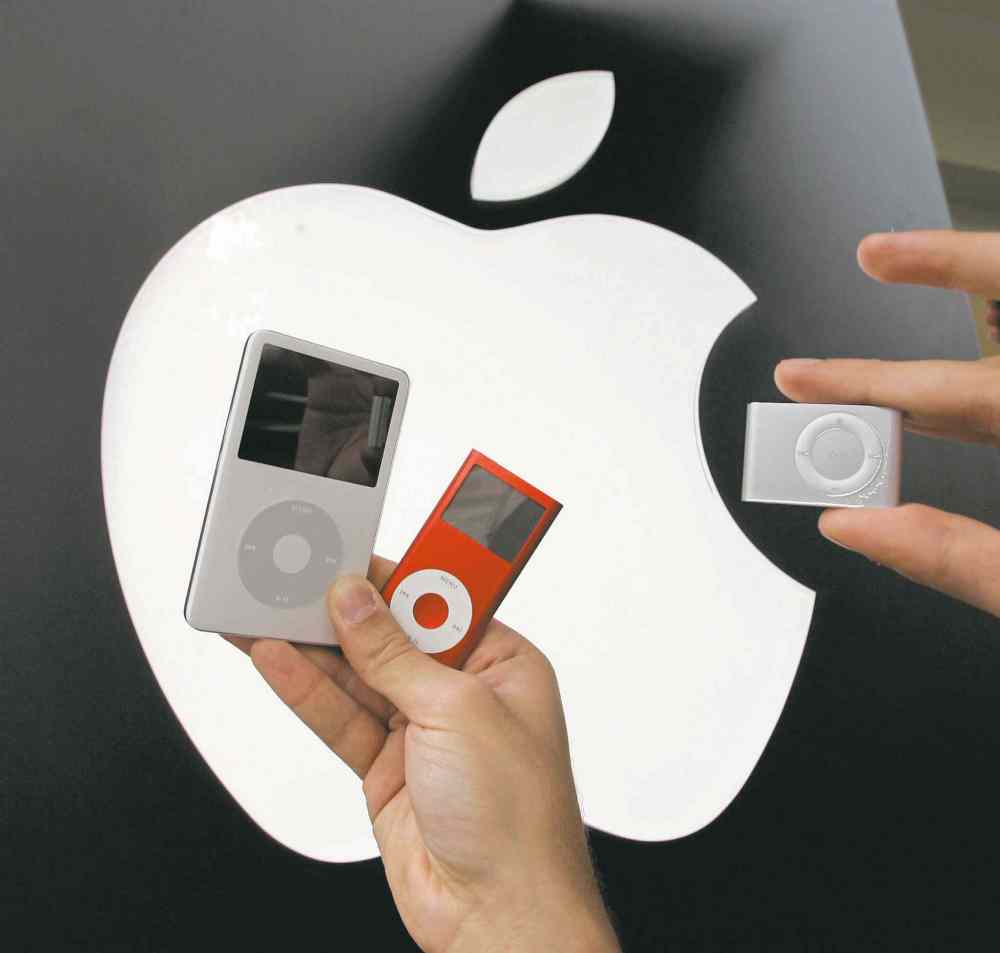
Technically, the iPod was little different than any other device on the market that played digitally compressed music. Aesthetically, though, it was a revelation: smaller and lighter than its competitors, sporting an external design inspired by Dieter Rams and, yes, dead simple to operate. It also benefited from the Apple marketing mystique: The first iPod commercial featured nothing more than a man dancing to a track by an obscure electronica band. What made the spot memorable was the promise in the voice-over at the end: “1,000 songs in your pocket.”
One thousand songs? Who in the world had the equivalent of 100 CDs that they’d want to hear on the go? Well, I did. The first time I saw the ad, I was looking at a TV bookended by massive, wooden towers filled with hundreds of CDs (furniture that would very soon become obsolete). In fact, I was probably the target audience for the ad — young enough to feel passionate about new music, old enough to have the disposable income to afford this thing. Because, Lord, it was expensive: $400 at a time when other digital-music players were going for about half that much.
Four hundred bucks was more than my car payment, but I didn’t care. This iPod — whatever that meant — was beautiful, and I wanted it bad. It promised the never-ending mix tape, the opportunity to program a radio station that served a market of one: Fountains of Wayne to Janet Jackson to Nirvana to Alan Jackson to the Pretenders? No problem.
The reviews were brutal, not least from those who saw this only as a toy for people with more dollars than sense, and the device synced only with Apple’s computers. Nevertheless, Apple sold 125,000 iPods in the first 60 days. As people started putting their CD collection into their computers, dictionaries were forced to come up with a new definition for “rip.”
Still, the iPod didn’t truly become transformative until April 2003, when Apple launched its online music store with this proposition: Get any song you want, legally, for 99 cents and play it on your iPod. Such micropayments had long been proposed and dismissed as a nonstarter for American consumers, but in an era when Napster was a household word and 12-year-olds were getting sued by the music industry for illegally downloading music, this was the equivalent of a U.S. marshal striding into Dodge City to deliver law and order.
Sure, the promise of “any song” was overblown — several labels and artists wouldn’t license their music for Apple to sell, most famously the Beatles, Led Zeppelin and AC/DC — but that didn’t deter customers. Forget 1,000 songs; now you could have tens of thousands of songs in your pocket, even if you’d never owned the CD. The iTunes Music Store was a huge success: It sold 1 million songs in a week and 50 million in a year. Then it sold 50 million more in the next four months. When the store opened to international consumers, it sold 100 million more songs in five months.
By early 2004, the New York Times would call the iPod — not Apple, but just the iPod — a billion-dollar business. But the music business would never be the same. The iTunes Music Store had shattered the tyranny of albums: Customers no longer had to buy an entire CD to get the one or two songs they really wanted. (Consider that only six of the 111 albums to sell 10 million copies have been released since the iPod’s debut.) The decline in album sales led record stores to close their doors for good. The dominant arbiter of America’s musical tastes shifted from Billboard to the iTunes Top 100. Eventually the Beatles and Led Zeppelin gave in and allowed Apple to sell their music, and finally AC/DC did, too. (Garth Brooks is now the most famous holdout.) All this, because of the iPod.
So that the iPod could hold and play all these songs, Apple kept tinkering with it, making it smaller and lighter, adding a colour screen, more storage capacity and the ability to play videos. It made a tiny version, calling it the Mini, then went even tinier with the Nano. It made a cheap (by Apple standards), no-frills version called the Shuffle. The president of the United States was asked what he had on his iPod.

Then, in January 2007, Apple made the iPod irrelevant. By the time Jobs introduced the iPhone, the company had sold 110 million iPods. The device had served its purpose, getting people used to the idea of carrying photos, videos and music in their pocket, but for Apple to take the next logical step, it had to replace that gadget with another that offered much more functionality — phone calls, text messaging, even surfing the Web — in an iPod-size device. A thousand emails in your pocket.
Apple nodded to its debt by Jobs publicly calling the iPhone “the best iPod we’ve ever made” and including an iPod icon in early generations of the iPhone. While the latter disappeared within a few years, the iPod name lived on, gracing a few devices with touch screens. The deck-of-cards-sized rectangle, though, with rounded edges and the iconic “click wheel” lingered in only one model: the iPod Classic, which debuted months after the iPhone.
Compared with its progeny, the Classic was a one-trick pony, and it sold accordingly. In January, Jobs’s successor, Tim Cook, called the iPod “a declining business.” So the demise of the iPod Classic Tuesday came as no real surprise. (For iPod devotees, the Shuffle, Nano and iPhone-inspired Touch still exist, for now.) But after 13 years, all that remains of the original, and its once-towering influence, are the profits — today, Apple has $164 billion in cash and, since the day that Jobs introduced it in 2001, its stock price is up 8,234 per cent — and the headphones: millions of people bopping around with something white sticking in their ears.
— Washington Post