Birds of a feather don’t necessarily flock together: research

Advertisement

Advertise with us

A new study suggests modern cityscapes may be turning birds into better problem solvers. The McGill University research, published recently in Behavioral Ecology, found city birds were different from their rural counterparts in several ways.

Read this article for free:


or

Already have an account? Log in here »

To continue reading, please subscribe:

Subscribe and receive a limited-edition Free Press branded hat or tote.

Digital Subscription

One year of digital access for only $205*

  • Enjoy unlimited reading on winnipegfreepress.com
  • Read the E-Edition, our digital replica newspaper
  • Access News Break, our award-winning app
  • Play interactive puzzles

*First annual payment billed as $205.00 + GST for one year. This annual subscription will automatically renew at $233.00 + GST every 52 weeks (10% off the regular annual price of $259.35). Offer available to new and qualified returning subscribers only. Cancel any time.

To continue reading, please subscribe:

Add Free Press access to your Brandon Sun subscription for only an additional

$1 for the first 4 weeks*

  • Enjoy unlimited reading on winnipegfreepress.com
  • Read the E-Edition, our digital replica newspaper
  • Access News Break, our award-winning app
  • Play interactive puzzles
Start now

*Your next Brandon Sun subscription payment will increase by $1.00 and you will be charged $17.95 plus GST for four weeks. After four weeks, your payment will increase to $24.95 plus GST every four weeks.

Hey there, time traveller!
This article was published 02/04/2016 (3801 days ago), so information in it may no longer be current.

A new study suggests modern cityscapes may be turning birds into better problem solvers. The McGill University research, published recently in Behavioral Ecology, found city birds were different from their rural counterparts in several ways.

“We found that not only were birds from urbanized areas better at innovative problem-solving tasks than bullfinches from rural environments, but that, surprisingly, urban birds also had a better immunity than rural birds,” first author Jean-Nicolas Audet, a PhD candidate at McGill, said in a statement.

Audet and his colleagues tested 53 bullfinches from different parts of Barbados — something he was inspired to do after being terrorized by bold city birds at a restaurant.
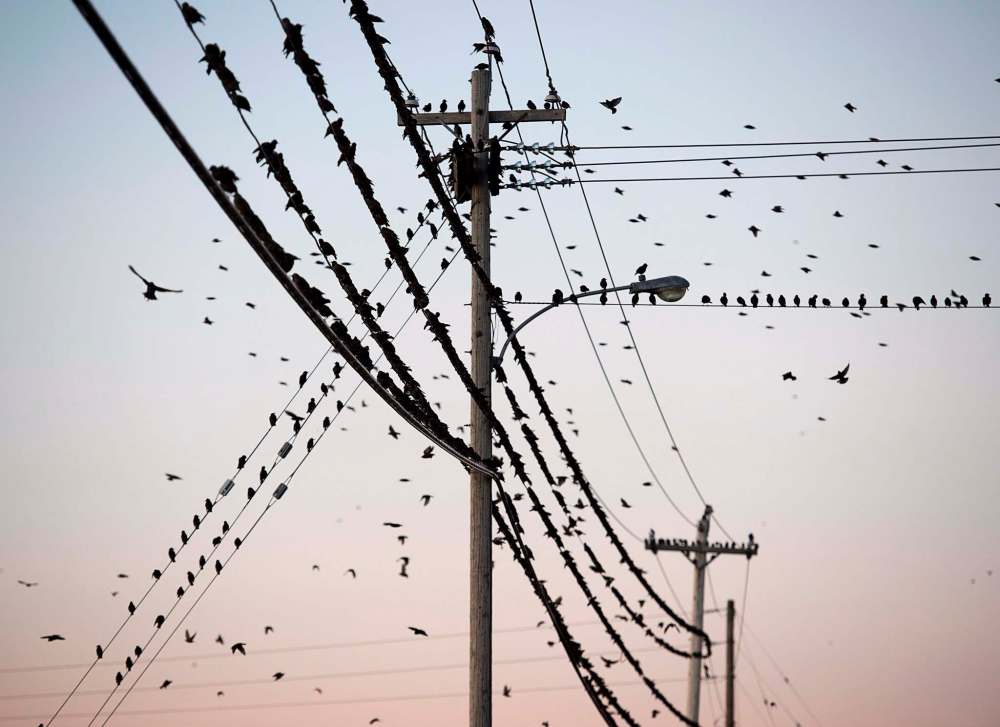
ANDREW VAUGHAN / THE CANADIAN PRESS
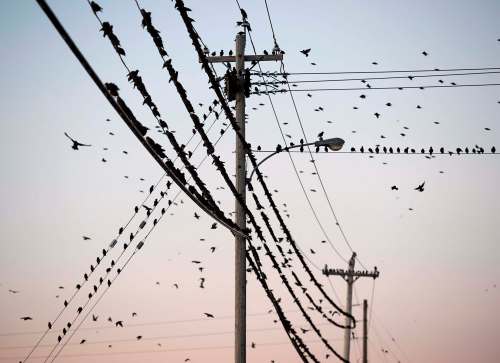
A new study suggests cityscapes may be turning birds into better problem solvers.
ANDREW VAUGHAN / THE CANADIAN PRESS A new study suggests cityscapes may be turning birds into better problem solvers.

“Barbados bullfinches are always watching and trying to steal your sandwich,” Audet told CBC News.

So what’s the difference between a bold city bruiser and a demure country bird? According to cognitive tests, an awful lot: The city birds really were more bold by some measures (they were quicker to eat food presented to them in a familiar dish by a human who then hid, meaning they cared less about how likely a human was to interrupt their meal), and better at solving problems — getting to food that had been placed in jars or drawers, for example.

They weren’t any better or worse at learning to distinguish between different coloured dishes that gave them access to food, and they were actually more cautious about obtaining food with unfamiliar objects nearby than their rural cousins were (a trait referred to as neophobia).

But surprisingly, there was one other area where they came out ahead: They had stronger immune systems. Audet and his colleagues thought it might make sense for better cognitive abilities to be associated with weaker immune systems, because the birds don’t have infinite resources to fuel their brains and bodies. But it seems that city birds really can have it all.

Taken all together, these traits seem to serve a pretty obvious purpose. When humans are around, it means birds have more reason to learn to access food in new and challenging places. A bird in the country is pretty much always going to find seeds in the same sorts of places, but a city bird can, for example, learn to snatch sandwiches off restaurant plates. That’s where the boldness comes in, too. And perhaps a fear of novel objects is just part of the same routine: A city bird encounters new and strange dangers more often than one in a rural environment, so it needs to be smart about sussing out situations before blundering in.

Fifty-three birds from one country is a pretty small sample size, so we can’t assume that these findings are true for birds all over the world — or even for birds all over Barbados. But the results suggest humankind’s influence might have a profound effect on the behaviour (and health) of urban birds. It’s especially interesting in Barbados, where birds likely aren’t isolated enough from one another to become different species, or even to change much from generation to generation.

“Barbados is a very small island, and it would be surprising if urban and rural bullfinches were geographically isolated, even if the island has a high population density and the original vegetation of the island has been destroyed and replaced by sugar cane and other anthropogenic plants for over 350 years,” the authors write in the study. “Enhanced boldness, problem solving, and immunocompetence in urbanized bullfinches might all be experience-driven responses to environmental variation in food, human disturbance, and pathogens.”

In other words, these changes probably aren’t due to long-term natural selection: They’re made on the fly.

— The Washington Post

Report Error Submit a Tip

More Stories

Birds of a feather don’t necessarily flock together: research

By Rachel Feltman 4 minute read Preview

Birds of a feather don’t necessarily flock together: research

By Rachel Feltman 4 minute read Saturday, Apr. 2, 2016

A new study suggests modern cityscapes may be turning birds into better problem solvers. The McGill University research, published recently in Behavioral Ecology, found city birds were different from their rural counterparts in several ways.

“We found that not only were birds from urbanized areas better at innovative problem-solving tasks than bullfinches from rural environments, but that, surprisingly, urban birds also had a better immunity than rural birds,” first author Jean-Nicolas Audet, a PhD candidate at McGill, said in a statement.

Audet and his colleagues tested 53 bullfinches from different parts of Barbados — something he was inspired to do after being terrorized by bold city birds at a restaurant.

“Barbados bullfinches are always watching and trying to steal your sandwich,” Audet told CBC News.

Read
Saturday, Apr. 2, 2016

Doctor pays $500K to revamp courtyard at care home where he works

By Zoe Pierce 4 minute read Preview

Doctor pays $500K to revamp courtyard at care home where he works

By Zoe Pierce 4 minute read Thursday, Aug. 27, 2026

Fifty years after Dr. Pravinsagar Mehta began caring for residents at Actionmarguerite, a courtyard he had long watched deteriorate is getting a new life after he and his wife committed $500,000 to its redevelopment and long-term maintenance.

Read
Thursday, Aug. 27, 2026

Security guard in stable condition after grocery store assault

Scott Billeck 2 minute read Preview

Security guard in stable condition after grocery store assault

Scott Billeck 2 minute read Updated: 12:35 PM CDT

A security guard was taken to hospital after an assault at a Sargent Avenue FreshCo Friday, just days after another guard was stabbed during a robbery at a St. James Dollarama.

Winnipeg police said officers were called to a store in the 600 block of Sargent Avenue shortly after 1 p.m. for a report of an assault.

An adult victim was taken to hospital in stable condition. Police did not provide details about what led to the assault or whether any arrests were made.

The incident comes three days after a 22-year-old security guard was stabbed during a robbery at a Dollarama in the Courts of St. James.

Read
Updated: 12:35 PM CDT

‘Not his best work,’ Kinew says of Trump’s order to rename Lake Ontario

Carol Sanders 3 minute read Preview

‘Not his best work,’ Kinew says of Trump’s order to rename Lake Ontario

Carol Sanders 3 minute read Thursday, Aug. 27, 2026

An executive order by U.S. President Donald Trump to rename Lake Ontario as Lake America is “sad,” Premier Wab Kinew says.

Read
Thursday, Aug. 27, 2026

Province announces phys-ed curriculum overhaul

Maggie Macintosh 6 minute read Preview

Province announces phys-ed curriculum overhaul

Maggie Macintosh 6 minute read Thursday, Aug. 27, 2026

Manitoba is overhauling phys-ed class and requiring all high school students to regularly work up a sweat on school grounds to graduate.

Premier Wab Kinew announced on Thursday that a new curriculum is being piloted across the kindergarten to Grade 12 system this fall.

Changes to phys-ed and health education — which apply to all grades, but Grade 11 and 12 students, in particular — will ensure these mandatory subjects are delivered entirely in-person, starting in the 2028-29 school year.

The policy is called “Every Body, Every Day.”

Read
Thursday, Aug. 27, 2026

Motion seeks to remove longtime head of Southern Chiefs’ Organization due to ‘behaviour’ concerns

Carol Sanders 4 minute read Preview

Motion seeks to remove longtime head of Southern Chiefs’ Organization due to ‘behaviour’ concerns

Carol Sanders 4 minute read Wednesday, Aug. 26, 2026

For the second time in a year, the leadership of Southern Chiefs’ Organization Grand Chief Jerry Daniels is being called into question.

A motion obtained by the Free Press calls “immediately” for a special summit of the 33 SCO chiefs to consider removing Daniels, who’s been at the helm since 2017.

The Aug. 17 motion, put forward by Lake Manitoba First Nation Chief Cornell McLean and Bloodvein First Nation Chief Lisa Young, cites concerns about “governance, leadership, accountability, transparency, organizational decision-making and confidence of member Nations in the current leadership of the organization.”

McLean would not provide specific examples Wednesday but said the “behaviour” of Daniels is a concern.

Read
Wednesday, Aug. 26, 2026