Expert warns of extreme weather increase

Watchdog committee says all levels of government must work together to fix climate change

Advertisement

Advertise with us

Eric Reder believes if Manitobans want to see the real effects and consequences of climate change, all they need to do is look at the sky and into their own backyards.

Read this article for free:


or

Already have an account? Log in here »

To continue reading, please subscribe:

Subscribe and receive a limited-edition Free Press branded hat or tote.

Digital Subscription

One year of digital access for only $205*

  • Enjoy unlimited reading on winnipegfreepress.com
  • Read the E-Edition, our digital replica newspaper
  • Access News Break, our award-winning app
  • Play interactive puzzles

*First annual payment billed as $205.00 + GST for one year. This annual subscription will automatically renew at $233.00 + GST every 52 weeks (10% off the regular annual price of $259.35). Offer available to new and qualified returning subscribers only. Cancel any time.

To continue reading, please subscribe:

Add Free Press access to your Brandon Sun subscription for only an additional

$1 for the first 4 weeks*

  • Enjoy unlimited reading on winnipegfreepress.com
  • Read the E-Edition, our digital replica newspaper
  • Access News Break, our award-winning app
  • Play interactive puzzles
Start now

*Your next Brandon Sun subscription payment will increase by $1.00 and you will be charged $17.95 plus GST for four weeks. After four weeks, your payment will increase to $24.95 plus GST every four weeks.

Hey there, time traveller!
This article was published 17/03/2018 (3104 days ago), so information in it may no longer be current.

Eric Reder believes if Manitobans want to see the real effects and consequences of climate change, all they need to do is look at the sky and into their own backyards.

“There definitely is more of what we would call extreme-weather events happening in Manitoba and happening within a shorter amount of time,” says Reder, who belongs to the Winnipeg-based environmental organization Wilderness Committee.

“It’s about the extremes and these are extremes that our infrastructure was not built to handle, and that is where you see the potential for chaos.”
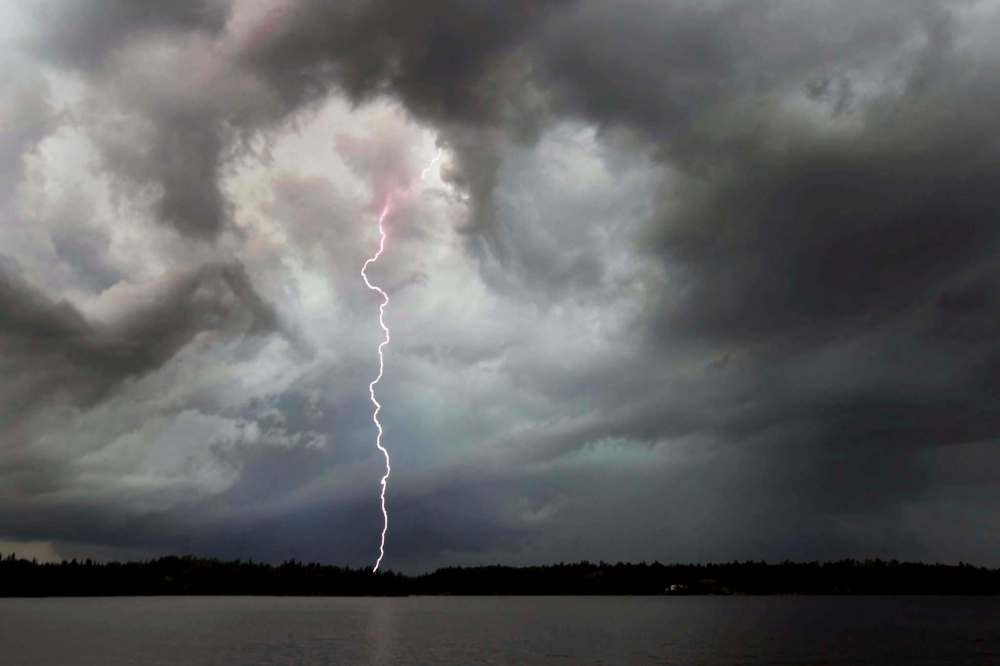
Climate change is bringing precipitation amounts that can be destructive. (Joe Bryksa / Free Press files)

Reder has spent much of his career focused on the effects of climate change both around the world and in Manitoba. And he worries that if things don’t change soon, those consequences could become far more extreme.

One of the most serious effects of climate change here is the larger number of intense storms, which bring precipitation amounts that can be destructive and disastrous.

“We know that we now have more intense and slower-moving rainstorms and thunderstorms,” he says.

“So, instead of a storm in Manitoba, where you get a torrential downpour for 45 minutes, now you can get two hours of that intense torrential rain because the storms move slower, and that is a direct result of that warming of the atmosphere.”

And that means more instances of flash flooding and flooding of homes and basements, he says.

It is for those reasons why Manitoba insurance companies are keeping a close eye on climate change and global warming.

“The insurance industry are really the ones that are at the forefront of this and pushing for climate action, because more than ever they are seeing the costs of natural disasters and the costs of things that are a direct result of climate change,” Reder says.

“They see the size and scope of these disasters and the costs to the insurance industry. They know the costs associated with flooding in Manitoba and they know we can’t afford flooding at this scale.”

Because of what he says is a greater chance of extreme storms and increased precipitation in Manitoba, Reder worries that if the trend continues, it could lead to more homeowners not even feeling their own homes and property are safe from destruction.

“One of the biggest things that people own in their lives is their homes and that home, for many, is their security,” Reder says. “But now that security is being put at risk and more and more people worry that their property isn’t safe.”

Meanwhile, Reder says climate change is having and will continue to have real consequences on the province’s waterways.

“We’ve seen the increased prevalence of algae blooms in freshwater lakes, and that is because of the increased warmth of the water that allows them to flourish, and that is a very scary thing,” Reder says.

Eric Reder, a climate change expert with the Wilderness Committee, refers to climate change as ‘climate chaos’ because if people don’t adapt, the warming of the Earth will lead to more extremes and destruction. (Boris Minkevich / Winnipeg Free Press)

If more algae blooms continue to show up, it could damage those lakes by destroying the balance of their ecosystems, he says.

“The algae blooms throw off that balance by choking out certain life forms, and we don’t need an excess of one thing over another. We need everything to be working in harmony, and if climate change is destroying that balance, that is where we can see destruction.”

While Reder can see the effects of global warming on land and water, he’s equally concerned about the impacts he can’t see.

“One of the biggest risks will be the possible appearance of an insect, or a parasite, or some sort of species that we don’t even see coming, that is now able to survive where it wasn’t able to survive before because of that warming of the atmosphere and those changes in weather patterns,” Reder said. “Anywhere around the world when you are looking at changing climate, you are looking at the ability for a species or something else appearing that could be a bigger risk than the ones we already know about.”

Reder sometimes refers to climate change as “climate chaos” because he believes that if residents, businesses and all levels of government here in Manitoba and around the world don’t adapt, the continuing warming of the Earth will lead to more extremes, destruction and possible chaos.

“There is only one concrete way we can stop this problem from occurring and continuing, and that is by stopping the burning of fossil fuels,” Reder says. “There is going to be ebbs and flows, but the one thing that is so far out of whack in the equation is the burning of fossil fuels.”

Reder says although organizations like Wilderness Committee can act as “watchdogs,” the solutions can only begin to take shape if all levels of government start working to stop what he calls an “unnecessary dependence on fossil fuels for energy.”

“The technology is there to get us off fossil fuels,” he says. “We have things like solar panels and electric cars and electric boilers to heat homes.

“But what we lack is the political will, and we are still being force fed this idea that we need to keep propping up the fossil fuel industry. If we continue to prop up the fossil fuel industry, that is where we will continue to see the extreme effects of global warming, and that is what will ultimately lead to climate chaos.”
Report Error Submit a Tip

More Stories

Winnipeg venues saying no to AI-made advertisements

Sheldon Birnie 8 minute read Preview

Winnipeg venues saying no to AI-made advertisements

Sheldon Birnie 8 minute read Updated: Yesterday at 10:22 AM CDT

Although the days when telephone poles and notice boards across the city were thick with gig posters, either slopped up with wheat paste or wrapped tight with packing tape, are behind us, the art of making an appealing visual ad for live music events is still a vital part of the local creative scene.

However, a widespread backlash against a new kind of slop — the use of generative AI images — has been building, especially among creatives when it comes to promoting live music.

“Live music is and always has been a DIY type of scene, especially locally,” says Evan Simpson, who has been working as a graphic designer for nearly a decade.

“For years people have been making their own flyers, or if they have the budget, hiring a designer or artist to come up with some artwork for their flyers. It’s a whole ecosystem, a scene supporting itself. If you take away the visual side of it, the spark, individuality and uniqueness of each gig poster is lost. What a sad world it would be if all art were made by AI.”

Read
Updated: Yesterday at 10:22 AM CDT

A rural Manitoba physician is warning that Ste. Rose du Lac could face significant emergency department closures after its doctors were stretched thin helping absorb the fallout from the flooding and prolonged shutdown of Dauphin Regional Health Centre.

When Dauphin was evacuated July 1, Ste. Rose expanded its emergency department to 24-7 service and nearly doubled its in-patient load. But with Dauphin’s ER reopening last week and staff that had been temporarily working in Ste. Rose returning to their regular posts, Dr. Ashley Blais says her hospital, located about 50 kilometres southeast of Dauphin, has been left without enough physicians to maintain reliable emergency coverage.

“We answered the call when Manitoba’s health-care system needed us,” Blais said Monday. “Now we are asking the Manitoba health-care system to answer ours.”

Blais, who penned an open letter to Manitoba Health Minister Uzoma Asagwara, is calling on the province, Shared Health and Prairie Mountain Health to urgently develop a sustainable staffing plan for Ste. Rose, with direct input from physicians working there.

Letters, Sept. 14

7 minute read Preview

Letters, Sept. 14

7 minute read Updated: Yesterday at 8:14 AM CDT

Worth it for who? Our transit system has been undergoing growing pains for the past year, ever since city staff completely messed up the system with their redesign.

Read
Updated: Yesterday at 8:14 AM CDT

Young Winnipeg Jet hopeful, Viggo Bjorck, shines brightly in prospects tournament

Mike McIntyre 6 minute read Preview

Young Winnipeg Jet hopeful, Viggo Bjorck, shines brightly in prospects tournament

Mike McIntyre 6 minute read Sunday, Sep. 13, 2026

It’s safe to say Viggo Bjorck made plenty of new friends and fans this past weekend — including members of his own Winnipeg Jets prospects team which split a pair of tournament games in Quebec.

Take Davis Burnside for example. The undrafted 22-year-old forward, who signed with the Manitoba Moose last spring after finishing up at Ohio State University, couldn’t believe his eyes when he was put on a line with Bjorck, the eighth-overall pick from this summer’s draft and one of the most exciting young players in 2.0 Jets history.

“You see all the highlights and you just can’t wait to play with him,” said Burnside.

It wasn’t long before they teamed up for a highlight of their own. Bjorck made a sensational through-the-legs, no-look pass to Burnside on Sunday afternoon, setting him up for a shorthanded snipe in an eventual 6-4 loss to the Toronto Maple Leafs young guns.

Read
Sunday, Sep. 13, 2026

Menstruation, consent move up in sex-ed lesson plan

Maggie Macintosh 5 minute read Preview

Menstruation, consent move up in sex-ed lesson plan

Maggie Macintosh 5 minute read Yesterday at 6:00 AM CDT

Manitoba’s newest curriculum introduces the menstrual cycle earlier and repeatedly calls for explicit lessons on how students can give, seek, and decline to provide their consent.

The education department has released its sweeping proposal to overhaul how exercise, nutrition and sexuality are taught between kindergarten and Grade 12.

Grade 5 has long served as a key turning point for “the talk,” said J Fiedler, a sexual and reproductive health educator who provided input on the new curriculum.

“There’s no ‘the talk’ anymore. Now, there’s continuations of multiple ‘talks,’ which can hopefully reduce stress for students and stigma that people experience talking about sexuality.”

Read
Yesterday at 6:00 AM CDT

Transit safety drives first mayoral debate

Morgan Modjeski 5 minute read Preview

Transit safety drives first mayoral debate

Morgan Modjeski 5 minute read 2:01 AM CDT

The safety of Winnipeg Transit drivers was front and centre Monday as the first mayoral debate of the 2026 election focused on public transit.

Kevin Klein, the most experienced of the 10 candidates at the Amalgamated Transit Union 1505-hosted debate, said the time for partial safety shields has passed.

“The partial shields have failed drivers. That’s why we need change,” the former PC MLA and city councillor said, adding driver safety is not a staffing issue, but a “protection failure.”

If elected, Klein said he will bring in full-shield implementation across the city within two years and start a nine-bus pilot project immediately.

Read
2:01 AM CDT