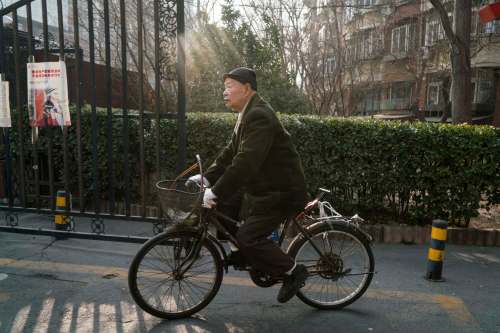
The lonely grandpa
Tens of millions of Chinese growing old without enough support
Advertisement
Read this article for free:
or
Already have an account? Log in here »
To continue reading, please subscribe:

Digital Subscription
One year of digital access for only $205*
- Enjoy unlimited reading on winnipegfreepress.com
- Read the E-Edition, our digital replica newspaper
- Access News Break, our award-winning app
- Play interactive puzzles
*First annual payment billed as $205.00 + GST for one year. This annual subscription will automatically renew at $233.00 + GST every 52 weeks (10% off the regular annual price of $259.35). Offer available to new and qualified returning subscribers only. Cancel any time.
To continue reading, please subscribe:
Add Free Press access to your Brandon Sun subscription for only an additional
$1 for the first 4 weeks*
- Enjoy unlimited reading on winnipegfreepress.com
- Read the E-Edition, our digital replica newspaper
- Access News Break, our award-winning app
- Play interactive puzzles
*Your next Brandon Sun subscription payment will increase by $1.00 and you will be charged $17.95 plus GST for four weeks. After four weeks, your payment will increase to $24.95 plus GST every four weeks.
Read unlimited articles for free today:
or
Already have an account? Log in here »
Hey there, time traveller!
This article was published 12/05/2018 (3006 days ago), so information in it may no longer be current.
TIANJIN, China — Han Zicheng survived the Japanese invasion, the Chinese civil war and the cultural revolution, but he knew he could not endure the sorrow of living alone. On a chilly day last December, the 85-year-old Chinese grandfather gathered some scraps of white paper and wrote out a pitch in blue ink: “Looking for someone to adopt me.”
“Lonely old man in his 80s. Strong-bodied. Can shop, cook and take care of himself. No chronic illness. I retired from a scientific research institute in Tianjin, with a monthly pension of 6,000 RMB (US$950) a month,” he wrote.
“I won’t go to a nursing home. My hope is that a kind-hearted person or family will adopt me, nourish me through old age and bury my body when I’m dead.”
He taped a copy to a bus shelter in his busy neighbourhood.
Then he went home to wait.
Han was desperate for company. He said his wife had died. His sons were out of touch. His neighbours had kids to raise and elderly parents of their own.
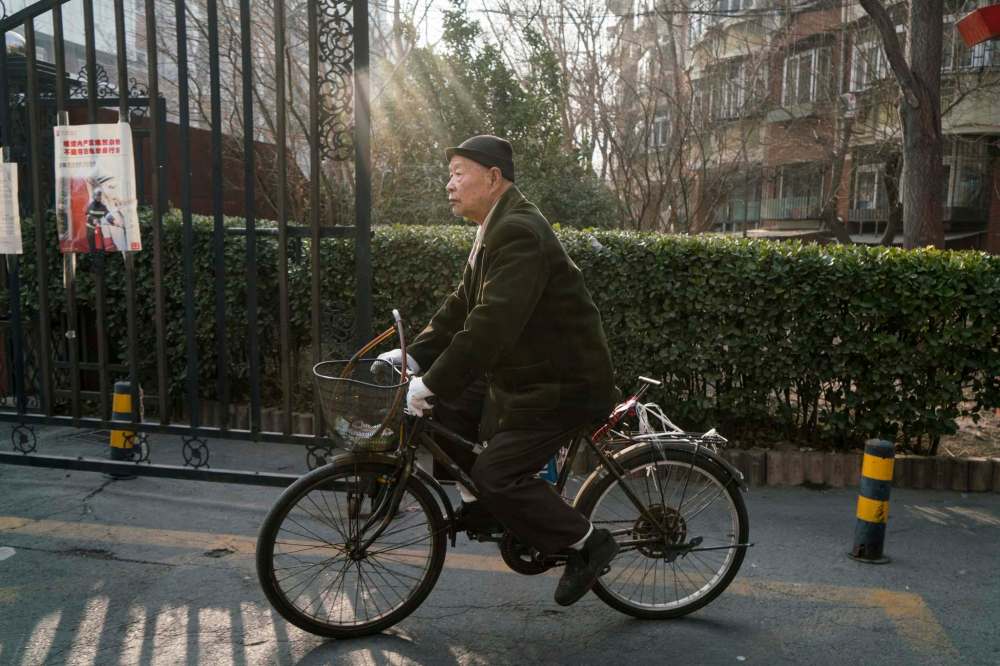
He was fit enough to ride his bike to the market to buy chestnuts, eggs and buns, but he knew his health would one day fail him. He also knew he was but one of tens of millions of Chinese growing old without enough support.
Improved living standards and the one-child policy have turned China’s population pyramid upside down. Already, 15 per cent of Chinese are over 60. By 2040, it will be nearly one in four, according to current projections.
It’s a demographic crisis that threatens China’s economy and the fabric of family life. Businesses must chug along with fewer workers. A generation of single children care for aging parents on their own.
In 2013, the Chinese government made a law mandating parental visits. In practice, millions of “empty-nest” elderly — seniors who don’t live with their spouses or children — have little protection. Children leave. The social safety net is full of holes.
Han had tried and failed to find caregivers. This time, a woman saw him taping a note to a store window, snapped a picture and posted it on social media with a plea: “I hope warm-hearted people can help.”
A crew from digital news platform Pear Video came to tell the story of the lonely Tianjin grandpa. Han’s phone started ringing.
And through his last three months, it did not stop.
● ● ●
At first, Han was hopeful.
He had been trying for years to get people to listen to him, stopping neighbours to tell them he was lonely, scared of dying and didn’t want to die alone.
Now, people were reaching out, showing concern. A local restaurant offered food. A journalist from Hebei province promised to visit. He struck up a telephone friendship with a 20-year-old law student in the south.
But his mood soured when he realized the family he imagined would be tough to find. He rejected offers he considered below him. When a migrant worker called in January, he dismissed him and hung up the phone.
Han had lived through a lot. Born in 1932, he was a boy when the Japanese invaded China, a teenager when Mao Zedong founded the People’s Republic and a young man in the hungry years that followed.
He got a job working at a factory, met his wife and eventually enrolled in night classes and then enrolled in university. Their sons grew up during the Cultural Revolution, a decade of mayhem that fractured families and minds.
“Chinese people my age have really suffered,” he said.
Having endured so much, his generation expected to grow old like those before them: living in a family compound, cared for by sons and grandsons. For Han and millions of others, that has not happened. That made him mad.
The problem, Han told anyone who would listen, was that young people have abandoned the old model, but the government had yet to find a new system for senior care.
Jiang Quanbao, a professor of demography at the Institute for Population and Development Studies at Xi’an Jiaotong University, said that the challenge is that China is both an aging society and a developing country. China “got old before it got rich,” he said.
Peng Xizhe, a professor of population and development at Shanghai’s Fudan University, called the supply and quality of nursing homes in China “seriously inadequate.”
Even those such as Han, who could afford a decent room in a nursing home, are generally skeptical. Older people don’t want their peers to think their children abandoned them, Peng said. Children are afraid of appearing unfilial.
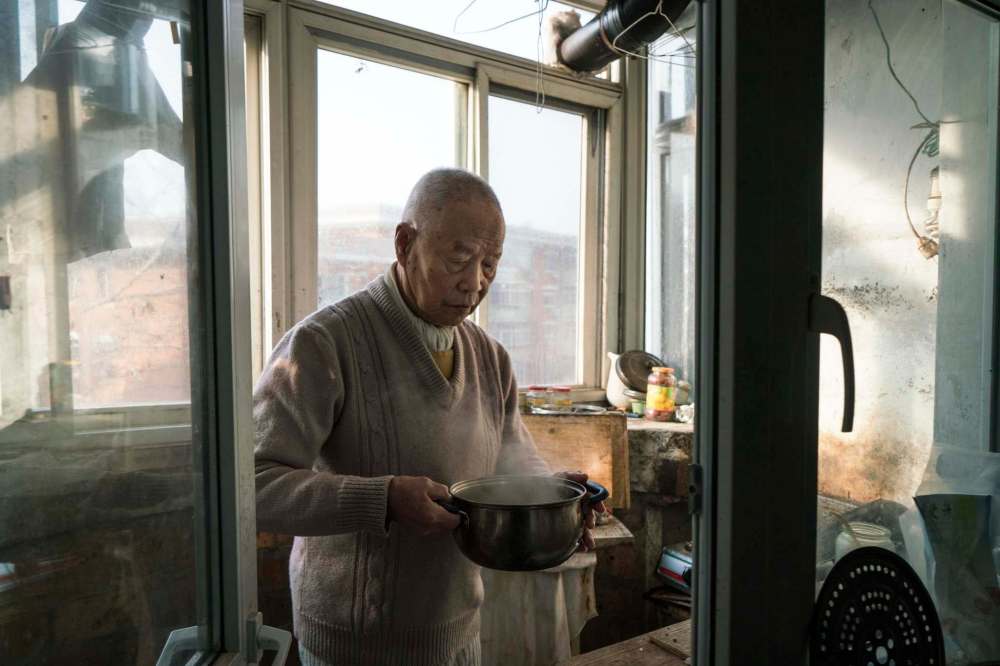
Han said he fell out with one son and that the other emigrated to Canada in 2003 and didn’t call him enough. But he declined to provide their contact numbers — he didn’t want to embarrass them, he said.
Han compared his plight to a withering plant. Elderly people are “like flowers and trees,” he said. “If we are not watered, we cannot grow.”
But when people who saw his story called to check in, he often launched into tirades against the government or the food at the local seniors home — which he tried and hated. The portions were too small for the price, he said. The soup was thin.
As winter settled in, the calls became less frequent. Han was once again consumed by fear that he would die in bed, alone.
● ● ●
The last weeks of Han’s life are a mystery, an ending obscured by stubborn silence and missed calls. What is clear is that the system failed him — and will likely fail others.
Han spent his final days trying to connect. In February, he started making calls to a help line for seniors called the Beijing Love Delivery Hotline. The line’s founder, Xu Kun, founded the service to prevent suicide, particularly among seniors who live alone.
Xu said the elderly often get angrier as they age. The problem is that this pushes people away just when they need them most. “Family and society find it hard to understand the grumpiness, the depression that comes with growing old,” she said.
Han would call the line a couple of times a week, venting to the staff about his loneliness and lamenting the state of China’s seniors homes. He stopped calling in early March, Xu said.
Han also kept in touch with his law-student friend, Jiang Jing. He told Jiang there was another young person, a military man named Cui, who was in regular contact and interested in adopting him.
Jiang last chatted with Han on March 13. On March 14, she missed a call from him. The next time she called, in early April, an unfamiliar voice picked up: his son, she later learned. He said his father died March 17.
In Tianjin, Han’s death went unnoticed. Two weeks after he died, the neighbourhood committee that is supposed to keep an eye on residents was surprised by news of his death. Five neighbours said they had noticed his absence in the hallway, but did not check on him.
Han’s son, Han Chang, flew in from Canada to handle his affairs. He was angry at his father for posting an adoption notice and angry at reporters for covering it.
The younger Han said his father had been lying, that the old man had three sons, not two, and that they took good care of him. He refused to provide the names or numbers of his siblings or anyone else who could confirm his account.
His father had not been lonely, he insisted, just old.
“This could happen anywhere,” he said.
He did not want to discuss his father’s life, but confirmed the basic details of his death: when Han fell ill on March 17, he called an unknown number in his phone. The son would not say who — it could have been the military man, another prospective adopter or someone else.
Han’s greatest fear was that he would die in his bed, that someone would find his bones. But when his time came, he had someone to call. He made it to the hospital.
When his heart gave out, he was not alone.
— Washington Post