Goat labour attracts curious onlookers
Offers greener solutions for clearing land
Advertisement
Read this article for free:
or
Already have an account? Log in here »
To continue reading, please subscribe:

Digital Subscription
One year of digital access for only $205*
- Enjoy unlimited reading on winnipegfreepress.com
- Read the E-Edition, our digital replica newspaper
- Access News Break, our award-winning app
- Play interactive puzzles
*First annual payment billed as $205.00 + GST for one year. This annual subscription will automatically renew at $233.00 + GST every 52 weeks (10% off the regular annual price of $259.35). Offer available to new and qualified returning subscribers only. Cancel any time.
To continue reading, please subscribe:
Add Free Press access to your Brandon Sun subscription for only an additional
$1 for the first 4 weeks*
- Enjoy unlimited reading on winnipegfreepress.com
- Read the E-Edition, our digital replica newspaper
- Access News Break, our award-winning app
- Play interactive puzzles
*Your next Brandon Sun subscription payment will increase by $1.00 and you will be charged $17.95 plus GST for four weeks. After four weeks, your payment will increase to $24.95 plus GST every four weeks.
Read unlimited articles for free today:
or
Already have an account? Log in here »
Hey there, time traveller!
This article was published 29/05/2018 (2993 days ago), so information in it may no longer be current.
WASHINGTON — He almost didn’t see them at first.
A crowd of people standing along his usually clear jogging route up Eastern Avenue, straddling the Washington-Maryland border, tipped him off that something was up. Following their gaze into a small clearing of overgrown trees and wild flora, he saw something move.
“I thought it was a deer at first, to be honest,” said Spencer Douglas, 33, a financial analyst who lives in Mount Rainier, Md. “It took me a minute to be like, ‘Nah, that’s a goat.’”
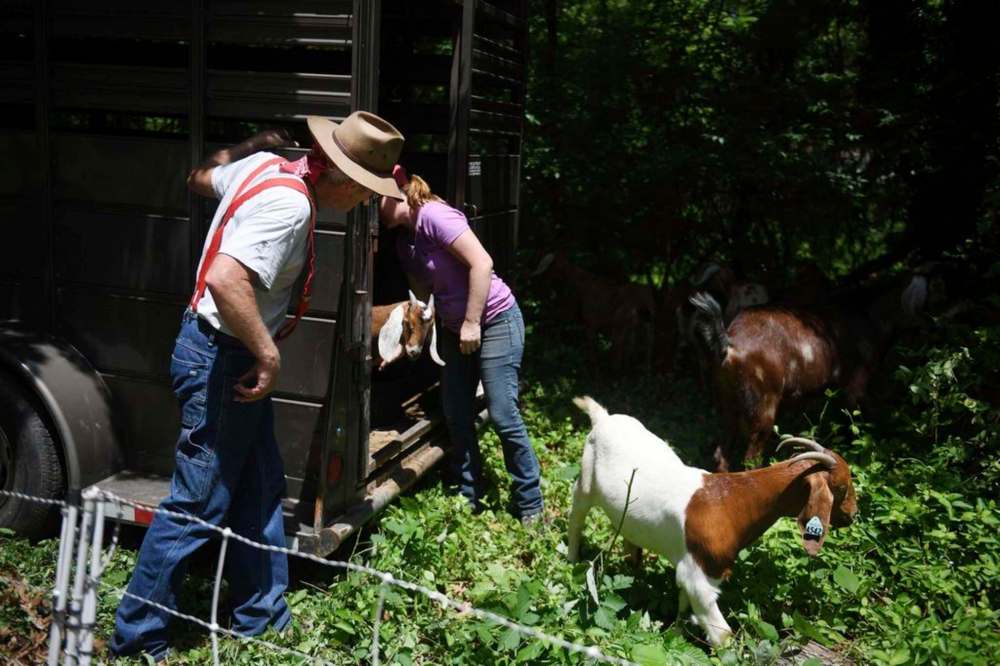
A herd, to be precise.
Nine goats from a farm in Centreville, Md., took up residence this week on a plot of land in Mount Rainier, where they have been eating poison ivy, honeysuckle and other overgrown plants since Monday afternoon.
But these aren’t just any goats. They’re professional goats. And they’re in high demand.
Eco-Goats, which offers its services to clear invasive species, overgrown brush and difficult-to-handle plants such as poison ivy, poison oak and brambles, has been in business about 10 years. Owner Brian Knox said he’s recently gotten pickier about what contracts the goats will or won’t take.
The Maryland company’s most recent job in Mount Rainier, clearing a parcel of city land neglected since the turn of the century, is the latest in a line of gigs around the Washington area that are part of a national push toward greener solutions and natural methods for clearing land.
Knox said he prefers to work with cities, counties and school districts — anywhere there’s an opportunity to engage with children and community members, where the goats can show off all they can do.
“We used to do an exercise where you have one person wander through the woods with a pair of clippers and a bag and try to see if they can collect what a goat will typically eat in a day — that’s about 20 pounds of leaves — and it doesn’t add up as quickly as you’d think,” he said.
Goats have been used to clear foliage for centuries, but in recent years, the age-old method has become new again. Goats have been called to clear land near airports, schools, the Anacostia watershed, the district’s Congressional Cemetery, fire-prone ranches and private residences.
Eco-Goats used to deploy crews of up to 140 animals per job. But Knox said he’s learned smaller is better and pared down the number of working goats to about 20, depending on the property’s size.
Goats come with benefits that crews of humans do not: they fertilize the land as they go, they’re relatively quiet and they work night and day. Plus, Knox added, they’re fun to watch.
“Goats are really fascinating animals. They’re much more captivating than sheep or cows or horses, I think,” he said. “They’re kind of mesmerizing. It’s a lot like watching fish. You can waste a lot of time watching fish and you can waste a lot of time watching goats.”
Though goats do not dig up roots of weeds or plants such as poison ivy, they do pick off the leaves and destroy seeds, which can sometimes be spread when people clear foliage with methods such as mowing.
Once the goats have had their fill and the area has been cleared, Knox said, a crew of human workers will finish the job, pulling up roots and cutting away the bits of plants goats leave behind, such as sticks and stems.
It’s hard to say when the animals will be done — they run on goat time, as Knox says. But Shivali Shah, vice-mayor of Mount Rainier, said she expects they could hang around through the weekend if there’s more to do.
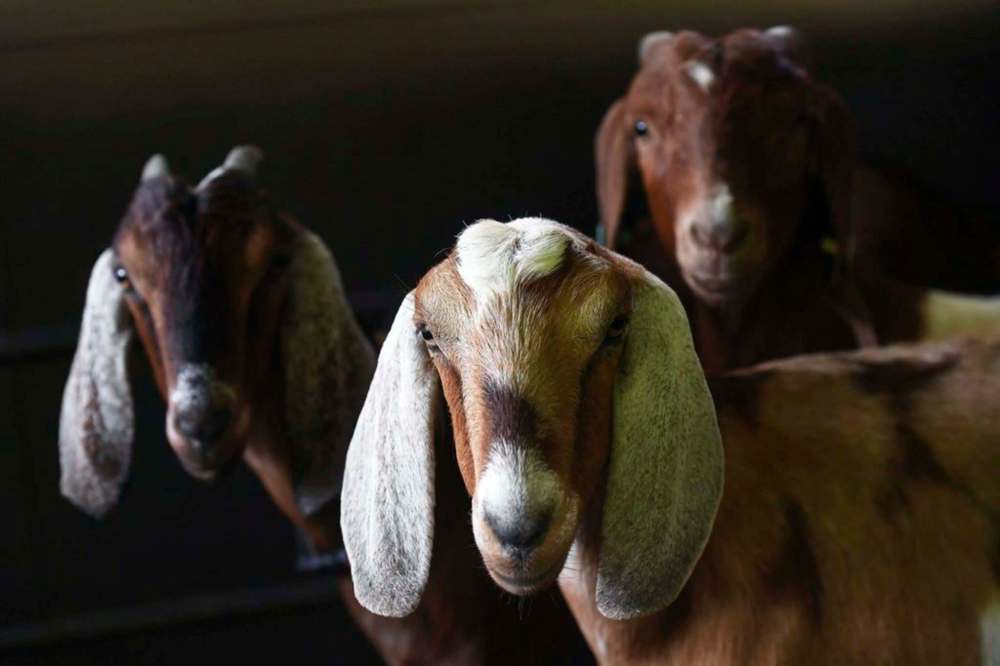
“In urban and suburban areas, you don’t really have an opportunity to see working animals like this — goats who aren’t here to be petted or fed. They’re here to get a job done,” she said. “It’s truly been a learning experience for the whole community.”
The goats have been grazing on an overgrown plot that measures about a quarter-acre, Coun. Bryan Knedler said.
The parcel was donated to Mount Rainier in 2000 by the Rogers family, which developed a number of subdivisions in the area in the early 1900s.
Several residents who watched the goats this week said they would be happy if the land could remain a goat habitat. On any given evening, dozens of curious residents stopped by to watch the goats work.
“Mom, look! There’s no more tree,” a gleeful toddler named Maurycy shouted. “They’re eating it!”
Children on tricycles and scooters paused to stare while their parents offered factoids about the animals.

One man serenaded them with a rendition of the Rolling Stones’ Poison Ivy, while two new parents discussed the merits of goat landscaping as they passed their newborn back and forth.
“We are not buying a goat,” the woman said, finally.
Her verdict notwithstanding, Knox said most people fall in love with his goats.
“I’ve been stopping every day on my way home from work to watch them,” said Horace Smith, 63. “They’re so graceful, so pretty. I find it soothing just watching them move. It reminds you how beautiful and perfect nature can be.”
— Washington Post