Stars in their sights
Astronomical objects with celebrity namesakes
Advertisement
Read this article for free:
or
Already have an account? Log in here »
To continue reading, please subscribe:

Digital Subscription
One year of digital access for only $205*
- Enjoy unlimited reading on winnipegfreepress.com
- Read the E-Edition, our digital replica newspaper
- Access News Break, our award-winning app
- Play interactive puzzles
*First annual payment billed as $205.00 + GST for one year. This annual subscription will automatically renew at $233.00 + GST every 52 weeks (10% off the regular annual price of $259.35). Offer available to new and qualified returning subscribers only. Cancel any time.
To continue reading, please subscribe:
Add Free Press access to your Brandon Sun subscription for only an additional
$1 for the first 4 weeks*
- Enjoy unlimited reading on winnipegfreepress.com
- Read the E-Edition, our digital replica newspaper
- Access News Break, our award-winning app
- Play interactive puzzles
*Your next Brandon Sun subscription payment will increase by $1.00 and you will be charged $17.95 plus GST for four weeks. After four weeks, your payment will increase to $24.95 plus GST every four weeks.
Read unlimited articles for free today:
or
Already have an account? Log in here »
Hey there, time traveller!
This article was published 02/06/2018 (3014 days ago), so information in it may no longer be current.
The Tsawout First Nation in British Columbia doesn’t have to reach for the stars — because it already has a home in the heavens.
That’s because floating in the asteroid belt between Mars and Jupiter is a newly discovered minor planet that now carries the Vancouver Island community’s name.
Last month, astronomer David Balam presented a plaque to the First Nation marking the official naming of asteroid Tsawout at a meeting of the International Astronomical Union in Victoria, B.C.
The astronomer discovered the two-kilometre-wide astronomical object in 2007, but the official naming process takes as long as 20 years and involves intricate mapping of the minor planet’s orbit.
For the record, minor planets, or asteroids, are chunks of rock left over from the formation of the solar system, and Tsawout is one of millions orbiting in the asteroid belt.
Balam chose the name because of a personal connection — his family homestead was on a nearby island and his family has links to both the Tsawout and Haida First Nations.
Tsawout Chief Harvey Underwood was deeply moved by the tribute. “Our name means ‘houses on the hill.’ Now our planet is ‘houses in the universe,’ I guess,” he told The Canadian Press. “It’s mixed in there with all the stars.”
They’re certainly in good company, as we see from today’s celestial list of Five Astronomical Objects Named for Famous People (And At Least One Cat):
5) The famous earthling: Aviatrix Amelia Earhart
The astronomical namesake: A disturbance in Saturn’s rings

Reaching for the stars: We probably know a lot more about the mystery surrounding the disappearance of legendary aviation pioneer Amelia Earhart than we do about the nature of Saturn, the sixth planet from the sun and the second-largest in the solar system. What we do know about this gas giant is that it is famed for its ring system, composed mostly of ice particles, with a smaller amount of rocky debris and dust. Saturn also has at least 62 moons and there are hundreds of tiny moons known as “moonlets” that occasionally barrel through the dust of the rings and clear the space immediately in front of and behind them. These propeller-shaped disturbances don’t have official names, but NASA is fond of referring to the most intriguing “propellers” by the names of famous aviators. So it is not surprising that the space agency decided to name a prominent propeller after Amelia Earhart, the first woman to fly solo across the Atlantic Ocean and who went missing in 1937 while attempting to fly around the world.
In 2017, NASA posted on its website images of the Earhart propeller gap taken by the Cassini space probe, which has been studying Saturn since 2004. “The unmanned spacecraft captured the image from a distance of nearly 11,340 kilometres as it cruised past on March 22,” the space agency posted in 2017. “Earhart is situated very close to the 320-kilometre-wide Encke Gap, which is held open by the much larger moon Pan… The propeller is nothing more than Earhart’s attempt to open a gap like Encke using its gravity. However, Earhart’s attempt is thwarted by the mass of the ring, which fills in the nascent gap before it can extend very far.” The earthbound Earhart, along with navigator Fred Noonan, vanished over the Pacific on July 2, 1937, while on a quest to circumnavigate the globe along the equator.
4) The famous (fictional) earthling: James Bond, Agent 007
The astronomical namesake: Asteroid 9007

Reaching for the stars: Astronomers discover new space objects all the time, so coming up with clever names can pose a challenge. For instance, what do you call an asteroid that has the scientific ID number 9007? Well, if you are Anton Mrkos, you realize the last three numbers of that ID are identical to the iconic code number (007) belonging to the world’s most famous fictional spy, namely James Bond of the British Secret Service, whose ability to kill people and seduce female super-spies has been chronicled in 25 blockbuster feature films. For the record, Mrkos first spotted the celestial James Bond on Oct. 5, 1983, while at the Klet Observatory in the Czech Republic.
According to universeguide.com, James Bond is a large spherical-shaped rock that orbits the sun mainly between the orbits of Mars and Jupiter. Here’s a taste of what universeguide.com says: “Its orbit takes 3.89 years to travel around the sun. The absolute magnitude of the object is 13.9, which is the brightness of the object. A higher absolute magnitude means that the object is faint, whereas a very low number means it is very bright… The orbital inclination, the angle at which James Bond orbits in relation to the orbital plane, is 5.859 degrees.” There’s more, but we suspect even the supremely intelligent agent wouldn’t understand the details. What we find most cool is the fact this object has a Winnipeg connection in the sense Bond’s creator, British author Ian Fleming, who churned out 12 novels and two collections of short stories on Bond, is widely believed to have modelled his hero after Sir William Stephenson — better known as The Man Called Intrepid — the Winnipeg-born spymaster tapped by British Prime Minister Winston Churchill to create an intelligence-gathering network that cracked Nazi codes and shortened the Second World War. That said, we are sure that when he discovered this sexy space rock, Anton Mrkos was shaken, but not stirred.
3) The famous (non) earthling: Mr. Spock
The astronomical namesake: Asteroid 2309
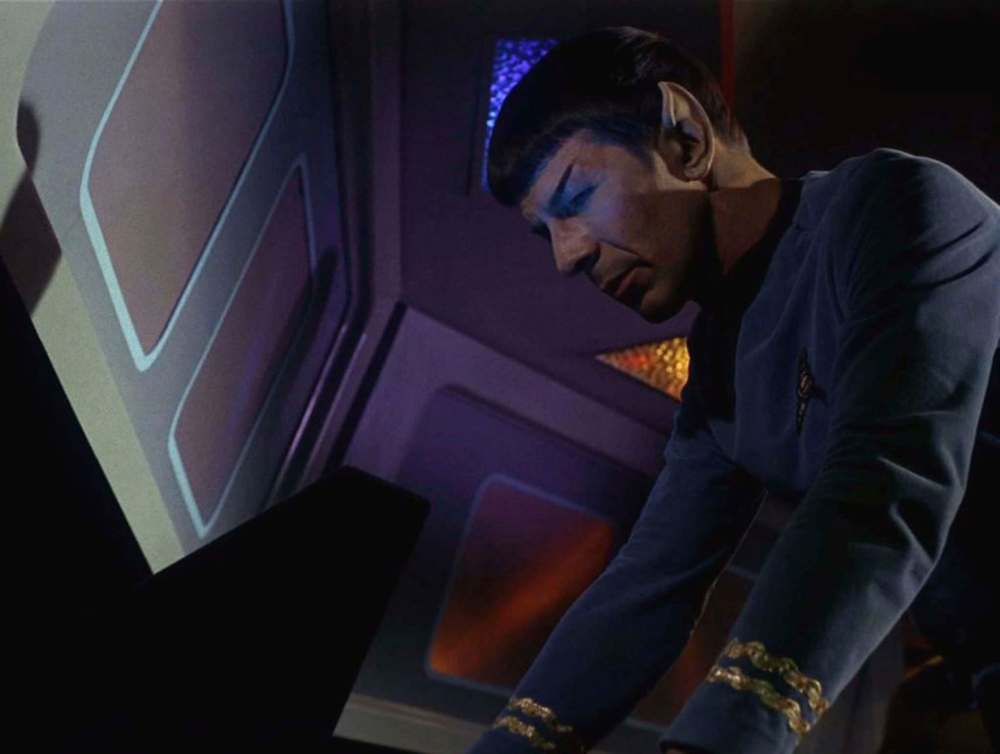
Reaching for the stars: We know what you are thinking. You are thinking: “Yes, it makes perfect sense that someone named an asteroid after Mr. Spock, the coolly logical and pointy-eared science officer from the Star Trek franchise.” But, tragically, you could not be more wrong. We can explain. On Aug. 16, 1971, at the Yale-Colombia Station at El Leoncito, Argentina, astronomer James B. Gibson looked into the Final Frontier and discovered a new 21-kilometre-wide asteroid between the orbits of Mars and Jupiter, orbiting three astronomical units from the sun every 5.23 years. He named the asteroid Mr. Spock. But not after THAT Mr. Spock.
No, Gibson named the new astronomical object after his cat, the tabby that trailed him on astronomical expeditions in the U.S., Africa and South America. According to Gibson, Mr. Spock the cat was “imperturbable, logical, intelligent and had pointed ears” just like his namesake. “Gibson argued that asteroids should be named only for those who had contributed to or had been important to astronomy in some way, and that his cat, by keeping him company during his work, fit the bill,” the website space.com notes. That prompted the International Astronomical Union to ban the use of pet names for asteroids. And, yes, the cat had been named after the famous Mr. Spock, the half-Vulcan, half-human sidekick to Capt. Kirk on the Starship Enterprise. Mr. Spock, of course, was brought to life onscreen by American actor, author, director and singer Leonard Nimoy, who died in 2015.
That year, Nimoy got his celestial reward when, on June 2, a 9.5-kilometre-wide asteroid, travelling between Mars and Jupiter, was named 4864 Nimoy in his honour. “Given the impact Star Trek has had on how the public perceives space exploration, honouring Leonard Nimoy’s legacy as Spock with an asteroid, in our view, is only logical,” space.com said at the time. Fascinating, captain!
2) The famous earthling(s): Tom Hanks and Meg Ryan
The astronomical namesake(s): Asteroids 12818 and 8353
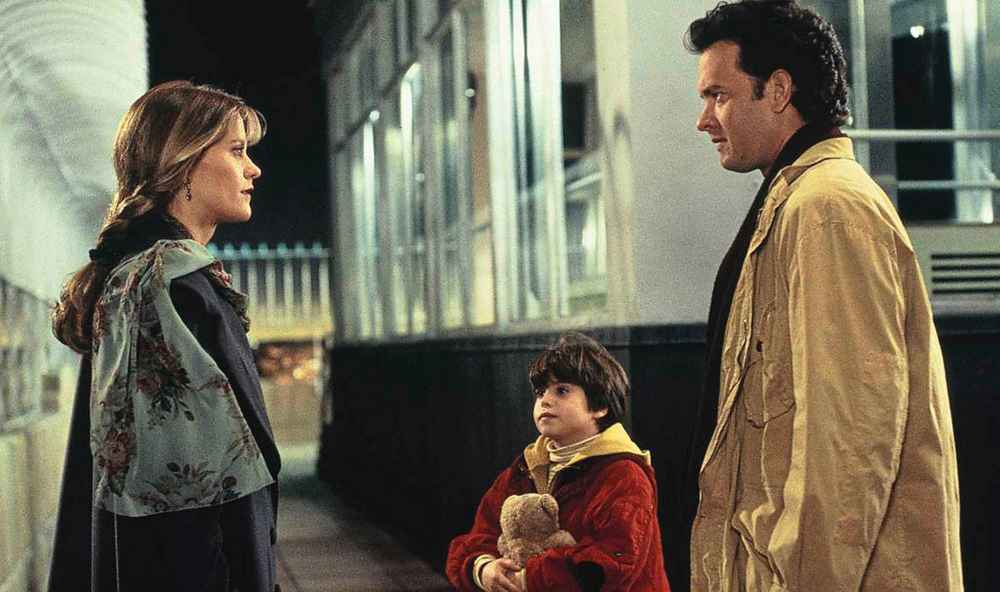
Reaching for the stars: On Earth, superstar actors Tom Hanks and Meg Ryan are bound together for eternity thanks to the hugely popular romantic comedies in which the pair have starred together, including 1993’s Sleepless in Seattle and 1998’s You’ve Got Mail. Well, it turns out the pair are also united in the heavens as well. You might say, they are Sleepless in Space. Or, possibly, Tom and Meg: You’ve Got Asteroids! The two asteroids were discovered seven years apart in different hemispheres, according to space.com.
Asteroid 12818 Tomhanks was discovered April 13, 1996, by University of Arizona astronomer Joseph L. Montani, part of a group of astronomers called Spacewatch. Spacewatch member Jim Scotti bestowed the name in honour of Hanks’ work as astronaut Jim Lovell in the 1998 hit Apollo 13, based on the NASA moon mission in which equipment failure forced the team to turn back for Earth before their lunar landing. On April 3, 1989, Asteroid 8353 Megryan was discovered by Eric Elst at the European Southern Observatory in Chile. Here’s a citation Elst gave to NASA’s Jet Propulsion Laboratory: “Margaret Mary Emily Anne Hyra (Meg Ryan, b. 1961) majored in journalism and later became an actress. She showed her talent in You’ve Got Mail.” Not content to just make films together, the actors’ namesake asteroids decided to hang out together in the heavens, making headlines in 2011 when they both made their closest approaches to Earth in September. Notes space.com: “Asteroid 12818 Tomhanks swung within about 151 million miles of Earth on Sept. 12, while 8353 Megryan came about 191 million miles away on Sept. 27. Neither came closer than the distance between the Earth and the sun, and they did not pose any risk to our planet.” What better place to find a pair of stars?
1) The famous earthling: Stephen Colbert
The astronomical namesake(s): An asteroid (and much more)

Reaching for the stars: For most people, having a minor planet named after them symbolizes the pinnacle of success. For Stephen Colbert, the famed comedian, satirist and late-night TV host, it’s just another brick in a rapidly expanding wall of fame. To be blunt, there is an awful lot of stuff named after this guy, some of it in space. Let’s start with the asteroid — which was discovered Oct. 3, 2005, by the Catalina Sky Survey and eventually named in honour of the TV star, known largely for his work on The Daily Show, The Colbert Report and The Late Show With Stephen Colbert. In 2009, NASA had an online poll to name the new wing on the International Space Station, and Colbert urged his fans to support him as a write-in candidate. “While his name won by over 40,000 votes, NASA instead named a space treadmill after him: the Combined Operational Load Bearing External Resistance Treadmill (C.O.L.B.E.R.T.)” globaltv.com notes.
In 2007, feeling snubbed when rocker Neil Young had a spider named for him, Colbert claimed to be just as worthy, and in 2008 Aptostichus stephencolbert became an officially recognized species of trapdoor spider. Also in 2007, Ben & Jerry’s released their newest ice-cream flavour, Stephen Colbert’s AmeriCone Dream, “a decadent melting pot of vanilla ice cream with fudge-covered waffle cone pieces and a caramel swirl.” In 2006, the San Francisco Zoo decided to set aside an eagle egg and name the infant after the cheeky satirist. “Stephen Jr. has since been reintroduced to the wild and, in true rebellious fashion, migrated to Canada (and probably voted for Obama),” globaltv.com notes. Not to forget that March 20, 2007, was Stephen Colbert Day in Oshawa, Ont., after the mayor lost a bet on hockey to the TV host. And that’s just a partial list. Hopefully, Colbert won’t have any more asteroids or comets to put on his resume. Because he doesn’t have the space.
doug.speirs@freepress.mb.ca