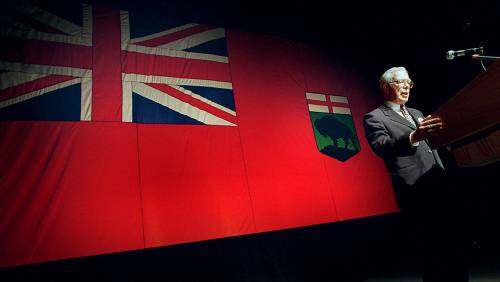
Serious interview derailed by cat

Feline wasn't too concerned about the cameras

Advertisement

Advertise with us

Cats.

Read this article for free:

or

Already have an account? Log in here »

To continue reading, please subscribe:

Subscribe and receive a limited-edition Free Press branded hat or tote.

Digital Subscription

One year of digital access for only $205*

  • Enjoy unlimited reading on winnipegfreepress.com
  • Read the E-Edition, our digital replica newspaper
  • Access News Break, our award-winning app
  • Play interactive puzzles

*First annual payment billed as $205.00 + GST for one year. This annual subscription will automatically renew at $233.00 + GST every 52 weeks (10% off the regular annual price of $259.35). Offer available to new and qualified returning subscribers only. Cancel any time.

To continue reading, please subscribe:

Add Free Press access to your Brandon Sun subscription for only an additional

$1 for the first 4 weeks*

  • Enjoy unlimited reading on winnipegfreepress.com
  • Read the E-Edition, our digital replica newspaper
  • Access News Break, our award-winning app
  • Play interactive puzzles
Start now

*Your next Brandon Sun subscription payment will increase by $1.00 and you will be charged $17.95 plus GST for four weeks. After four weeks, your payment will increase to $24.95 plus GST every four weeks.

Hey there, time traveller!
This article was published 17/07/2018 (2921 days ago), so information in it may no longer be current.

Cats.

They care not for your affection, your familiar voice or perhaps even for your overall existence.

And they certainly don’t care about your career as a respected academic or any fancy television interviews taking place in your office.

Polish historian Jerzy Targalski discovered this during an on-camera appearance on a Dutch news program when his cat unceremoniously climbed atop his head in the middle of the interview.

Targalski was speaking with a journalist from the Dutch public television station Nieuwsuur to weigh in on “the controversial forced removal of Polish top judge Malgorzata Gersdorf” by the country’s ruling conservative party, according to NTR reporter Rudy Bouma.

Partway through the taping, his orange tabby began pawing and mewing at Targalski’s right side. The cat then scaled up the professor’s arm like a personal Everest.

“Eh — we tolerate this?” Targalski asked. It was both a question and an apologetic statement, directed more to the camera crew and less to the cat, who by this point was already upon his neck.

Someone from behind the camera made a sound. Targalski smiled and pressed on, with the resignation of a man who has shared his home with a cat and thus knows his place in the feline-human order.

He spoke of the presence of secret-police agents in certain countries and what that means for the political transformation of those countries.

But he may as well not have been speaking at all for all the attention his cat was stealing.

As Targalski continued the interview, his cat nuzzled his ear, used his shoulders to get a closer look at a chandelier above and, at one point, curled its tail across Targalski’s face, covering his eyes.

The political scientist, who earned his doctorate with a thesis titled “Mechanisms of dismantling communism in Yugoslavia on the example of Slovenia and Serbia (1986-1991),” simply brushed the cat’s tail away and held it down for several moments to the side of his head.

Alas, none of that footage made it into the final Nieuwsuur segment. Lisio does, however, manage a cameo in the final cut that aired last week in a far less obtrusive manner — by lying in Targalski’s lap, getting petted as the professor conducts a seated interview.

Targalski, of course, is not the first person to have a television interview not go as planned, as international relations expert and Pusan National University political science professor Robert Kelly — better known as the “BBC dad” — can tell you after his two young children hilariously crashed his BBC appearance last year.

He’s not even the first to have a cat interrupt a television shoot. Last year, Dumka, a black cat belonging to Nils Usakovs, the mayor of Riga, Latvia, wandered into an online Q-and-A session his human was hosting, to the delight of many of the mayor’s Facebook followers, as the Washington Post reported.

Usakovs took it in good stride, writing later on Facebook: “Anything can happen if your office is ruled by cats.”

— Washington Post
Report Error Submit a Tip

More Stories

Winnipeg Fringe Festival: 2026 show reviews

Winnipeg Free Press 1 minute read Preview

Winnipeg Fringe Festival: 2026 show reviews

Winnipeg Free Press 1 minute read Tuesday, Jul. 14, 2026

Not sure what to see at this year's Winnipeg Fringe Theatre Festival? All of the Free Press’s reviews will be published here.  Find a show and click to read its review.

Read
Tuesday, Jul. 14, 2026

Manitobans on hook for $40M in unpaid medical bills racked up by non-Canadians

Tyler Searle 6 minute read Preview

Manitobans on hook for $40M in unpaid medical bills racked up by non-Canadians

Tyler Searle 6 minute read Tuesday, Jul. 14, 2026

Manitoba Nurses Union president calls the amount “shocking.”

Read
Tuesday, Jul. 14, 2026

Sheriff who died in train collision ‘loved everybody’

Tyler Searle 6 minute read Preview

Sheriff who died in train collision ‘loved everybody’

Tyler Searle 6 minute read Updated: Yesterday at 6:09 PM CDT

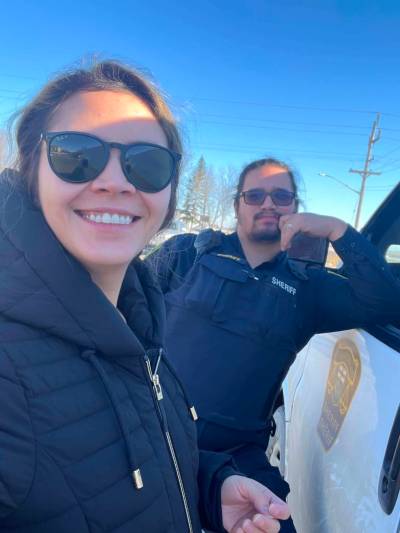
Brett Matheson-Maytwayashing was a loving father, hard-working sheriff and proud First Nations man who helped lead traditional ceremonies for a decade before he died in a collision with a train near Portage la Prairie.

Matheson-Maytwayashing, 27, died in the Tuesday morning crash, which occurred on a rural road west of Portage while he and another member of the sheriff’s service were on their way to attend court in Amaranth, his mother, Alissa Matheson-Maytwayashing, told the Free Press.

It was Matheson-Maytwayashing’s first day back at work after taking time off to participate in a sun dance ceremony in northern Saskatchewan last week, his mother said.

“Brett didn’t judge anybody, he would give people chances,” she said, her voice breaking. “He didn’t care what colour you were, he didn’t care your nationality — Brett just loved everybody.”

Read
Updated: Yesterday at 6:09 PM CDT

Buckled concrete gives drivers the heave-ho

Joyanne Pursaga 4 minute read Preview

Buckled concrete gives drivers the heave-ho

Joyanne Pursaga 4 minute read Tuesday, Jul. 14, 2026

Highways, local roads and sidewalks have buckled and broken thanks to extreme heat in recent days, wreaking havoc with travel.

Garth Thomson was driving on the Perimeter Highway, just north of Assiniboia Downs, around 4 p.m. Sunday when he suddenly came upon a major gap in the road.

“There was a big break in the highway, which was the heaving. I had about four seconds to decide what I was going to do. So, I kind of hit my brakes and drove more towards the centre, where the big chunks weren’t (located),” said Thomson. “It happened so fast … there were big chunks (of concrete), probably a foot (per) square, sticking up.”

His convertible had bumper damage and a hole in its gas tank, he said.

Read
Tuesday, Jul. 14, 2026

Carney trumps Trump with Gordie Howe bridge deal

Dan Lett 5 minute read Preview

Carney trumps Trump with Gordie Howe bridge deal

Dan Lett 5 minute read Monday, Jul. 13, 2026

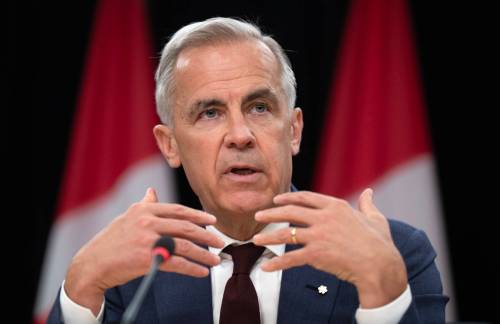
This is the reality of dispute resolution with the Trump administration: getting what we want but doing it in a way that gives the wacky, volatile and irrational president some sort of moral victory to parade on social media.

Read
Monday, Jul. 13, 2026

The next Duff’s Ditch must be medical

Rafiq Andani 5 minute read Preview

The next Duff’s Ditch must be medical

Rafiq Andani 5 minute read 2:00 AM CDT

A runaway rail trolley hurtles towards five people tied to the tracks. You stand at the switch lever. If you pull the lever, the trolley veers onto a sidetrack, where one person is tied down. Do nothing and five die. Pull the lever and one dies by your hand.

A health minister needs no introduction to the weight of that choice. Every budget season, governments confront this dilemma with one cruel modification — the lever switches between today and tomorrow. Down the near track sits this year’s emergency, a crowded emergency department, a surgical backlog, a crisis demanding a decision by Friday. Down the far track, in the distance, over the horizon, waits a geriatric demographic that has not arrived yet. Each year’s budget cannot simultaneously rescue both.

Philosophers treat the trolley scenario as a thought experiment. A health minister calls it Tuesday.

The actual choice is crueller, because both tracks hold real people. The stroke patient in today’s hallway deserves rescue, as do the patients down the line. Two scholars, Guido Calabresi and Philip Bobbitt, analyzed such allocations as tragic choices — scarcity forces a society to preserve one value by sacrificing another. Their darker observation concerned method. Societies rarely make these choices in the open. The lever keeps directing traffic away from the immediate noise, toward the far track.

Read
2:00 AM CDT