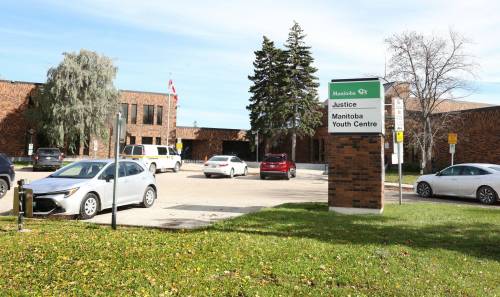
Manitobans on hook for $40M in unpaid medical bills racked up by non-Canadians
Read this article for free:
or
Already have an account? Log in here »
To continue reading, please subscribe:

Digital Subscription
One year of digital access for only $205*
- Enjoy unlimited reading on winnipegfreepress.com
- Read the E-Edition, our digital replica newspaper
- Access News Break, our award-winning app
- Play interactive puzzles
*First annual payment billed as $205.00 + GST for one year. This annual subscription will automatically renew at $233.00 + GST every 52 weeks (10% off the regular annual price of $259.35). Offer available to new and qualified returning subscribers only. Cancel any time.
To continue reading, please subscribe:
Add Free Press access to your Brandon Sun subscription for only an additional
$1 for the first 4 weeks*
- Enjoy unlimited reading on winnipegfreepress.com
- Read the E-Edition, our digital replica newspaper
- Access News Break, our award-winning app
- Play interactive puzzles
*Your next Brandon Sun subscription payment will increase by $1.00 and you will be charged $17.95 plus GST for four weeks. After four weeks, your payment will increase to $24.95 plus GST every four weeks.
Read unlimited articles for free today:
or
Already have an account? Log in here »
Manitoba’s health-care system has lost $40 million in the last five years after treating non-Canadians who reneged on paying their medical bills.
Shared Health averaged about $7.9 million in losses each fiscal year between 2020 and 2025. The figures were released via a freedom of information request that was submitted by SecondStreet.org, an Alberta-based think tank.
“The big picture in Canada is that we have a system that’s in crisis from coast to coast, and if these dollars had been spent on helping Canadians with health care, then that could ease some of the pressure on the system.” said Colin Craig, president of SecondStreet.org, on Tuesday.
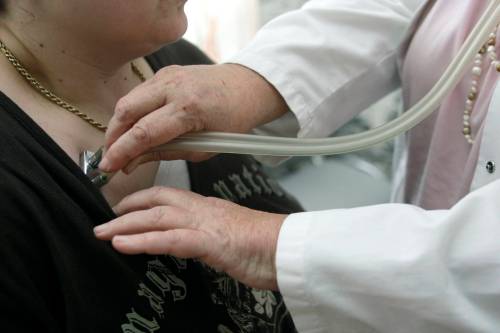
The estimated $40 million lost to unpaid medical debts in Manitoba could help bolster health-care staffing, says Manitoba Nurses Union president Darlene Jackson. (Thomas Kienzle / The Canadian Press files)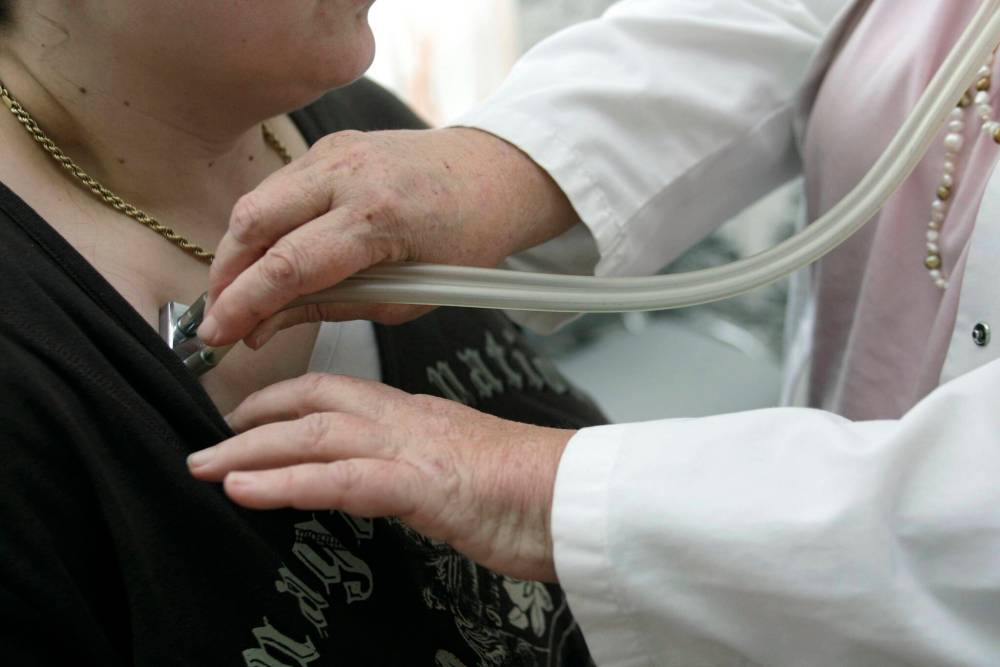
“Canadian taxpayers are spending millions of dollars on health-care services for people who don’t even live in Canada.”
Permanent residents, work permit holders and some refugee claimants can qualify for public health coverage in Manitoba — but tourists, transients, visitors and most study permit holders cannot, says the Manitoba Health website.
Non-residents left taxpayers on the hook for $3.8 million in fiscal 2020-21, $8.2 million in 2021-22, $4.5 million in 2022-23, $18.7 million in 2023-24 and $4.5 million in 2024-25, the Shared Health data shows.
SecondStreet.org estimated the unpaid amount could have paid for hip replacement operations for about 3,400 patients. The numbers are based on a patient cost estimator tool created by the Canadian Institute for Health Information.
“Canadian taxpayers are spending millions of dollars on health-care services for people who don’t even live in Canada.”
Freedom of information requests filed with other provincial health authorities show a similar issue persists in Alberta, where losses totalled $92.3 million since 2020-21, and in British Columbia, where they reached $200.6 million in the same period.
Craig outlined three potential policy solutions his organization believes could cut the amount unpaid: Provincial health regions should require visitors to pay upfront before treatment, except when they require lifesaving care; people admitted to Canada should be required to have travel insurance before entering the country, and they should be banned from re-entering the country if they have outstanding medical bills.
Health Minister Uzoma Asagwara said they take the figures seriously, but need a better understanding of what’s included and whether measures to get people to pay can be strengthened.
“Health authorities are responsible for billing and collection processes, and I expect every reasonable effort to be made to recover those costs while ensuring anyone requiring urgent or life-saving care can receive it.”
The priority is to ensure capacity is available for Manitobans, the minister said, and that care to non-residents doesn’t contribute to longer wait times or hamper patient flow.
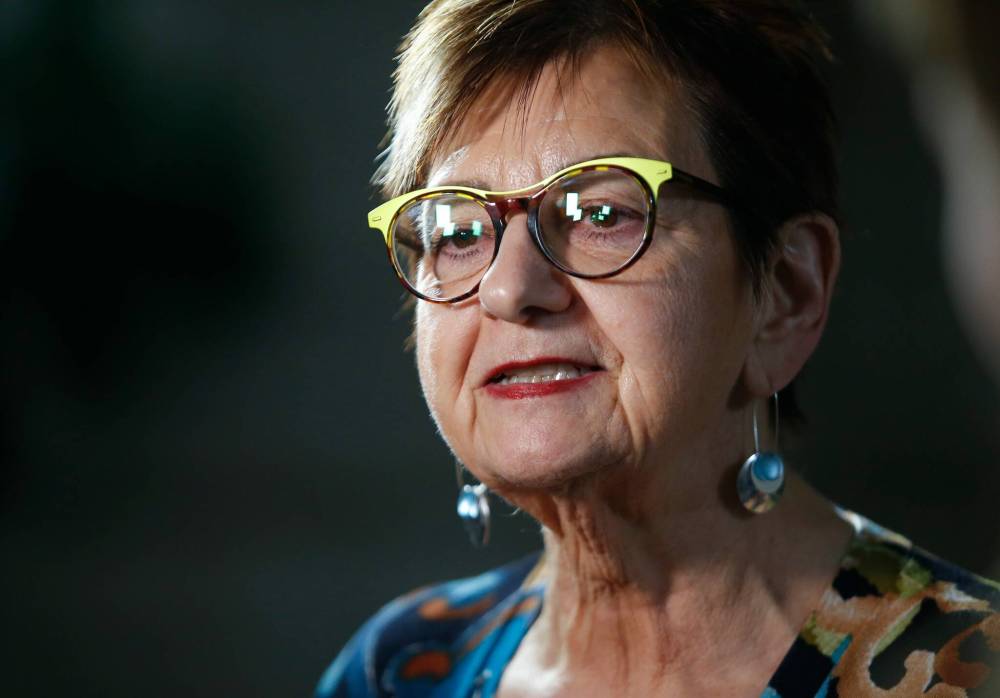
Manitoba Nurses Union president Darlene Jackson called the uncollected amount “shocking.”
“I can’t help but thinking that this money being poured back into our health-care system would absolutely benefit staff as well as patients,” Jackson said.
The union leader said she was not aware of the issue until Tuesday. Nurses who provide care to patients have no connection to bills issued to them.
“Now, more than ever, we need to be looking at utilizing every dollar that we have in health care,” she said.
“Let’s say I go to the U.S. and go to a hospital — I am billed, there’s no two ways about it. I have to pay before I leave. So, I think it’s really important that we look at how we can actually collect this money.”
An injection of $40 million could help bolster staffing, Jackson said.
“While unpaid hospital costs are ultimately absorbed by the publicly funded health system, physicians are often left to absorb the financial loss when their services go unpaid.”
A spokesperson for Doctors Manitoba said the amount of money unpaid likely exceeds $40 million because the numbers provided by Shared Health do not account for the cost of physician services.
While hospitals in Manitoba are funded by provincial health authorities, physicians are paid directly by Manitoba Health for each insured service they provided.
This means physicians are responsible for billing non-Canadian patients or their insurers and following up on outstanding accounts. Doctors Manitoba has raised concerns about this process with the province, their statement says.
“As a result, there are likely millions of dollars in additional physician services that have also gone unpaid over the same period,” the spokesperson said.
“While unpaid hospital costs are ultimately absorbed by the publicly funded health system, physicians are often left to absorb the financial loss when their services go unpaid.”
Andrew Longhurst, a senior research with the Canadian Centre for Policy Alternatives, questioned the motivations of SecondStreet.org, noting the organization has pushed for greater involvement of private health care in Canada.
“They are trying to rile people up and make them, I think, blame people who are migrants, people who are of colour, people who are trying to make a better life,” he said.
“I don’t really see what they are making a fuss out of about in terms of this. I think the benefit of tourism and having people in Manitoba far out weighs the very small cost associated with that.”
Longhurst noted the $40 million loss over five years is little more than a “rounding error” when compared to Manitoba’s overall health budget, which is slated to reach $10.6 billion in 2026-27.
“I don’t really see what they are making a fuss out of about in terms of this. I think the benefit of tourism and having people in Manitoba far out weighs the very small cost associated with that,” Longhurst said.
“If you’re going to put resources toward litigating or going after those dollars, you’re probably going to end up spending more than you would actually bring back.”
Noah Schulz, director of the Manitoba Health Coalition, agreed.
“We have much bigger issues in public health care in Manitoba and in Canada than tourists costing the system,” Schulz said.
He described the policy recommendations presented by Craig as shortsighted, warning there could be unintended consequences for visitors and Canadians alike.
“In terms of policy solutions — if this is a problem that we want to address — would be in terms of more reciprocal health-care agreements between Canada and other countries.”
tyler.searle@freepress.mb.ca

Tyler Searle is a multimedia producer who writes for the Free Press’s city desk. A graduate of Red River College Polytechnic’s creative communications program, he wrote for the Stonewall Teulon Tribune, Selkirk Record and Express Weekly News before joining the paper in 2022. Read more about Tyler.
Every piece of reporting Tyler produces is reviewed by an editing team before it is posted online or published in print — part of the Free Press‘s tradition, since 1872, of producing reliable independent journalism. Read more about Free Press’s history and mandate, and learn how our newsroom operates.
Our newsroom depends on a growing audience of readers to power our journalism. If you are not a paid reader, please consider becoming a subscriber.
Our newsroom depends on its audience of readers to power our journalism. Thank you for your support.
Related Articles
Structural flaws affect health-care performance



History
Updated on Tuesday, July 14, 2026 4:38 PM CDT: Adds quotes and details.
Updated on Tuesday, July 14, 2026 6:20 PM CDT: Adds response from Health Minister Uzoma Asagwara.