Nature can instil empathy
Introducing kids to the world around them builds crucial connections
Advertisement
Read this article for free:
or
Already have an account? Log in here »
To continue reading, please subscribe:

Digital Subscription
One year of digital access for only $205*
- Enjoy unlimited reading on winnipegfreepress.com
- Read the E-Edition, our digital replica newspaper
- Access News Break, our award-winning app
- Play interactive puzzles
*First annual payment billed as $205.00 + GST for one year. This annual subscription will automatically renew at $233.00 + GST every 52 weeks (10% off the regular annual price of $259.35). Offer available to new and qualified returning subscribers only. Cancel any time.
To continue reading, please subscribe:
Add Free Press access to your Brandon Sun subscription for only an additional
$1 for the first 4 weeks*
- Enjoy unlimited reading on winnipegfreepress.com
- Read the E-Edition, our digital replica newspaper
- Access News Break, our award-winning app
- Play interactive puzzles
*Your next Brandon Sun subscription payment will increase by $1.00 and you will be charged $17.95 plus GST for four weeks. After four weeks, your payment will increase to $24.95 plus GST every four weeks.
Read unlimited articles for free today:
or
Already have an account? Log in here »
Hey there, time traveller!
This article was published 20/07/2018 (2916 days ago), so information in it may no longer be current.
Earlier this year, I wrote about what kids should do if they found a baby bird on the ground. The idea for the story came from an experience I had with my sons last summer, when we discovered a robin’s nest in a holly bush. The fragile home, stitched together with twigs and lined with dried grass, clung to a prickly-leafed branch near the busy bus stop at the edge of our yard in Washington. We watched the parents deliver dangling worms to the babies, snapped pictures from a distance, fretted through heavy rainstorms and, when they finally grew feathers and disappeared, wondered whether the little birds would make it to adulthood.
When writing the story a year later, I interviewed David Mizejewski, a naturalist with the National Wildlife Federation. He shared advice for kids who encounter a baby bird. He also talked about how ordinary backyard wildlife — from birds to bunnies — provides valuable context for teaching kids to care about others. “All of these are fellow creatures who need a happy and safe habitat, even if it’s in the backyard,” he said at the time. “And… giving your kids the exposure to nature is just the right thing to do.”
Kevin Coyle, the federation’s vice-president of education, says: “The research tends to show that even very young kids can develop a real sense of caring about things other than themselves, like wild animals. They develop tolerance toward other things and develop a sense of empathy. That’s a good thing overall.”
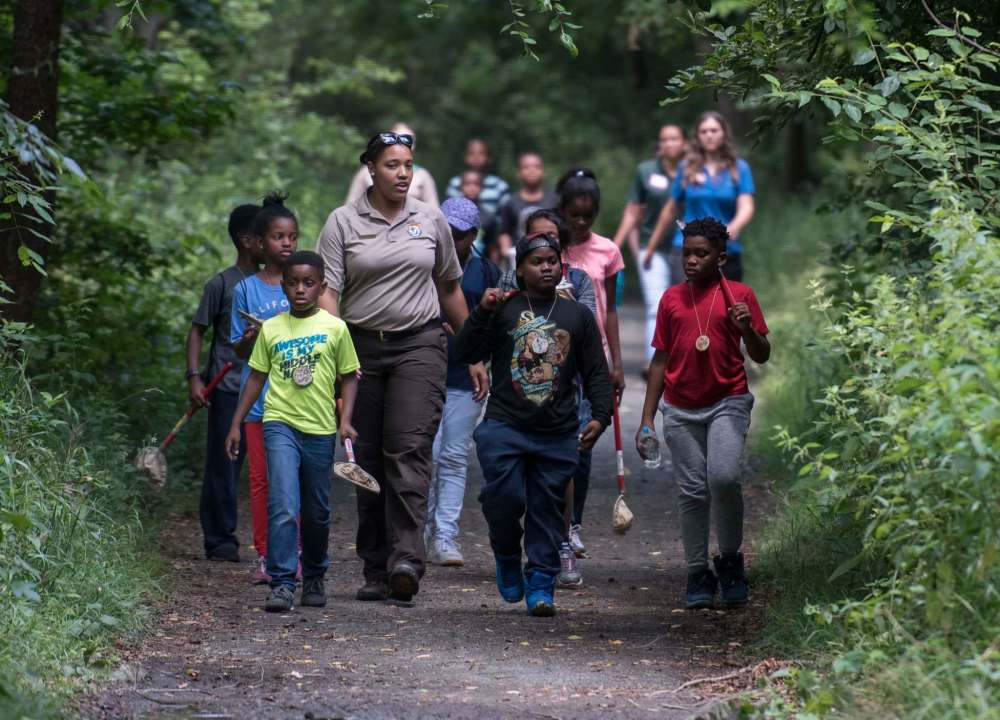
Mizejewski and Coyle agree parents who want their children to grow into adults who value and care about others should take time to explore nature with them, because caring about nature can translate into being more compassionate and caring toward other people. Here are three strategies for using the natural world to raise empathetic children:
Create an awareness of backyard wildlife
Why? Learning about and observing nature can contribute to your child’s sense of empathy.
How? Coyle advises parents to think about teaching kids empathy with the help of nature as they would any other learning experience. The first stage is awareness. Give your child something to focus on, such as a mother raccoon you might come across if you’re out early, a bird’s nest or even ordinary insects. Talk about how the wild animals living around us deserve respect and understanding as they care for themselves and their young, just as many humans do.
Try this:
Start a birding journal and make notes about birds you observe during neighbourhood walks.
Read about nature together and talk about topics such as where chipmunks live, what they need to survive and what challenges they face.
Grab a magnifying glass and head outside for a game of bug bingo, a fantastic way to make outdoor learning fun.
Help backyard wildlife
Why? Now that your kids understand the wildlife around them a little better, they will begin to connect what they know to others in general. When a child contemplates what raccoons, butterflies or native songbirds need to survive, the thought process builds empathy, Coyle says.
How? Kids need help from parents to put what they know into action and make the connection between something they do and the benefits to someone else. For example, brainstorm with your young child about ways he or she could help bees, such as creating a simple watering station for pollinators. Try to develop his or her understanding that there is a direct relationship between his or her action and helping to meet another animal’s survival needs.
Try this:
Set up a bird feeder, especially in the winter. Observe birds that visit. Let your child help refill the feeder. Talk about how birds need to eat just like we do.
Plant a caterpillar host plant, such as milkweed. You might end up with monarch butterflies to observe. Plant parsley, dill or fennel to attract black swallowtails.
Clean up litter in your neighbourhood to help keep wildlife safe from eating, sticking to or getting entangled in dangerous human trash.
Work with your child to turn part of your yard into a wildlife habitat garden. This involves thinking about the needs of local wild animals and providing native plant species, water, nesting boxes and other habitat features in a natural yard. It’s a great way to get kids engaged with helping local wildlife. Older kids can expand into raising money for a wildlife rescue organization or collecting items on the organization’s wish list from friends and family.
Plan meaningful outdoor experiences
Why? Simply getting outdoors is so basic, yet so important for your kids’ growth as an empathetic human, Mizejewski says. It might not sound like a big deal, but spending time in nature with your child can be hugely significant in how your child ends up relating to the natural world, and to others.
How? Focus on interpreting nature together and enabling your child to learn about things outside him or herself, to foster empathy.

Try this:
Spend time on a regular basis in a relatively wild, natural setting such as a nearby park. Notice and discuss the changes in the environment and how wild animals cope as the weather changes.
Focus on nature, not other things like sporting activities. Get in the habit of pointing out relationships that animals have to nature and what’s involved in their survival, such as where an opossum sleeps or where a mother fox might build a den to keep her kits safe.
Give your children opportunities to discover, observe and identify different types of grasshoppers and woodpeckers, for example, and praise their efforts. Those experiences out in nature where kids are learning are “highly affirming,” Coyle says. They can also inspire a lasting affinity for the outdoors.
— Washington Post