Where’s the line on screen time for kids, parents ask
Advertisement
Read this article for free:
or
Already have an account? Log in here »
To continue reading, please subscribe:

Digital Subscription
One year of digital access for only $205*
- Enjoy unlimited reading on winnipegfreepress.com
- Read the E-Edition, our digital replica newspaper
- Access News Break, our award-winning app
- Play interactive puzzles
*First annual payment billed as $205.00 + GST for one year. This annual subscription will automatically renew at $233.00 + GST every 52 weeks (10% off the regular annual price of $259.35). Offer available to new and qualified returning subscribers only. Cancel any time.
To continue reading, please subscribe:
Add Free Press access to your Brandon Sun subscription for only an additional
$1 for the first 4 weeks*
- Enjoy unlimited reading on winnipegfreepress.com
- Read the E-Edition, our digital replica newspaper
- Access News Break, our award-winning app
- Play interactive puzzles
*Your next Brandon Sun subscription payment will increase by $1.00 and you will be charged $17.95 plus GST for four weeks. After four weeks, your payment will increase to $24.95 plus GST every four weeks.
Read unlimited articles for free today:
or
Already have an account? Log in here »
Hey there, time traveller!
This article was published 30/12/2018 (2795 days ago), so information in it may no longer be current.
“Is it true that Silicon Valley tech executives don’t let their kids use screens?” I was on the East Coast speaking with parents and once again was asked the question I can’t seem to escape.
I’ve observed with curiosity the ongoing buzz about how Silicon Valley parents — particularly those who are technology executives and investors — keep their children off screens. These stories tend to create low-grade anxiety as well as a parent-shaming aimed at those who let their kids use screens.
Over the past 15 years, I’ve worked as an educational consultant focused on executive-functioning issues with tweens and teens in an office near Google’s, Facebook’s and Apple’s main campuses. More than a thousand middle school and high school students have walked into my office over the years — including those whose parents are technology CEOs, executives, venture capitalists and other investors — to discuss their work habits, distractions and the effects of everyday technology in their lives.
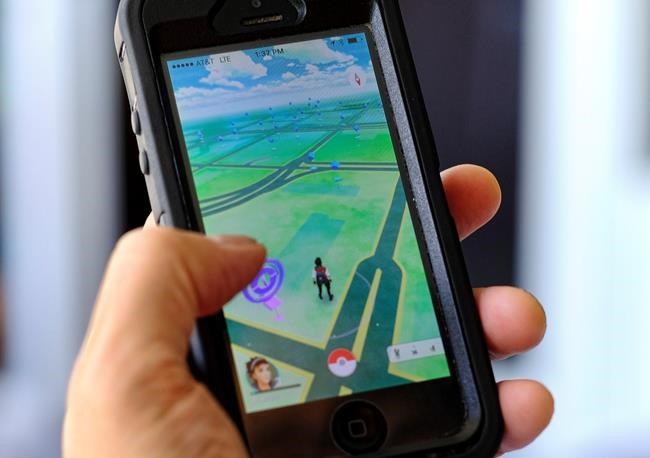
It’s no secret that social media and technology use have become a hot topic countrywide — especially because there has been little research into the relationship between teens’ technology and social media use and long-term brain development and mental wellness.
After spending the past year travelling to more than 35 cities across the country consulting with schools on social media, technology and student wellness issues, as well as visiting many of the schools in Silicon Valley, I’ve found it’s a fallacy that most parents working in technology want their kids to live completely screen-free lives. It certainly may be easier to keep younger children from using screens, but all the Silicon Valley parents I interviewed agreed it isn’t realistic once children are school-aged. Instead, they are focused on finding ways to make sure their kids have healthy experiences online and in real life — and, in some ways, are further along than other parents in doing so.
Take, for example, Loren Cheng, director of product management for Facebook Messenger Kids and father of a preschooler, a second-grader and a fifth-grader. He lets his children use technology to promote creation, collaboration or communication. His second-grader loves Minecraft and recently used online video tutorials to build an elaborate castle with underground traps. His fifth-grader messages him in the afternoon when he is still at work, conversations he’s not sure they would have otherwise.
These activities point to an important and often overlooked distinction in how and when technology is used. For instance, a child passively staring at a screen is different from one who is actively communicating with a grandparent via FaceTime or using online tools to develop creative projects, say, to create animation or edit videos.
For younger kids, strict guidelines can be critical. But as children get older, it’s important for parents to have conversations with them and to establish times for them to be offline. Monitoring apps such as Bark or OurPact work best in concert with conversations around use, not in lieu of them. Of course, what works for one family might not work for another. But as a rule, it is often more effective to put rules in place proactively rather than to try to cut back on screen time once a child has already developed habits.
“The only thing that works (for us) is very rigid rules,” says Mike Popek, who worked at Google for nearly 14 years in different management roles — and went to junior high and high school with me. He and his wife have three children, ages nine, seven and three, and live in Palo Alto, Calif.
His older children are each allowed an hour of screen time per night at the computer in the living room — but only after homework is done and dinner has been served. The family makes no distinction between educational videos and interactive experiences and scrolling through information online during that hour. So even though his kids use screens on a regular basis, he admits that “we’re probably stricter than most.”
“There’s no way you can just say no to screens. It’s not possible,” Popek says. “They’ll be at a huge disadvantage in their lives if they have no experience with this type of technology.”
Dan Zigmond, director of analytics at Instagram, has two daughters, 16 and 18, both of whom have smartphones and regularly spend time online and using different apps. For him, “it’s less about having strict rules and more about just having lots of conversations about it.” His children will call him out if they think he is on his phone too much, and as a family they don’t have screens at mealtimes. They will “sometimes take vacations where we’re completely off the grid.”
Helping children and teens create consistent, compartmentalized time offline is key, though what that looks like can differ depending on children’s ages and their susceptibility to overusing technology.
To help tweens and teens become more aware, I recommend parents require kids to do a little research before downloading any new apps or opening new online accounts. Who founded and created the app? Have there been any recent related scandals in the news? Can they find out anything about the app’s data privacy and cybersecurity issues? This process of investigation can help kids actively reflect on how and where they should spend time online. And, I should add, it’s no less applicable for apps that are marketed as educational, as the FBI recently warned.
In the end, as Instagram’s Zigmond puts it, “the basic issues around parenting and helping to set boundaries and helping kids make healthy choices around all kinds of things are kind of the same, no matter what.” Parents around the country are more in line with Silicon Valley parents than they might believe: we’re all trying to figure it out in an ever-changing digital world. It’s a good idea to keep up the pressure on companies to protect children. And less shaming and more proactive solutions will go a long way in creating a safer, happier, healthier world for kids online and in real life.
Homayoun is an author of three books, including Social Media Wellness: Helping Tweens and Teens Thrive in an Unbalanced Digital World.
— Washington Post