Routine food inspections halted by US government shutdown

Advertisement

Advertise with us

NEW YORK - Routine food inspections aren't getting done because of the partial government shutdown, but checks of the riskiest foods are expected to resume next week, the Food and Drug Administration said Wednesday.

Read this article for free:


or

Already have an account? Log in here »

To continue reading, please subscribe:

Subscribe and receive a limited-edition Free Press branded hat or tote.

Digital Subscription

One year of digital access for only $205*

  • Enjoy unlimited reading on winnipegfreepress.com
  • Read the E-Edition, our digital replica newspaper
  • Access News Break, our award-winning app
  • Play interactive puzzles

*First annual payment billed as $205.00 + GST for one year. This annual subscription will automatically renew at $233.00 + GST every 52 weeks (10% off the regular annual price of $259.35). Offer available to new and qualified returning subscribers only. Cancel any time.

To continue reading, please subscribe:

Add Free Press access to your Brandon Sun subscription for only an additional

$1 for the first 4 weeks*

  • Enjoy unlimited reading on winnipegfreepress.com
  • Read the E-Edition, our digital replica newspaper
  • Access News Break, our award-winning app
  • Play interactive puzzles
Start now

*Your next Brandon Sun subscription payment will increase by $1.00 and you will be charged $17.95 plus GST for four weeks. After four weeks, your payment will increase to $24.95 plus GST every four weeks.

Hey there, time traveller!
This article was published 09/01/2019 (2773 days ago), so information in it may no longer be current.

NEW YORK – Routine food inspections aren’t getting done because of the partial government shutdown, but checks of the riskiest foods are expected to resume next week, the Food and Drug Administration said Wednesday.

The agency said it’s working to bring back about 150 employees to inspect riskier foods such as cheese, infant formula and produce. FDA Commissioner Scott Gottlieb said the agency can’t make the case that “a routine inspection of a Nabisco cracker facility” is necessary during the shutdown, however.

The FDA doesn’t oversee meat and poultry and those inspections are continuing.
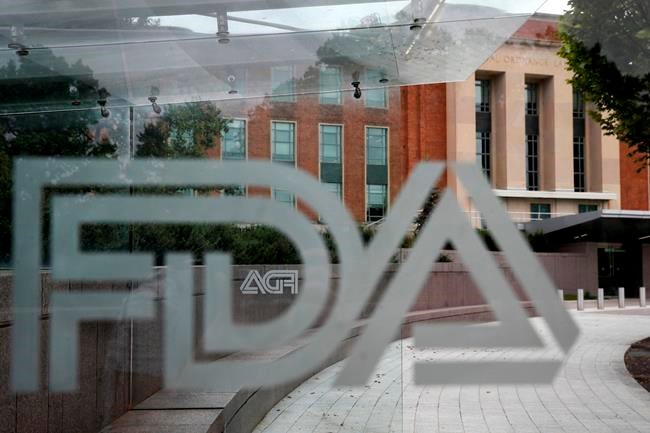
This Aug. 2, 2018, file photo shows the U.S. Food and Drug Administration building behind FDA logos at a bus stop on the agency's campus in Silver Spring, Md. The U.S. government isn’t doing routine food inspections because of the partial federal shutdown, but checks of the riskiest foods are expected to resume next week. The FDA said Wednesday, Jan. 9, 2019, that it's working to bring back about 150 employees to inspect riskier foods such as cheese, infant formula and produce. (AP Photo/Jacquelyn Martin, File)

Gottlieb said FDA inspections would have ramped up this week for the first time since the holidays, so the lapse in inspections of high-risk foods will not be significant if they resume soon. He said his concern would grow if those inspections were halted for several weeks.

The FDA conducts about 8,400 domestic inspections a year, or an average of 160 a week, Gottlieb said. He said about a third inspections are at places that handle high-risk foods. Factors that determine whether a food is more susceptible to contamination include the type of food, how it’s made, and the facility’s history of violations.

The FDA oversees about three-quarters of the food supply, including packaged foods and produce. The agency said all imported foods will continue to be inspected and that critical functions, such as monitoring for food poisoning outbreaks, remain up and running. Sampling of some foods such as frozen berries for contamination has also continued, Gottlieb said.

The Centers for Disease Control and Prevention, which helps with tainted food outbreaks, is not affected by the partial shutdown and on Wednesday said the E. coli outbreak linked to romaine lettuce appears to be over . The FDA said its investigation into that outbreak will also continue.

The Department of Agriculture has said its inspections of meat, poultry and processed eggs will continue, and that 89 per cent of its food safety employees are still working. Restaurants are overseen by local health agencies.

Sarah Sorscher, deputy director of regulatory affairs at the Center for Science in the Public Interest, said the FDA’s short-term lapse in routine food inspections isn’t a cause for worry, but will be if the shutdown continues.

“That’s more and more issues they’re potentially not catching,” she said.

She said a long shutdown could hinder the FDA’s work on implementing new food safety standards .

In 2017, a government report noted the number of facilities the FDA inspects has declined, and that it did not always take effective action to ensure violations were corrected. The report noted that the agency inspected about 19 per cent of all food facilities in 2015.

___

The Associated Press Health and Science Department receives support from the Howard Hughes Medical Institute’s Department of Science Education. The AP is solely responsible for all content.


Report Error Submit a Tip

More Stories

Differing goals of religion, politics

John R. Wiens 5 minute read 2:00 AM CDT

Kudos to David Driedger for modelling a more appropriate and constructive role for religion in politics than the one that has become commonplace today (“Take care of them; there is enough”, Think Tank, July 27).

Resisting the temptation to preach, coerce and control, he has chosen to remind, persuade and challenge. It could hardly more different to what we are witnessing everyday to the south of us. I thank him for his humility, courage and sense of responsibility to humanity.

Our recent experiences with religion’s forays into the political realm, both in the U.S. and parts of Canada have done little to endear us to either one. Religious fundamentalism, in its many forms, has wrought untold havoc on governments across the globe, with some of the most toxic iterations being right on our doorsteps — we might even call it a form of domestic terrorism.

In the U.S., Christian nationalism, represented by MAGA, has contaminated government and ordinary lives like a hazardous toxin escaping containment — corroding and poisoning the presidency, the legislature, the court system and law enforcement, and in the process threatening the very relationships which make a civilized society possible. Simply put, the positive ideal of godliness in the American constitution, which emphasized tolerance for, acceptance of and upheld the equal worth of all peoples is in peril.

Democracy is a civic election issue

Erna Buffie 5 minute read Preview

Democracy is a civic election issue

Erna Buffie 5 minute read 2:00 AM CDT

Scott Gillingham should be worried — very, very worried. Not just because he’ll likely win the upcoming mayoral race for no better reason than the lack of a tenable, progressive alternative, but because longtime, and in some cases, progressive councillors are currently quitting his administration.

And they’re not going quietly.

Just take Coun. Sherri Rollins’ (Fort Rouge – East Fort Garry) recent announcement that she would not be seeking re-election. When she cited the reasons she won’t be running again, she dropped a bit of a bombshell.

In addition to citing the mayor’s lack of transparency on issues such as homelessness, she also observed that he and his advisers “increasingly sideline the public service.”

Read
2:00 AM CDT

Let’s move forward on disability rights

David Kron 5 minute read 2:00 AM CDT

Tyson Sylvester wants to study computer science.

He has the intelligence, the determination, and the ambition to succeed in post-secondary education. Like thousands of young Manitobans graduating from high school, he wants to pursue higher education and build a career.

Instead, he is spending his young adult life fighting the provincial government to simply receive the supports he needs to get there.

Tyson lives with cerebral palsy, is blind and uses a wheelchair. The irony here is that Tyson can’t get government support because he scored too high on an IQ test.

Meeting shines spotlight on internet safety

Maggie Macintosh 5 minute read 3:00 AM CDT

Concerns about status-quo literacy curriculum and website terms-of-service were repeatedly raised at a public consultation on how the provincial government can better protect internet users.

Roughly 50 people gathered in Winnipeg to weigh-in on how local governments should regulate personal data collection and artificial intelligence on Wednesday.

“The average person that selects ‘cookies’ has no idea what that means,” said Alan Campbell, a father of two and longtime school trustee who attended the evening event at St. Vital’s Norberry-Glenlee Community Centre.

Manitoba’s innovation and new technology department has hired KPMG to collect feedback and compile a report on recommendations for future AI use and cybersecurity incident reporting in the public sector.

A Winnipeg home with a mountain view? You won’t find a real one, but AI-generated visual suggests otherwise

Gabrielle Piché 6 minute read Preview

A Winnipeg home with a mountain view? You won’t find a real one, but AI-generated visual suggests otherwise

Gabrielle Piché 6 minute read Tuesday, Aug. 11, 2026

Manitoba’s mountain range peeked out behind a Scotia Street home.

At least, it did in a photo attached to a real estate listing for 232 Scotia St. in Winnipeg’s (flat) Seven Oaks neighbourhood.

Another picture — now removed — showed a cartoon cityscape viewable from the bungalow’s front porch.

Both photos had tags in their bottom left corners: “AI-generated content.”

Read
Tuesday, Aug. 11, 2026

Dealing with what’s left behind … in the cloud

Editorial 4 minute read Preview

Dealing with what’s left behind … in the cloud

Editorial 4 minute read 2:01 AM CDT

Sooner or later, we will all face it; if we’re wise, we plan for its arrival.

Death.

Notwithstanding the pithy observation of 18th-century American statesman Benjamin Franklin regarding the inescapable nature of taxes, the only real inevitability in each of our lives is that it will end. And when it does, those left behind to (one hopes) mourn our passing are always left with the unenviable chore of tying up multitudinous loose ends.

What comes to mind first are familiar material considerations such as wills, finances, property divestiture and the burdensome responsibility of sorting through and disposing of a lifetime’s worth of accumulated clothing, furniture, vehicles and all manner of personal belongings. These jobs are made immeasurably easier if the departed has left specific and detailed instructions and documentation for those tasked with sorting it all out.

Read
2:01 AM CDT