Woodpecker damage? Try scare tactics, redirection
Advertisement
Read this article for free:
or
Already have an account? Log in here »
To continue reading, please subscribe:

Digital Subscription
One year of digital access for only $205*
- Enjoy unlimited reading on winnipegfreepress.com
- Read the E-Edition, our digital replica newspaper
- Access News Break, our award-winning app
- Play interactive puzzles
*First annual payment billed as $205.00 + GST for one year. This annual subscription will automatically renew at $233.00 + GST every 52 weeks (10% off the regular annual price of $259.35). Offer available to new and qualified returning subscribers only. Cancel any time.
To continue reading, please subscribe:
Add Free Press access to your Brandon Sun subscription for only an additional
$1 for the first 4 weeks*
- Enjoy unlimited reading on winnipegfreepress.com
- Read the E-Edition, our digital replica newspaper
- Access News Break, our award-winning app
- Play interactive puzzles
*Your next Brandon Sun subscription payment will increase by $1.00 and you will be charged $17.95 plus GST for four weeks. After four weeks, your payment will increase to $24.95 plus GST every four weeks.
Read unlimited articles for free today:
or
Already have an account? Log in here »
Hey there, time traveller!
This article was published 22/01/2019 (2736 days ago), so information in it may no longer be current.
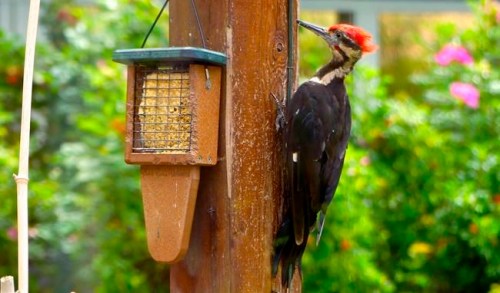
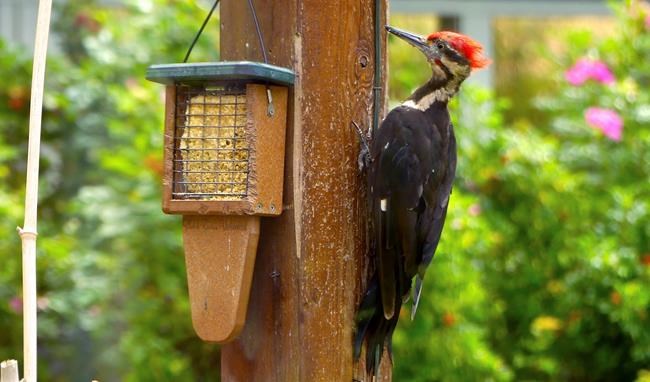
Woodpeckers, flickers and sapsuckers may be fun for birders to watch but they can be troublesome — pecking holes in dwellings, shredding feeders, enlarging cavities in trees, and driving you to distraction by drumming on wooden or metal surfaces.
“Woodpeckers can damage homes, especially those with cedar siding, or homes that are painted brown, making them look like a giant tree trunk,” said Clifford Shackelford, Texas Parks and Wildlife Department ornithologist. “These conditions also attract carpenter bees, which bore holes in order to lay their eggs.”
Woodpeckers hammer or peck on wood or metal for three reasons, Shackelford said. First is foraging or seeking food. Second is drumming, when a male during the extensive spring mating season lays claim to a territory by tapping on wood or metal. And third is excavating for a place to build a nest and rear young.
What’s a harried homeowner to do?
“Since all species of woodpeckers are protected by state and local laws across the United States, lethal solutions or killing these birds is not an option,” Shackelford said in an email.
That leaves benign solutions. Several to consider:
–Woodpeckers need trees for shelter and food. Redirect them to different wooded locations. Place birdfeeders at distant sites, leave snags (dead branches or standing trees) on the property, build large nesting or roosting boxes, repair and cover damaged areas of the home or, if all else fails, try a pest control service.
–Frighten or scare. These bird-proofing options include displaying predator decoys, hanging reflective or colorful items, creating loud noises, or introducing odour or flavour repellents.
Predator-like decoys can lessen the degree of woodpecker damage but won’t discourage the birds for long, said Marvin Reynolds, an area director for Colorado State University Extension.
“They can become used to owls, hawks or snakes in an area,” Reynolds said. “If the predator doesn’t move, they will realize it’s not a threat.”
Stuffing insulation into woodpecker-carved cavities also is a short-term stopgap since the birds simply will remove it, he said.
Pepper sprays are only a temporary fix and need to be re-applied after it rains or snows.
“Hanging an old CD or DVD that can spin in the wind seems a good deterrent,” Reynolds said. “Foil strips work the same way.”
The sun’s reflection from a mirror also will scare birds, he said.
Here’s what not to do:
–Don’t trap, capture, injure or kill woodpeckers. Do not remove eggs from their nests.
–Refrain from using sticky substances that could be toxic or coat the birds’ feathers. Those also could stain furniture and buildings.
–Do not use insecticides to try to eliminate woodpecker food sources. They have many adverse effects, including thinning already scarce pollinator populations.
It’s not true that woodpeckers, flickers and sapsuckers kill trees, Shackelford said.

“It’s guilt by association because woodpeckers are observed foraging on dead or dying trees that are swarming with hidden insects, namely beetle larvae under the bark or deep inside the wood, that serve as woodpecker food,” he said. “Actually, woodpeckers are beneficial because they can help keep numbers of these sorts of insects in check.”
___
Online: For more about preventing woodpecker damage, see this handbook from the Internet Center for Wildlife Damage Management:
http://www.icwdm.org/handbook/birds/Woodpeckers.asp
You can contact Dean Fosdick at deanfosdick@netscape.net