AP Exclusive: US Nobelist was told of gene-edited babies

Advertisement

Advertise with us

Long before the claim of the world's first gene-edited babies became public, Chinese researcher He Jiankui shared the news with a U.S. Nobel laureate who objected to the experiment yet remained an adviser to He's biotech company.

Read this article for free:


or

Already have an account? Log in here »

To continue reading, please subscribe:

Subscribe and receive a limited-edition Free Press branded hat or tote.

Digital Subscription

One year of digital access for only $205*

  • Enjoy unlimited reading on winnipegfreepress.com
  • Read the E-Edition, our digital replica newspaper
  • Access News Break, our award-winning app
  • Play interactive puzzles

*First annual payment billed as $205.00 + GST for one year. This annual subscription will automatically renew at $233.00 + GST every 52 weeks (10% off the regular annual price of $259.35). Offer available to new and qualified returning subscribers only. Cancel any time.

To continue reading, please subscribe:

Add Free Press access to your Brandon Sun subscription for only an additional

$1 for the first 4 weeks*

  • Enjoy unlimited reading on winnipegfreepress.com
  • Read the E-Edition, our digital replica newspaper
  • Access News Break, our award-winning app
  • Play interactive puzzles
Start now

*Your next Brandon Sun subscription payment will increase by $1.00 and you will be charged $17.95 plus GST for four weeks. After four weeks, your payment will increase to $24.95 plus GST every four weeks.

Hey there, time traveller!
This article was published 28/01/2019 (2757 days ago), so information in it may no longer be current.

Long before the claim of the world’s first gene-edited babies became public, Chinese researcher He Jiankui shared the news with a U.S. Nobel laureate who objected to the experiment yet remained an adviser to He’s biotech company.

The revelation that another prominent scientist knew of the work, which was widely condemned when it was revealed, comes as scientists debate whether and how to alert troubling research, and the need for clearer guidelines.

Emails obtained by The Associated Press under a public records request show that Nobel Prize winner Craig Mello of the University of Massachusetts learned about the pregnancy last April from He in a message titled “Success!”
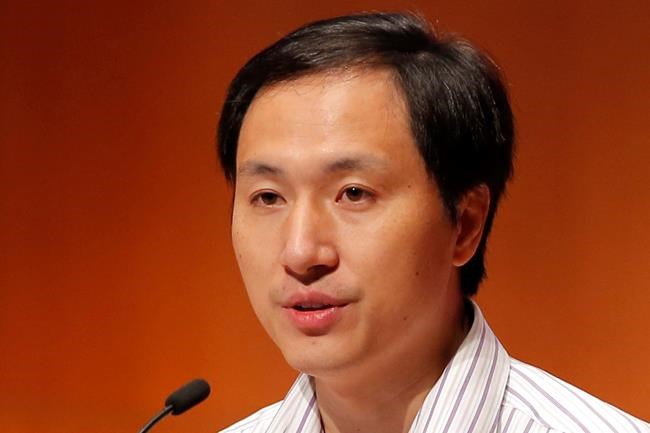
FILE - In this Nov. 28, 2018, file photo, He Jiankui, a Chinese researcher, speaks during the Human Genome Editing Conference in Hong Kong, where he made his first public comments about his claim to have helped make the world's first gene-edited babies. Emails obtained by The Associated Press show He told Nobel laureate Craig Mello about the gene-edited babies in April 2018, months before the claim became public. Mello objected to the experiment and remained an adviser to He's biotech company for eight more months before resigning. (AP Photo/Kin Cheung, File)

“I’m glad for you, but I’d rather not be kept in the loop on this,” Mello replied. “You are risking the health of the child you are editing … I just don’t see why you are doing this. I wish your patient the best of luck for a healthy pregnancy.”

Mello stayed on as a scientific adviser for He’s Direct Genomics company for eight more months, until December, just after news of the births became public and drew international scorn. The Chinese scientist’s gene-editing work was not a company experiment. He tried to alter the genes of twin girls to help them resist possible future infection with HIV, the AIDS virus.

Several U.S. researchers knew or strongly suspected He was considering trying embryo gene editing, and his disclosure to Mello in April is notable because it specified the pregnancy had been achieved, and came on the day He himself said he learned of it.

Editing embryos intended for a pregnancy is not allowed in the U.S. and many other places because of the risk of harming other genes and concerns that these DNA changes can be passed to future generations. But there’s no certain way to stop a rogue scientist from experimenting, no matter what rules are in place, because the gene-editing technology is cheap and easy to use.

It’s not clear how someone would have raised concerns about He’s project, said University of Wisconsin bioethicist Alta Charo, who was one of the leaders of the Hong Kong gene-editing conference where He gave details of the experiment. He’s work has not been published in a scientific journal.

University of Minnesota bioethicist Leigh Turner said the lack of action by scientists who learned of He’s intentions indicates a broader culture of silence. “There seems to have been multiple lost opportunities,” Turner said.

Last week, China’s state media reported that He could face consequences after investigators determined he acted alone and fabricated an ethics review by others. The Xinhua report said the twins and people involved in a second, ongoing pregnancy with a gene-edited embryo will remain under medical observation with regular visits supervised by government health departments. Efforts to reach He were unsuccessful.

Mello declined requests for an interview. In statements provided through his university, Mello said he had no idea He was “personally interested” in human gene editing or had the means to pull it off, and that their discussions were “hypothetical and broad.” Mello repeated his disapproval of He’s project and said he resigned from Direct Genomics’ scientific advisory board because he felt that a company led by He could no longer be effective.

Mello said he started on the board in October 2017, and said he didn’t accept compensation for the role. A representative for his university said faculty members are allowed to serve on scientific advisory boards. Mello is paid by the Howard Hughes Medical Institute, which also supports AP’s Health & Science Department. Mello’s work with Direct Genomics was not as an HHMI representative, according to the university and an email from an HHMI lawyer to He.

According to a statement Mello’s university provided, He approached Mello during a break at a company meeting in November 2017 to talk about the possibility of using the powerful gene-editing tool CRISPR to prevent HIV infection from parent to child. The statement said Mello said he had no idea of He’s intention to try this himself.

After the meeting, emails show that Mello connected He to a colleague for advice on “pediatric HIV transmission risks for a therapy he is contemplating.”

Infectious disease expert Dr. Katherine Luzuriaga replied that she looked forward to talking. She did not respond to requests for an interview. The university released a statement saying that Luzuriaga and He had a brief phone call, and that she was not aware the advice she was providing could be for He’s work on gene-edited embryos.

In April, He emailed Mello: “Good News … the pregnancy is confirmed!” He asked Mello to keep the news confidential.

Mello, who won a Nobel in 2006 for genetics research, expressed concern about health risks.

“I think you are taking a big risk and I do not want anyone to think that I approve of what you are doing,” he wrote. “I’m sorry I cannot be more supportive of this effort, I know you mean well.”

The emails show Mello attended another Direct Genomics meeting in China in November, about a week before the Hong Kong conference where He made his claim public.

Mello’s statement said he resigned from the company’s scientific advisory board on Dec. 6.

___

Follow Candice Choi at @candicechoi and Marilynn Marchione at @MMarchioneAP

___

The Associated Press Health and Science Department receives support from the Howard Hughes Medical Institute’s Department of Science Education. The AP is solely responsible for all content.
Report Error Submit a Tip

More Stories

Proposed Transcona development — which could add 20,000 people — gets thumbs down from residents

Joyanne Pursaga 5 minute read Preview

Proposed Transcona development — which could add 20,000 people — gets thumbs down from residents

Joyanne Pursaga 5 minute read Friday, Aug. 14, 2026

Dozens of Winnipeggers fear plans to make way for up to 20,000 more people to live in south Transcona would dramatically alter their neighbourhood and tie hefty fees for new services to their property titles.

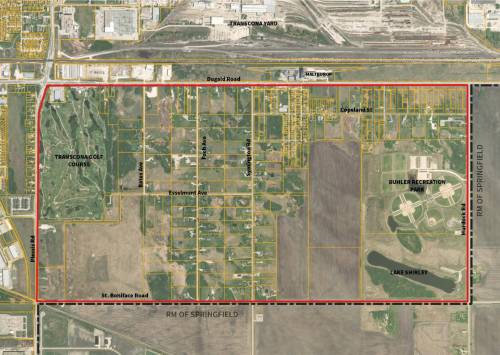
If city council adopts the proposed South Transcona secondary plan, all future development applications would need to conform to its goals. The affected area is located south of Dugald Road, north of St. Boniface Road, east of Plessis Road and west of Murdock Road.

Homeowner Virginia Page Jähne fears the plan could add a massive tab to the title of her 4.3-acre property to cover services required for the development.

“My main concern is that they are wanting to put $1.4 million onto my title to pay for this. Now, they say that I will not have to pay it unless I subdivide. But if a person comes by and wants to buy from me … and they see that $1.4 million … what’s the first thing (they’re) going to do?” said Page Jähne, in an interview.

Read
Friday, Aug. 14, 2026

Development turning long-vacant gas station in Selkirk into commercial hub

By Tiago Resko 2 minute read Preview

Development turning long-vacant gas station in Selkirk into commercial hub

By Tiago Resko 2 minute read Thursday, Aug. 13, 2026

A plot of land that has sat vacant in Selkirk for 30 years is being redeveloped to host new businesses in the heart of the city.

The former gas station site on Main Street — between Rosser and Pacific avenues — will be turned into a commercial hub that will be home to six local businesses, and will be a big stepping stone for economic growth in Selkirk, Mayor Larry Johannson said Thursday.

“For decades this site has been a reminder of what once was. Today, it represents what is possible when investors see the potential of our community and choose to be a part of its future,” he said in a news release announcing the project and Thursday’s groundbreaking.

“This development reflects confidence in Selkirk, our economy and the direction we are heading.”

Read
Thursday, Aug. 13, 2026

HSC weapons scanners effective, needed at other hospitals: nurses union

Carol Sanders 5 minute read Preview

HSC weapons scanners effective, needed at other hospitals: nurses union

Carol Sanders 5 minute read Yesterday at 9:57 AM CDT

The AI weapons scanners at Health Sciences Centre have detected close to 2,000 items since they were installed at Manitoba’s largest hospital.

From March 6, 2025 to the beginning of this month, a total of 1,973 items had been flagged by the scanners and identified for further review, Shared Health said this week.

Knives, Swiss army knives and other multi-tools, drugs, alcohol, box cutters, syringes and other injection devices were detected, it said. The technology set up at entrances to the adult and children’s emergency rooms and the crisis response centre is designed to identify a wide range of objects that may require review under site safety protocols.

But Manitoba Nurses Union president Darlene Jackson said the technology isn’t available everywhere at HSC, and a sawed-off rifle was discovered in the adult ER earlier this month.

Read
Yesterday at 9:57 AM CDT

Foster mom pleads guilty to assault that left six-year-old-girl paralyzed

Dean Pritchard 4 minute read Preview

Foster mom pleads guilty to assault that left six-year-old-girl paralyzed

Dean Pritchard 4 minute read Friday, Aug. 14, 2026

A Winnipeg foster mother has admitted to violently assaulting her ill foster daughter and leaving her paralyzed after the girl resisted the woman’s efforts to provide her with medication, a court has heard.

Marilyn Keno, 26, pleaded guilty Friday to one count of aggravated assault.

Keno remains in custody and will be sentenced at a later date following the completion of a court-ordered pre-sentence report.

The maximum sentence for aggravated assault is 14 years in prison. Crown attorney Alanna Littman and defence lawyer Jeremy Kostiuk did not disclose what sentences they will be recommending.

Read
Friday, Aug. 14, 2026

Oliveira shines in win over Redblacks, Collaros rocked again

Taylor Allen 5 minute read Preview

Oliveira shines in win over Redblacks, Collaros rocked again

Taylor Allen 5 minute read Yesterday at 8:57 PM CDT

It wasn’t a stellar performance by any stretch.

But at this point, the Winnipeg Blue Bombers will take a win no matter what it looks like.

The Blue and Gold outlasted the winless Ottawa Redblacks 33-21 on a rainy Friday night at Princess Auto Stadium to improve to 5-4.

“It’s great to finally get a win at home for our fans and to go out and play a better game is very encouraging,” said right guard Patrick Neufeld.

Read
Yesterday at 8:57 PM CDT

Bombers manage to hand Redblacks another loss

Taylor Allen 7 minute read Preview

Bombers manage to hand Redblacks another loss

Taylor Allen 7 minute read Updated: Yesterday at 8:35 AM CDT

It looked bad. Real bad.

Winnipeg Blue Bombers quarterback Zach Collaros made his return to the lineup on Friday night against the Ottawa Redblacks, and he was once again the victim of a blindside hit.

The one he suffered in Hamilton on July 5 appeared relatively modest in comparison and yet, it sidelined him for a month with a neck injury.

So when Redblacks linebacker Lucas Cormier came around the edge unblocked and hammered Collaros from behind in the second quarter, you could hear a pin drop inside Princess Auto Stadium.

Read
Updated: Yesterday at 8:35 AM CDT