Telemedicine’s challenge: Getting patients to click the app

Advertisement

Advertise with us

Walmart workers can now see a doctor for only $4. The catch? It has to be a virtual visit.

Read this article for free:

or

Already have an account? Log in here »

To continue reading, please subscribe:

Subscribe and receive a limited-edition Free Press branded hat or tote.

Digital Subscription

One year of digital access for only $205*

  • Enjoy unlimited reading on winnipegfreepress.com
  • Read the E-Edition, our digital replica newspaper
  • Access News Break, our award-winning app
  • Play interactive puzzles

*First annual payment billed as $205.00 + GST for one year. This annual subscription will automatically renew at $233.00 + GST every 52 weeks (10% off the regular annual price of $259.35). Offer available to new and qualified returning subscribers only. Cancel any time.

To continue reading, please subscribe:

Add Free Press access to your Brandon Sun subscription for only an additional

$1 for the first 4 weeks*

  • Enjoy unlimited reading on winnipegfreepress.com
  • Read the E-Edition, our digital replica newspaper
  • Access News Break, our award-winning app
  • Play interactive puzzles
Start now

*Your next Brandon Sun subscription payment will increase by $1.00 and you will be charged $17.95 plus GST for four weeks. After four weeks, your payment will increase to $24.95 plus GST every four weeks.

Hey there, time traveller!
This article was published 06/02/2019 (2732 days ago), so information in it may no longer be current.

Walmart workers can now see a doctor for only $4. The catch? It has to be a virtual visit.

The retail giant recently rolled back the $40 price on telemedicine, becoming the latest big company to nudge employees toward a high-tech way to get diagnosed and treated remotely.

But patients have been slow to embrace virtual care. Eighty per cent of mid-size and large U.S. companies offered telemedicine services to their workers last year, up from 18 per cent in 2014, according to the consultant Mercer. Only 8 per cent of eligible employees used telemedicine at least once in 2017, most recent figures show.
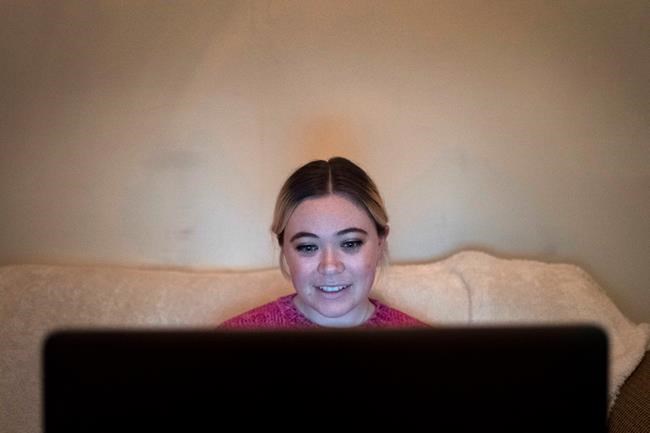
In this Jan. 14, 2019 photo, Caitlin Powers sits in the living room of her Brooklyn apartment in New York, and has a telemedicine video conference with physician, Dr. Deborah Mulligan. Widespread smartphone use, looser regulations and employer enthusiasm are helping to expand access to telemedicine, where patients interact with doctors and nurses from afar, often through a secure video connection. (AP Photo/Mark Lennihan)

“There’s an awful lot of effort right now focused on educating the consumer that there’s a better way,” said Jason Gorevic, CEO of telemedicine provider Teladoc Health.

Widespread smartphone use, looser regulations and employer enthusiasm are helping to expand access to telemedicine, where patients interact with doctors and nurses from afar, often through a secure video connection. Supporters say virtual visits make it easier for patients to see a therapist or quickly find help for ailments that aren’t emergencies. But many still fall back to going to the doctor’s office when they’re sick.

Health care experts have long said that changing behaviour can be hard. In telemedicine’s case, patients might learn about it from their employer and then forget about it by the time they need care a few months later. Plus emotions can complicate health care decisions, said Mercer’s Beth Umland.

“My little kid is sick, I want them to have the best of care right away, and for some people that might not register as a telemedicine call,” she said.

Some patients, especially older ones, also just prefer an in-person visit.

“Going to the doctor’s office is a big event in their life and something they look forward to,” said Geoffrey Boyce, CEO of InSight Telepsychiatry, which provides virtual mental health services.

Tom Hill is among that crowd. The 66-year-old from Mooresville, Indiana, said he’s never used telemedicine and has no plans to.

“I believe in a handshake and looking a guy in the eye,” said Hill during a recent shopping break at a downtown Indianapolis mall. “I don’t buy anything online either.”

But the practice does gain fans once patients try it.

Julie Guerrero-Goetsch has opened her MDLive telemedicine app several times since first using it about a year ago to get help for a sinus infection.

The Fallon, Nevada, resident was skeptical, but she didn’t have time to go in person. MDLive connected her to a doctor soon after she opened the app. She said he started asking questions about symptoms “just as if I was sitting in a doctor’s office” and prescribed an antibiotic.

Caitlin Powers tried telemedicine recently after hearing about it through a friend. The Columbia University graduate student was feeling stuffed up and worried she might be coming down with the flu. She said her appointment started on time, lasted 10 minutes, and she spoke by video with a doctor in Florida while never leaving her Brooklyn apartment.

“As a student, I don’t really have time to spend three hours waiting to see a doctor, and this was so easy,” she said.

Doctors have used telemedicine for years to monitor patients or reach those in remote locations. Now more employers are encouraging people covered under their health plans to seek care virtually for several reasons.

Telemedicine can reduce time spent away from the job, and it also can cost half the price of a doctor’s visit, which might top $100 for someone with a high-deductible plan. However, those savings can be negated if telemedicine’s convenience causes people to overuse it.

Walmart said it cut the cost for virtual visits to give another care option to the more than one million people covered by its health benefits.
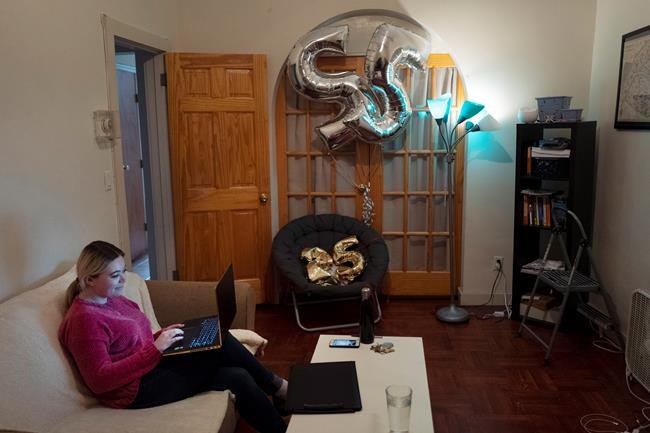
In this Jan. 14, 2019 photo, Caitlin Powers sits in the living room of her Brooklyn apartment in New York, and has a telemedicine video conference with physician, Dr. Deborah Mulligan. Widespread smartphone use, looser regulations and employer enthusiasm are helping to expand access to telemedicine, where patients interact with doctors and nurses from afar, often through a secure video connection. (AP Photo/Mark Lennihan)

Employers aren’t the only ones pushing the technology.

The drugstore chains CVS Health and Walgreens are promoting apps that let customers connect to doctors. Some insurers like Oscar Health are offering it for free to customers as a first line of treatment.

Ease of use is one of the reasons researchers and telemedicine providers think the practice will become more widespread in several areas of care. Those include dermatology and follow-up doctor visits after a surgery or medical procedure.

Mental health visits are another area ripe for virtual care because patients can feel more comfortable talking to a therapist in their own home, said Boyce of InSight Telepsychiatry, which delivers mental health care in about 30 states.

Boyce said people also like the anonymity of a virtual visit.

Mental health visits were the most common use of telemedicine by patients until primary care overtook that specialty a few years ago, Harvard’s Dr. Ateev Mehrotra and other researchers found in a recent study of claims data from a large insurer.

Research firm IHS Markit estimates that telemedicine visits in the U.S. will soar from 23 million in 2017 to 105 million by 2022. But even then, they will probably amount to only about one out of every 10 doctor visits, said senior analyst Roeen Roashan.

MDLive CEO Rich Berner said telemedicine is like the digital video recorder TiVo, which took a while to catch on with viewers.

“People were so used to doing things the other way that it just took a little while to kind of really go mainstream,” he said. “But when it did, it went mainstream big-time.”

___

Follow Tom Murphy on Twitter: @thpmurphy

___

The Associated Press Health & Science Department receives support from the Howard Hughes Medical Institute’s Department of Science Education. The AP is solely responsible for all content.

Report Error Submit a Tip

More Stories

We’re giving, they’re taking — where’s the win?

Editorial 4 minute read Preview

We’re giving, they’re taking — where’s the win?

Editorial 4 minute read 2:00 AM CDT

In the give-and-take of negotiations so far, Canada seems to be doing all the giving, while the United States does all the taking.

In the last few days, the Canadian government said it was backing away from a five per cent levy to be paid by American streaming services such as Amazon and Netflix after, earlier, dropping the three per cent digital services tax. Then, there was what now appears to be succumbing to American President Donald Trump over the Gordie Howe International Bridge, where Canada agreed to let the U.S. share the net revenues from the bridge, even though Canada paid for the entire construction.

Now, Prime Minister Mark Carney is signalling he won’t use energy exports to the United States as a bargaining chip in the current talks on the Canada-U.S.-Mexico free trade agreement, saying he didn’t “see the value” of using Canada’s energy exports to the U.S. as a trade bargaining chip.

“Canadians are reliable,” Carney said Wednesday in Red Deer, Alta. “One of the biggest commodities, arguably the best, is trust. People trust us, and so, when you’re a supplier of a key commodity, key service, you’ve got to think really hard about not supplying.”

Read
2:00 AM CDT

South Osborne residents fail in bid to prevent construction of 131-unit apartment tower

Malak Abas 4 minute read Preview

South Osborne residents fail in bid to prevent construction of 131-unit apartment tower

Malak Abas 4 minute read Wednesday, Jul. 29, 2026

A proposed 10-storey highrise on an empty south Osborne lot will move forward despite concerns from residents about the impact the building will have on nearby parking and traffic.

The city-owned lot at 425 Osborne St., which previously served as a gas station but has long sat vacant, will be developed into a mixed-use residential building with 131 units, 39 of which would be affordable, along with additional office space for the adjacent Winnipeg Transit garage and the Transit customer service centre across the street, along with a two-level parkade for tenants and Transit employees.

The property is being developed by the University of Winnipeg Community Renewal Corp. 2.0, and designed by Prairie Architects Inc.

At a meeting held by city council’s appeal committee Wednesday, several residents said while they supported the idea of more housing in the Lord Roberts neighbourhood, they had lingering concerns about the impact the development will have on the already-busy area.

Read
Wednesday, Jul. 29, 2026

Province picks CancerCare facility construction manager

Free Press staff 2 minute read 2:00 AM CDT

PCL Constructors Canada will oversee the construction management of CancerCare Manitoba’s new facility.

The provincial government awarded its contract to PCL following a competitive procurement process, a Thursday news release says.

It points to similar projects PCL has undertaken, including the Arthur J.E. Child Comprehensive Cancer Centre in Calgary and Peter MacCallum Cancer Centre in Melbourne, Australia.

In Manitoba, the new Winnipeg facility’s pre-construction phase — including design development and risk management — has launched. Leadership will work with clinicians, patients and other stakeholders throughout 2026, the news release says.

Drop bravado and cease silly summer spat

Maureen Scurfield 4 minute read Yesterday at 2:01 AM CDT

DEAR MISS LONELYHEARTS: My neighbour mowed the words “dumb ass” into my lawn, which had grown way too long while I was staying at the lake in my new cabin — for four weeks.

I agree my long front lawn got annoying to look at on our residential street. So, I got home and got out of my car, and took pictures of what he did to my lawn — in front of some neighbours for witnesses.

Then I unpacked my stuff, and that night just before bed I finally mowed the lawn with my loud mower. I did it in my own sweet time and went to bed, still mad. I honestly thought my neighbour was mostly just jealous because he doesn’t have a cabin himself!

I’d finally cooled off by noon the next day, so I went out and bought the guy a 12-pack, and left the beer on his back steps, with a card saying, “You can relax now!”

Métis federation opens Louis Riel College campus

Tyler Searle 4 minute read Preview

Métis federation opens Louis Riel College campus

Tyler Searle 4 minute read Wednesday, Jul. 29, 2026

Thirteen years after establishing the Louis Riel College, the Manitoba Métis Federation opened the doors to the school’s first official campus on Wednesday — cutting the ribbon on what it hopes will become a thriving centre for Métis education in Winnipeg.

The campus, which occupies a handful of rooms on the ground floor of the MMF’s building at 200 Main St., primarily offers courses related to health care and Indigenous-focused early childhood education, but will expand its slate of training options, said JoAnne Remillard, the federation’s education minister.

“This new campus represents opportunity, education and a commitment to creating pathways for students to achieve their goals and build successful futures,” she said.

“Everyone is excited about this.”

Read
Wednesday, Jul. 29, 2026

Decision on corridor for Trans-Canada twinning near Ontario border expected this fall, province says

Chris Kitching 4 minute read Preview

Decision on corridor for Trans-Canada twinning near Ontario border expected this fall, province says

Chris Kitching 4 minute read Wednesday, Jul. 29, 2026

The Manitoba government is taking more time to evaluate and select a preferred corridor for the twinning of a 16-kilometre section of the Trans-Canada Highway near the Ontario boundary.

An earlier timeline indicated Manitoba Transportation and Infrastructure expected to choose an alignment by the fall of 2025. A provincial spokesperson told the Free Press on Monday a decision is expected this winter, but a different spokesperson said Wednesday a decision is expected this fall.

“The department continues to evaluate corridor alternatives and will undertake additional geotechnical, environmental and design work as part of the (functional design study) to support the selection of a preferred corridor,” the spokesperson said in a statement.

The study, which will include Crown-Indigenous and public consultation, is expected to be completed in late 2027, with a detailed design to follow.

Read
Wednesday, Jul. 29, 2026