London man seems to be free of HIV in second such case

Advertisement

Advertise with us

SEATTLE - A London man appears to be free of the virus that causes AIDS after a stem cell transplant, the second success including the "Berlin patient," doctors reported.

Read this article for free:


or

Already have an account? Log in here »

To continue reading, please subscribe:

Subscribe and receive a limited-edition Free Press branded hat or tote.

Digital Subscription

One year of digital access for only $205*

  • Enjoy unlimited reading on winnipegfreepress.com
  • Read the E-Edition, our digital replica newspaper
  • Access News Break, our award-winning app
  • Play interactive puzzles

*First annual payment billed as $205.00 + GST for one year. This annual subscription will automatically renew at $233.00 + GST every 52 weeks (10% off the regular annual price of $259.35). Offer available to new and qualified returning subscribers only. Cancel any time.

To continue reading, please subscribe:

Add Free Press access to your Brandon Sun subscription for only an additional

$1 for the first 4 weeks*

  • Enjoy unlimited reading on winnipegfreepress.com
  • Read the E-Edition, our digital replica newspaper
  • Access News Break, our award-winning app
  • Play interactive puzzles
Start now

*Your next Brandon Sun subscription payment will increase by $1.00 and you will be charged $17.95 plus GST for four weeks. After four weeks, your payment will increase to $24.95 plus GST every four weeks.

Hey there, time traveller!
This article was published 04/03/2019 (2743 days ago), so information in it may no longer be current.

SEATTLE – A London man appears to be free of the virus that causes AIDS after a stem cell transplant, the second success including the “Berlin patient,” doctors reported.

The therapy had an early success with Timothy Ray Brown, a U.S. man treated in Germany who is 12 years post-transplant and still free of HIV. Until now, Brown is the only person thought to have been cured of infection with HIV, the virus that causes AIDS.

Such transplants are dangerous and have failed in other patients. They’re also impractical to try to cure the millions already infected.
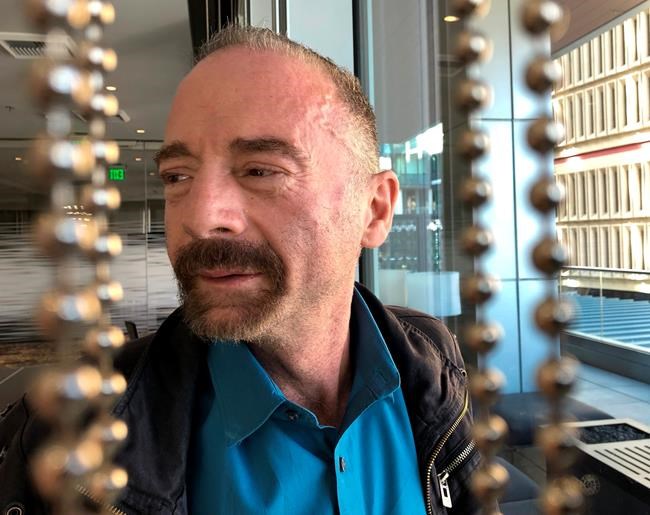
Timothy Ray Brown poses for a photograph, Monday, March 4, 2019, in Seattle. Brown, also known as the
Timothy Ray Brown poses for a photograph, Monday, March 4, 2019, in Seattle. Brown, also known as the "Berlin patient," was the first person to be cured of HIV infection, more than a decade ago. Now researchers are reporting a second patient has lived 18 months after stopping HIV treatment without sign of the virus following a stem-cell transplant. But such transplants are dangerous, cannot be used widely and have failed in other patients. (AP Photo/Manuel Valdes)

The latest case “shows the cure of Timothy Brown was not a fluke and can be recreated,” said Dr. Keith Jerome of Fred Hutchinson Cancer Research Center in Seattle who had no role. He added that it could lead to a simpler approach that could be used more widely.

The case, published online Monday by the journal Nature, was presented Tuesday at an HIV conference in Seattle.

Brown sat in the front row, stood for a round of applause and shook hands with lead researcher Ravindra Gupta of University College London after Gupta presented details on the London patient.

The patient has not been identified. He was diagnosed with HIV in 2003 and started taking drugs to control the infection in 2012. It’s unclear why he waited that long. He developed Hodgkin lymphoma that year and agreed to a stem cell transplant to treat the cancer in 2016.

With the right kind of donor, his doctors figured, the London patient might get a bonus beyond treating his cancer: a possible HIV cure.

Doctors found a donor with a gene mutation that confers natural resistance to HIV. About 1 per cent of people descended from northern Europeans have inherited the mutation from both parents and are immune to most HIV. The donor had this double copy of the mutation.

That was “an improbable event,” said Gupta. “That’s why this has not been observed more frequently.”

The transplant changed the London patient’s immune system, giving him the donor’s mutation and HIV resistance.

The patient voluntarily stopped taking HIV drugs to see if the virus would come back.

Usually, HIV patients expect to stay on daily pills for life to suppress the virus. When drugs are stopped, the virus roars back, usually in two to three weeks.

That didn’t happen with the London patient. There is still no trace of the virus after 18 months off the drugs.

Researchers from eight countries are tracking 45 patients with cancer and HIV who have or will soon have stem cell transplants. One of them, a Dusseldorf, Germany, man, is showing no signs of HIV several months after stopping treatment drugs, but it is too soon to tell if he, too, could be in remission.
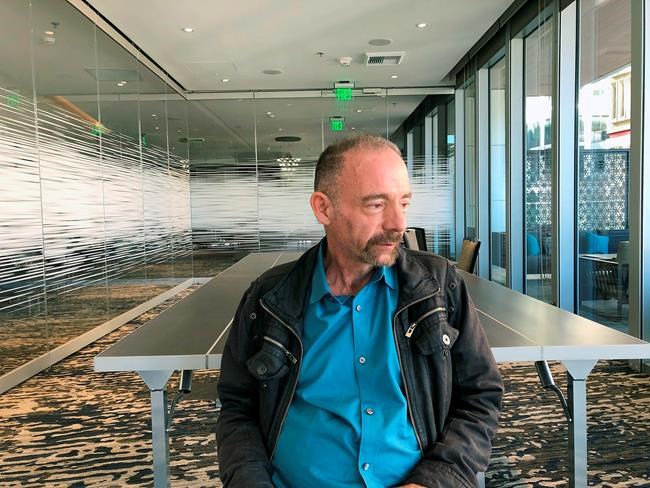
Timothy Ray Brown poses for a photograph, Monday, March 4, 2019, in Seattle. Brown, also known as the
Timothy Ray Brown poses for a photograph, Monday, March 4, 2019, in Seattle. Brown, also known as the "Berlin patient," is the first person to be cured of HIV infection. Now researchers are reporting a second patient has lived 18 months after stopping HIV treatment without sign of the virus following a stem-cell transplant. But such transplants are dangerous, cannot be used widely and have failed in other patients. (AP Photo/Manuel Valdes)

Calling the London patient “cured” is tricky, Gupta said, because there is no standard definition for how long someone must remain free of virus and off treatment drugs. “We are being cautious” to call it remission for now, he said.

Brown said he would like to meet the London patient and would encourage him to go public because “it’s been very useful for science and for giving hope to HIV-positive people, to people living with HIV,” he told The Associated Press Monday.

Stem cell transplants typically are harsh procedures which start with radiation or chemotherapy to damage the body’s existing immune system and make room for a new one. There are complications too. Brown had to have a second stem cell transplant when his leukemia returned.

Compared to Brown, the London patient had a less punishing form of chemotherapy to get ready for the transplant, didn’t have radiation and had only a mild reaction to the transplant.

Dr. Gero Hutter, the German doctor who treated Brown, called the new case “great news” and “one piece in the HIV cure puzzle.”

___

AP video journalists Manuel Valdes in Seattle and Havovi Todd in London contributed.

___

The Associated Press Health and Science Department receives support from the Howard Hughes Medical Institute’s Department of Science Education. The AP is solely responsible for all content.

Report Error Submit a Tip

More Stories

Agriculture sector wary of ‘strong headwind’ from south

Laura Rance-Unger 5 minute read Yesterday at 2:01 AM CDT

Industry analysts talked in circles on a recent webinar as they discussed the implications for agriculture of Canada’s deteriorating relationship with its largest trading partner.

On one hand, panellists for the hastily convened Canadian AgriFood Policy Institute event acknowledged the futility of negotiating on quicksand: a deal made today with the United States might be sucked into the muck tomorrow.

But on the other, webinar panellists speculated with varying degrees of optimism over what it will take to get negotiators back to bargaining.

This disconnect isn’t unique to this cluster of analysts. However, it underscores the difficulty of coming to terms with the seismic shift in America’s attitudes towards Canada.

$8.7-million detox centre called ‘high-priced drunk tank’

Carol Sanders 4 minute read Preview

$8.7-million detox centre called ‘high-priced drunk tank’

Carol Sanders 4 minute read Friday, Sep. 4, 2026

The new facility to detain people in a drug psychosis for up to 72 hours is operating the way it should, the government said Friday, even though just 26 people have been held for that purpose since it opened.

“The (protective care centre) is doing what it’s meant to do: support people, meet them where they’re at, provide a caring environment,” Addictions Minister Bernadette Smith said after updated data were posted online.

The vast majority of those detained at the 20-room facility at 190 Disraeli Fwy. were recovering from alcohol intoxication, the update shows.

In total, 4,425 people were detained from the time the site opened on Dec. 2, 2025, until June 30, for an average of less than five hours.

Read
Friday, Sep. 4, 2026

London man seems to be free of HIV in second such case

Carla K. Johnson, The Associated Press 5 minute read Preview

London man seems to be free of HIV in second such case

Carla K. Johnson, The Associated Press 5 minute read Tuesday, Mar. 5, 2019

SEATTLE - A London man appears to be free of the virus that causes AIDS after a stem cell transplant, the second success including the "Berlin patient," doctors reported.

The therapy had an early success with Timothy Ray Brown, a U.S. man treated in Germany who is 12 years post-transplant and still free of HIV. Until now, Brown is the only person thought to have been cured of infection with HIV, the virus that causes AIDS.

Such transplants are dangerous and have failed in other patients. They're also impractical to try to cure the millions already infected.

The latest case "shows the cure of Timothy Brown was not a fluke and can be recreated," said Dr. Keith Jerome of Fred Hutchinson Cancer Research Center in Seattle who had no role. He added that it could lead to a simpler approach that could be used more widely.

Read
Tuesday, Mar. 5, 2019

Mayoral candidate Gillingham vows building boom; Vogiatzakis, Woodstock promise improved safety

Joyanne Pursaga 5 minute read Preview

Mayoral candidate Gillingham vows building boom; Vogiatzakis, Woodstock promise improved safety

Joyanne Pursaga 5 minute read Friday, Sep. 4, 2026

Scott Gillingham promised several new steps to help get more homes and businesses built in Winnipeg Friday, if re-elected as mayor, amid other pledges from his competition.

Read
Friday, Sep. 4, 2026

Controlling pace of response path to success

Tim Kist 5 minute read Yesterday at 2:01 AM CDT

WITH the recent collapse of Canada-U.S. trade talks, the economic, political and social changes are coming at business leaders on a daily basis.

While you cannot control the pace of these changes, you can control the pace of response and timing of actions your organization takes. This is a time for thoughtful analysis and careful action, not chasing the latest trends.

Artificial intelligence, for example, can write articles, create images, draft emails and perform seemingly countless other tasks. But is this new tool solving a current business problem?

Successful companies know they must develop a strategy before launching any tactics. Otherwise, the strategy is based on “hope” — and we all know hope is not a strategy.

Class delayed a day after mould found in Tyndall Park school

Maggie Macintosh 6 minute read Preview

Class delayed a day after mould found in Tyndall Park school

Maggie Macintosh 6 minute read Thursday, Sep. 3, 2026

The first day of school has been postponed at École Stanley Knowles School after teachers discovered mould on chairs, rugs and other items when they were setting up their classrooms.

Families were alerted Thursday afternoon that an “HVAC malfunction” required extensive cleanup and, as a result, a one-day delay to the new year.

“I called it a couple weeks ago — it smelled really strong of mould,” said Amanda Bell, a mother who’s gone to the building regularly all summer to drop off and pick up her children from the on-site daycare.

Bell recalled she and her partner got a whiff of “wet mould” in a first-floor hallway near the library in mid-August and flagged it to an employee who told them they’d contact a custodian.

Read
Thursday, Sep. 3, 2026