WEATHER ALERT

US regulators clear path for genetically modified salmon

Advertisement

Advertise with us

NEW YORK - U.S. regulators on Friday gave the green light to salmon genetically modified to grow about twice as fast as normal, but the company behind it may face legal challenges before the fish can be sold domestically.

Read this article for free:

or

Already have an account? Log in here »

To continue reading, please subscribe:

Subscribe and receive a limited-edition Free Press branded hat or tote.

Digital Subscription

One year of digital access for only $205*

  • Enjoy unlimited reading on winnipegfreepress.com
  • Read the E-Edition, our digital replica newspaper
  • Access News Break, our award-winning app
  • Play interactive puzzles

*First annual payment billed as $205.00 + GST for one year. This annual subscription will automatically renew at $233.00 + GST every 52 weeks (10% off the regular annual price of $259.35). Offer available to new and qualified returning subscribers only. Cancel any time.

To continue reading, please subscribe:

Add Free Press access to your Brandon Sun subscription for only an additional

$1 for the first 4 weeks*

  • Enjoy unlimited reading on winnipegfreepress.com
  • Read the E-Edition, our digital replica newspaper
  • Access News Break, our award-winning app
  • Play interactive puzzles
Start now

*Your next Brandon Sun subscription payment will increase by $1.00 and you will be charged $17.95 plus GST for four weeks. After four weeks, your payment will increase to $24.95 plus GST every four weeks.

Hey there, time traveller!
This article was published 08/03/2019 (2698 days ago), so information in it may no longer be current.

NEW YORK – U.S. regulators on Friday gave the green light to salmon genetically modified to grow about twice as fast as normal, but the company behind it may face legal challenges before the fish can be sold domestically.

The Food and Drug Administration said it lifted an alert that had prevented AquaBounty from importing its salmon eggs to its Indiana facility, where they would be grown before being sold as food. The agency noted the salmon has already undergone safety reviews, and that it lifted its alert because the fish would be subject to a new regulation that will require companies to disclose when a food is bioengineered.

The move comes despite a pending lawsuit filed by a coalition of consumer, environmental and fishing groups that challenged the FDA’s approval of the fish.
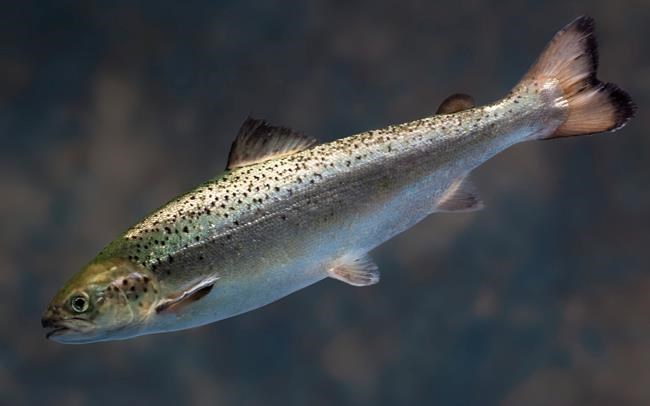
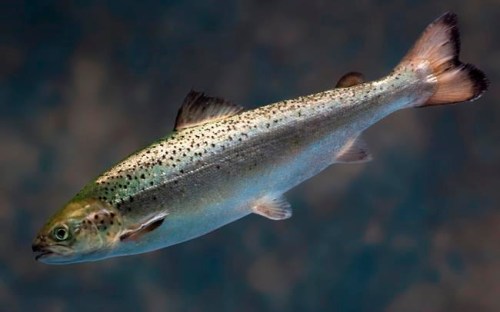
This 2009 photo provided by AquaBountyTechnologies shows a juvenile salmon raised at the company's hatchery in Fortune, Prince Edward Island, Canada. On Friday, March 8, 2019, the U.S. Food and Drug Administration said it had lifted an alert had that had prevented AquaBounty from importing its salmon eggs to its Indiana facility, where they would be grown before being sold as food. (AquaBountyTechnologies via AP)

“We think a remedy in our case would stop sale of the fish before they’re allowed to be sold,” said George Kimbrell, legal director for the Center for Food Safety, one of the groups suing the FDA.

AquaBounty was founded in 1991, and it has been working through years of safety reviews and regulatory hurdles to sell its fish in the United States. In 2015, its salmon became the first genetically modified animal approved by the FDA for human consumption. But the agency subsequently issued an alert that stopped the Maynard, Massachusetts-based company from importing its fish eggs until disclosure guidelines for genetically modified foods were resolved.

Called AquAdvantage, the fish is Atlantic salmon modified with DNA from other fish species to grow faster, which the company says will help feed growing demand for animal protein while reducing costs.

AquaBounty CEO Sylvia Wulf said the company expects to get a final certification for its Albany, Indiana, growing facility in the coming weeks. Salmon eggs could then be sent from the company’s research and development facility in Canada, and would be harvested after about 18 months when they reach 10 pounds, she said.

Wulf said it’s been difficult to engage companies in sales discussions because AquaBounty didn’t know when it could start growing the fish in the United States. She said the salmon already has been sold in limited quantities in Canada, where it doesn’t have to be labeled as genetically modified. Wulf said she doesn’t expect the pending lawsuit to affect the company’s U.S. plans.

The genetically modified salmon are raised in tanks and bred to be female and sterile, measures designed to address any fears that they might get into the environment and breed with wild fish.

But Kimbrell, of the Center for Food Safety, said the company’s own tests have shown it’s not 100 per cent certain the fish would be sterile, and that concerns about it getting in the environment would grow if the company’s operations were to expand.

He also noted the disclosure regulation uses the term “bioengineered,” even though most people are more familiar with the term genetically modified. And he pointed out that companies can provide disclosure through codes that have to be scanned.

Implementation of that regulation starts in 2020, though people may start seeing disclosures on packages sooner.

The genetic modification for AquaBounty’s fish is different from gene-editing technology, which lets scientists snip out specific genes to bring about traits without introducing foreign DNA. Companies are also working to develop a variety of gene-edited crops and animals .

____

Follow Candice Choi at www.twitter.com/candicechoi

___

The Associated Press Health and Science Department receives support from the Howard Hughes Medical Institute’s Department of Science Education. The AP is solely responsible for all content.
Report Error Submit a Tip

More Stories

Ref ‘dominates’ game in Sea Bears loss to Honey Badgers, says coach

Joshua Frey-Sam 7 minute read Preview

Ref ‘dominates’ game in Sea Bears loss to Honey Badgers, says coach

Joshua Frey-Sam 7 minute read Saturday, Jul. 25, 2026

Following a festive Christmas-in-July-themed Saturday afternoon inside Canada Life Centre, Winnipeg Sea Bears head coach Mike Raimbault didn’t mince words about who he thought was the Grinch in a hard-fought 88-86 loss to the visiting Brampton Honey Badgers that ended in controversy.

As the Sea Bears owned a one-point lead in Target Score Time, Brampton guard Sean East II was awarded three free throws — all of which he converted — after a questionable foul called on Teddy Allen by official Perry Stothart.

Raimbault, who has been known to bite his tongue on such topics, left nothing to the imagination about where he stood on the game-deciding judgment made in a game that had major post-season implications.

“I just felt like it was a fitting ending to the game where Perry Stothart had dominated the flow of the game from the start,” he said. “For him to call a bit of a guess foul and end the game on the foul, I felt like it’s disappointing that he can come in and dictate how the game’s going to be played and flow, and (that) continues to be a bit of an M.O. for him. So I think we’re disappointed with the fact that the league continues to let that happen.”

Read
Saturday, Jul. 25, 2026

US regulators clear path for genetically modified salmon

Candice Choi, The Associated Press 4 minute read Preview

US regulators clear path for genetically modified salmon

Candice Choi, The Associated Press 4 minute read Friday, Mar. 8, 2019

NEW YORK - U.S. regulators on Friday gave the green light to salmon genetically modified to grow about twice as fast as normal, but the company behind it may face legal challenges before the fish can be sold domestically.

The Food and Drug Administration said it lifted an alert that had prevented AquaBounty from importing its salmon eggs to its Indiana facility, where they would be grown before being sold as food. The agency noted the salmon has already undergone safety reviews, and that it lifted its alert because the fish would be subject to a new regulation that will require companies to disclose when a food is bioengineered.

The move comes despite a pending lawsuit filed by a coalition of consumer, environmental and fishing groups that challenged the FDA's approval of the fish.

"We think a remedy in our case would stop sale of the fish before they're allowed to be sold," said George Kimbrell, legal director for the Center for Food Safety, one of the groups suing the FDA.

Read
Friday, Mar. 8, 2019

Bombers’ offence, defence, and special teams fail to show up against Stampeders

Taylor Allen 6 minute read Preview

Bombers’ offence, defence, and special teams fail to show up against Stampeders

Taylor Allen 6 minute read Saturday, Jul. 25, 2026

The Winnipeg Blue Bombers constantly preach the importance of playing three-phase football.

On Friday night, they went 0-for-3.

Their offence, defence, and special teams all played a significant role in losing 52-30 to the visiting Calgary Stampeders.

The team that erased a 17-point deficit to beat Ottawa last Sunday was nowhere to be found.

Read
Saturday, Jul. 25, 2026

Visitors from across Canada make Somerset restaurant’s social media challenge a success

Zoe Pierce 3 minute read Preview

Visitors from across Canada make Somerset restaurant’s social media challenge a success

Zoe Pierce 3 minute read Saturday, Jul. 25, 2026

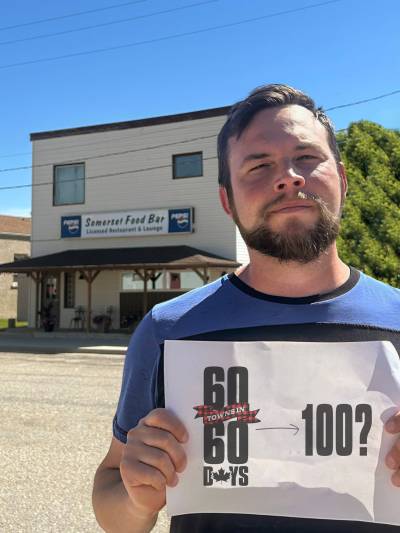
There may not be another restaurant in Manitoba that can say it has welcomed visitors from as many communities across the province and beyond as the Somerset Food Bar & Lounge has this summer.

In just over a two week span, visitors from more than 100 towns have come out to the family-owned restaurant tucked away in Somerset, a community of roughly 450 people in the Pembina Valley 130 kilometres southwest of Winnipeg.

It started as a challenge, “60 Towns in 60 Days,” where the restaurant wanted to document how many different places they could reach, as it often sees people travelling across Canada stop at the restaurant. The goal was also to encourage people to make a drive they normally wouldn’t.

“The more we started sharing, the more people really started getting behind it, and it turned into this really big thing fairly quickly,” said Jay Friesen, restaurant manager.

Read
Saturday, Jul. 25, 2026

Automation reaches new heights on farm

Laura Rance-Unger 4 minute read Preview

Automation reaches new heights on farm

Laura Rance-Unger 4 minute read Saturday, Jul. 25, 2026

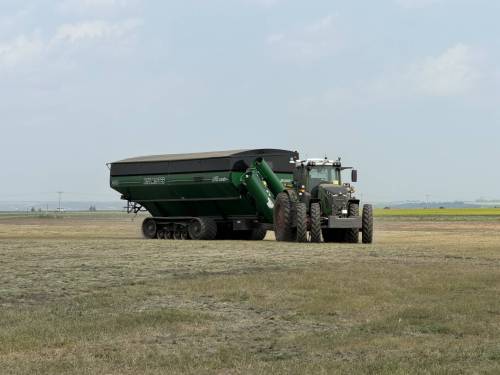
LANGHAM, Sask. — The thousands of farmers from across the Prairies who flock to the annual Ag in Motion show every July seem oblivious to the possibility the technology on display could one day replace many of them.

Families with children in tow, Hutterite colony workers, grandparents and young couples just starting out roamed through the 600 or more exhibitor displays, amazed at how everything about farming just keeps getting bigger, more efficient and increasingly more automated.

It’s now possible to seed using a 100-foot-wide drill — a 12-foot jump over the widest available a few years ago — provided the farmer can afford a tractor with enough horsepower to pull it. Those sell for around $850,000 and up.

Granted, the number of farms with enough acres to justify that kind of width and drawing power is still relatively small, but farms continue to grow. And it’s no secret the number of people who have the interest, skills and financial wherewithal to run them continues to shrink.

Read
Saturday, Jul. 25, 2026

Qualico celebrating 75 years of growth, success since its first development of 13 bungalows in River Heights

Aaron Epp 6 minute read Preview

Qualico celebrating 75 years of growth, success since its first development of 13 bungalows in River Heights

Aaron Epp 6 minute read 6:00 AM CDT

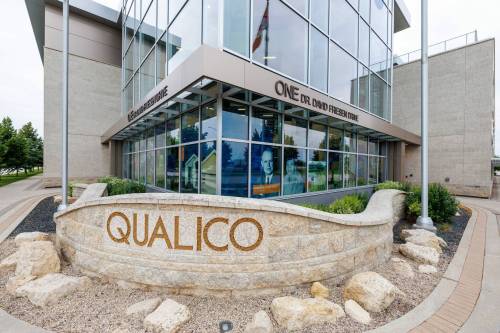
The first things staff and visitors see after ascending to the third floor of Qualico’s head office in Winnipeg are two statues — one each for company founders David and Katherine Friesen.

Flanking the doors to the integrated real estate company’s C-suite offices, the bronze sculptures are monuments to the couple and the vision, strength and integrity (as the plaques attached to the wooden pedestals attest) it took to start Qualico in 1951.

But imagine for a moment what it would be like if the sculptures were less reverent and more whimsical. Picture them outfitted with the kind of pull-string voice boxes one finds in a child’s toy. What might they say?

It’s possible one of David Friesen’s phrases would be: “No margin, no mission.”

Read
6:00 AM CDT