FDA takes up decades-long debate over breast implant safety

Advertisement

Advertise with us

WASHINGTON - U.S. health officials are taking another look at the safety of breast implants, the latest review in a decades-long debate.

Read this article for free:


or

Already have an account? Log in here »

To continue reading, please subscribe:

Subscribe and receive a limited-edition Free Press branded hat or tote.

Digital Subscription

One year of digital access for only $205*

  • Enjoy unlimited reading on winnipegfreepress.com
  • Read the E-Edition, our digital replica newspaper
  • Access News Break, our award-winning app
  • Play interactive puzzles

*First annual payment billed as $205.00 + GST for one year. This annual subscription will automatically renew at $233.00 + GST every 52 weeks (10% off the regular annual price of $259.35). Offer available to new and qualified returning subscribers only. Cancel any time.

To continue reading, please subscribe:

Add Free Press access to your Brandon Sun subscription for only an additional

$1 for the first 4 weeks*

  • Enjoy unlimited reading on winnipegfreepress.com
  • Read the E-Edition, our digital replica newspaper
  • Access News Break, our award-winning app
  • Play interactive puzzles
Start now

*Your next Brandon Sun subscription payment will increase by $1.00 and you will be charged $17.95 plus GST for four weeks. After four weeks, your payment will increase to $24.95 plus GST every four weeks.

Hey there, time traveller!
This article was published 24/03/2019 (2723 days ago), so information in it may no longer be current.

WASHINGTON – U.S. health officials are taking another look at the safety of breast implants, the latest review in a decades-long debate.

At a two-day meeting that starts Monday, a panel of experts for the U.S. Food and Drug Administration will hear from researchers, plastic surgeons and implant makers, as well as from women who believe their ailments were caused by the implants.

The panel will consider next steps, but for now, the FDA isn’t proposing any new restrictions or warnings. The agency’s longstanding position is that implants are essentially safe as long as women understand they can have complications, including scarring, pain, swelling and implant rupture.
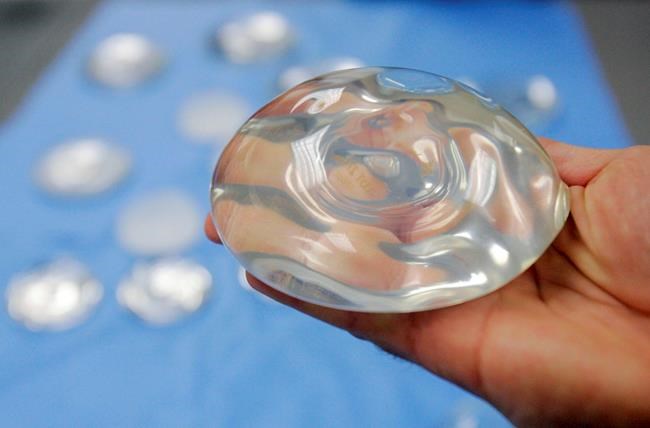
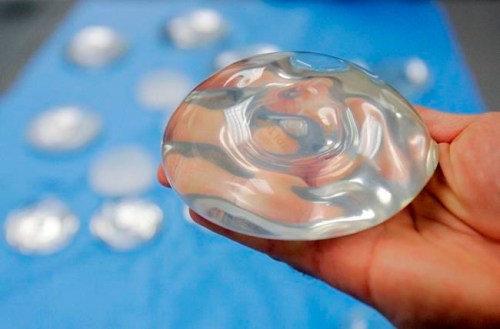
FILE - This Dec. 11, 2006 file photo shows a silicone gel breast implant in Irving, Texas. U.S. health officials are taking another look at the safety of breast implants, the latest review in a decades-long debate. At a two-day meeting that starts Monday, March 25, 2019, a panel of experts for the U.S. Food and Drug Administration will hear from researchers, plastic surgeons and implant makers, as well as from women who believe their ailments were caused by the implants. (AP Photo/Donna McWilliam, File)

But the FDA and other regulators around the world have been grappling with how to manage a recently confirmed link to a rare cancer and the thousands of unconfirmed complaints of other health problems.

In documents released before the meeting, FDA regulators said it is “impossible” for them to determine how frequently the cancer — a form of lymphoma — occurs because the U.S. does not track the total number of implants on the market. Estimates of the frequency of the disease range from 1 in 3,000 women to 1 in 30,000.

Most confirmed cases of the disease, known as breast implant-associated anaplastic large cell lymphoma, have involved a particular style of implants with a textured surface, designed to reduce scar tissue and slippage. But the FDA said it has also received reports of the disease in smooth implants — which account for most of the U.S. market — raising questions about whether the cancer is a risk with both implant types.

The disease is not breast cancer, but a form of cancer that attacks the immune system and usually forms in the scar tissue surrounding implants. It grows slowly and can usually be successfully treated by surgically removing the implants.

Thousands of women have also blamed their implants for a host of ailments, including rheumatoid arthritis, chronic fatigue and muscle pain. In the documents, the FDA reiterated its position that “there is not sufficient evidence” linking them to breast implants. The agency also sidestepped requests from patients to add a boxed warning — the agency’s most serious type — to breast implants and to require manufacturers to give women a checklist of potential harms and complications before surgery.

“I’m a little discouraged,” said Jamee Cook, one of more than 20 patients set to speak at the meeting, after reviewing the FDA materials. “But I guess I’m hoping that what we have to say will prompt discussion on those action points.”

A former paramedic, Cook said she had an array of health problems after getting implants in 1998, including exhaustion, migraines and an immune system disorder. She said her symptoms either resolved or improved after the implants were removed in 2015.

Breast augmentation is the most popular form of cosmetic surgery in the U.S., with roughly 300,000 women undergoing the procedure each year. Another 100,000 women receive implants for breast reconstruction after cancer surgery. Most women choose silicone gel-filled implants, which are considered more natural looking than saline implants.

Implants first went on sale in the mid-1960s. But they attracted little attention until the late 1980s, when a wave of lawsuits alleged serious harms and diseases linked to the devices. The FDA banned the silicone gel type in 1992 because of fears they might cause breast cancer, lupus and other disorders. But when studies seemed to rule out most of the disease concern, regulators returned the implants to the market in 2006 with the requirement that manufacturers track recipients to see how they fare long term.

Implant makers Allergan and Mentor — which is now part of Johnson & Johnson — enrolled nearly 100,000 women in a 10-year study. But more than half of the women dropped out within three years, leaving insufficient data to draw firm safety conclusions.

Last September, researchers at the University of Texas MD Anderson Cancer Center analyzed the company reports and found that women with silicone implants seemed to have greater rates of an immune system disorder called Sjogren syndrome, a connective tissue disorder called scleroderma and the skin cancer melanoma. But the authors acknowledged the limitations of the data, which often relied on incomplete, undiagnosed patient reports. FDA regulators said they “respectfully disagree” with the conclusions.

Last week, the FDA sent warning letters to Mentor and a smaller implant maker, Sientra, for failing to enrol or retain enough patients in their long-term studies. Allergan and the other U.S. manufacturer of breast implants — Ideal Implant — did not receive warnings.

___

Follow Matthew Perrone at @AP_FDAwriter

___

The Associated Press Health and Science Department receives support from the Howard Hughes Medical Institute’s Department of Science Education. The AP is solely responsible for all content.
Report Error Submit a Tip

More Stories

Smith’s pretzel logic confuses

Editorial 4 minute read Preview

Smith’s pretzel logic confuses

Editorial 4 minute read Yesterday at 2:01 AM CDT

Alberta Premier Danielle Smith had both sides of her mouth working overtime on Aug. 30, when she spoke at an event in Calgary to commemorate Alberta Day, the annual celebration of the province’s entry into Confederation in 1905 (officially Sept. 1, it was celebrated on the weekend).

Smith’s comments — and the things she did not say — revealed a lot about the political tightrope the premier is trying to walk over the challenges currently faced by her province. At the top of that list of challenges is a persistent campaign to separate Alberta from the aforementioned Confederation. A campaign that Smith appears to both support and oppose, depending on which day of the week it is.

Her Alberta Day remarks were an excellent case in point.

Smith has decided that on Oct. 19, Albertans will vote on a series of non-binding propositions in a province referendum. One of those questions will ask Albertans whether they want to hold a referendum on separation, thus making this fall’s vote a “referendum on whether to hold a referendum,” as some observers have dubbed it.

Read
Yesterday at 2:01 AM CDT

Police issue silver alert for missing man

1 minute read Updated: Yesterday at 6:13 PM CDT

Winnipeg police are calling on the public to help locate a missing senior.

Thomas Lakie, 78, was last seen near Wilkes Avenue and Waverley Street around 4 a.m. Saturday, a weekend news release states. Police believe he may be in the Crestview neighbourhood.

Lakie is described as 5-8 with a medium build, has grey hair, blue eyes and walks with a limp. Police say he was last seen wearing a black baseball hat, a black t-shirt, green sweatpants with cargo pockets and brown runners with beige soles.

Anyone who may have information on Lakie's whereabouts is asked to call the missing persons unit at 204-986-6250.

Art piece connects viewers to broader national landscape

Allison Gillmor 4 minute read Preview

Art piece connects viewers to broader national landscape

Allison Gillmor 4 minute read Yesterday at 2:01 AM CDT

WHAT IT IS: Copy Paperis a 2014 textile-based piece by Ontario-born, Winnipeg-based artist Kristin Nelson, currently on view at WAG-Qaumajuq as part of the exhibition Terra Cognita/Incognita.

Of the 125 works in the show — which uses historical and contemporary pieces from WAG-Qaumajuq’s permanent collection to explore how artists have represented the landscape over time and across cultures —probably the most attention-getting are the beautiful paintings of Canada’s lakes, plains, forests and mountains.

So, how does this seemingly modest, somewhat enigmatic work connect to Terra Cognita/Incognita’s larger themes?

WHAT IT’S ABOUT: In the middle of the exhibition, an antique desk holds several objects of beauty and utility, and this is where Copy Paper sneaks in, as something both “cognita and incognita,” known and unknown.

Read
Yesterday at 2:01 AM CDT

Today’s horoscope

Georgia Nicols 4 minute read 2:00 AM CDT

MOON ALERT: There are no restrictions to shopping or important decisions today. The moon is in Cancer.

ARIES (March 21-April 19)

Relations with parents and authority figures might be strained. Resist the urge to be too pushy. Likewise, avoid other people who are pushy. Your best choice is to work hard and get better organized. Fortunately, relations with partners are good.

TAURUS (April 20-May 20)

FDA takes up decades-long debate over breast implant safety

Matthew Perrone, The Associated Press 5 minute read Preview

FDA takes up decades-long debate over breast implant safety

Matthew Perrone, The Associated Press 5 minute read Sunday, Mar. 24, 2019

WASHINGTON - U.S. health officials are taking another look at the safety of breast implants, the latest review in a decades-long debate.

At a two-day meeting that starts Monday, a panel of experts for the U.S. Food and Drug Administration will hear from researchers, plastic surgeons and implant makers, as well as from women who believe their ailments were caused by the implants.

The panel will consider next steps, but for now, the FDA isn't proposing any new restrictions or warnings. The agency's longstanding position is that implants are essentially safe as long as women understand they can have complications, including scarring, pain, swelling and implant rupture.

But the FDA and other regulators around the world have been grappling with how to manage a recently confirmed link to a rare cancer and the thousands of unconfirmed complaints of other health problems.

Read
Sunday, Mar. 24, 2019

Wonderful wines to help welcome autumn

Ben Sigurdson 4 minute read Preview

Wonderful wines to help welcome autumn

Ben Sigurdson 4 minute read Yesterday at 3:00 AM CDT

As we creep ever closer to fall, many wine drinkers will start to think about popping corks (or screwcaps, as it were) on wines that suit cooler temperatures.

But summer’s not quite done yet. Here are six new and/or notable wines ideal for sipping as we make the transition from warmer weather into the first hints of autumn…

Wines of the weekThe Willm NV Blanc de Noirs Crémant d’Alsace Brut (Alsace, France — $28.99, Liquor Marts and beyond) is a French bubbly made from the Pinot Noir grape in the traditional method (secondary fermentation, which creates the bubbles, happens in the bottle rather than in tanks before bottling).

It’s pale gold with a hint of pink, and on the nose offers ripe cherry, cranberry, bread dough and strawberry compote notes. On the palate it’s light-bodied and mainly dry, with an almost-wild herbal component coming with the strawberry, tart peach, cranberry, raspberry and bread dough flavours.

Read
Yesterday at 3:00 AM CDT