Science Says: How daylight saving time affects health

Advertisement

Advertise with us

Office workers bemoan driving home in the dark. Night owls relish the chance to sleep in. As clocks tick toward the end of daylight saving time, many sleep scientists and circadian biologists are pushing for a permanent ban because of potential ill effects on human health.

Read this article for free:


or

Already have an account? Log in here »

To continue reading, please subscribe:

Subscribe and receive a limited-edition Free Press branded hat or tote.

Digital Subscription

One year of digital access for only $205*

  • Enjoy unlimited reading on winnipegfreepress.com
  • Read the E-Edition, our digital replica newspaper
  • Access News Break, our award-winning app
  • Play interactive puzzles

*First annual payment billed as $205.00 + GST for one year. This annual subscription will automatically renew at $233.00 + GST every 52 weeks (10% off the regular annual price of $259.35). Offer available to new and qualified returning subscribers only. Cancel any time.

To continue reading, please subscribe:

Add Free Press access to your Brandon Sun subscription for only an additional

$1 for the first 4 weeks*

  • Enjoy unlimited reading on winnipegfreepress.com
  • Read the E-Edition, our digital replica newspaper
  • Access News Break, our award-winning app
  • Play interactive puzzles
Start now

*Your next Brandon Sun subscription payment will increase by $1.00 and you will be charged $17.95 plus GST for four weeks. After four weeks, your payment will increase to $24.95 plus GST every four weeks.

Hey there, time traveller!
This article was published 31/10/2019 (2519 days ago), so information in it may no longer be current.

Office workers bemoan driving home in the dark. Night owls relish the chance to sleep in. As clocks tick toward the end of daylight saving time, many sleep scientists and circadian biologists are pushing for a permanent ban because of potential ill effects on human health.

Losing an hour of afternoon daylight sounds like a gloomy preview for the dark winter months, and at least one study found an increase in people seeking help for depression after turning the clocks back to standard time in November — in Scandinavia. Research shows the springtime start of daylight saving time may be more harmful, linking it with more car accidents, heart attacks in vulnerable people and other health problems that may persist throughout the time change.

Here’s what science has to say about a twice-yearly ritual affecting nearly 2 billion people worldwide.

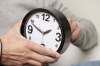
In this Thursday, July 25, 2019 photo, workers at the Electric Time Company in Medfield, Mass., test a 20 foot high clock, built for the a new train station in Bangkok, Thailand, prior to packing and shipment. The clock features a
In this Thursday, July 25, 2019 photo, workers at the Electric Time Company in Medfield, Mass., test a 20 foot high clock, built for the a new train station in Bangkok, Thailand, prior to packing and shipment. The clock features a "9" in Thai number script. Daylight saving time ends at 2 a.m. local time Sunday, Nov. 3, 2019, when clocks are set back one hour. Losing an hour of daylight sounds like a gloomy preview for the dark winter months, and at least one study found an increase in people seeking help for depression after turning the clocks back to standard time in November _ in Scandinavia. But far more research says that the springtime start of daylight saving time may be more harmful, linking it with more car accidents, heart attacks in vulnerable people and other health problems that may persist throughout the time change. (AP Photo/Charles Krupa)

SLEEP EFFECTS

Time changes mess with sleep schedules, a potential problem when so many people are already sleep deprived, says Dr. Phyllis Zee, a sleep researcher at Northwestern Medicine in Chicago.

About 1 in 3 U.S. adults sleep less than the recommended seven-plus hours nightly, and more than half of U.S. teens don’t get the recommended eight-plus hours on weeknights. One U.S. study found that in the week following the spring switch to daylight saving time, teens slept about 2 1/2 hours less than the previous week. Many people never catch up during the subsequent six months.

Research suggests that chronic sleep deprivation can increase levels of stress hormones that boost heart rate and blood pressure, and of chemicals that trigger inflammation.

HEART PROBLEMS

It has also been shown that blood tends to clot more quickly in the morning. These changes underlie evidence that heart attacks are more common in general in the morning, and may explain studies showing that rates increase slightly on Mondays after clocks are moved forward in the spring, when people typically rise an hour earlier than normal.

That increased risk associated with the time change is mainly in people already vulnerable because of existing heart disease, said Barry Franklin, director of preventive cardiology and cardiac rehabilitation at Beaumont Health hospital in Royal Oak, Michigan.

Studies suggest that these people return to their baseline risk after the autumn time change.

CAR CRASHES

Numerous studies have linked the start of daylight saving time in the spring with a brief spike in car accidents, and with poor performance on tests of alertness, both likely due to sleep loss.

The research includes a German study published this year that found an increase in traffic fatalities in the week after the start of daylight saving time, but no such increase in the fall.

Other studies on how returning to standard time in the fall might impact car crashes have had conflicting results.

OUR INTERNAL CLOCKS

Circadian biologists believe ill health effects from daylight saving time result from a mismatch among the sun “clock,” our social clock — work and school schedules — and the body’s internal 24-hour body clock.

Ticking away at the molecular level, the biological clock is entrained — or set — by exposure to sunlight and darkness. It regulates bodily functions such as metabolism, blood pressure and hormones that promote sleep and alertness.

Disruptions to the body clock have been linked with obesity, depression, diabetes, heart problems and other conditions. Circadian biologists say these disruptions include tinkering with standard time by moving the clock ahead one hour in the spring.

A mismatch of one hour daily is enough for ill effects, especially if it lasts for several months, according to Till Roenneberg, a circadian rhythm specialist at Ludwig-Maximilian University in Munich, Germany.

PRESSURE TO CHANGE

In the U.S., daylight saving time runs from the second Sunday in March to the first Sunday in November. It was first established 100 years ago to save energy. Modern-day research has found little or no such cost savings.

Federal law allows states to remain on standard time year-round but only Hawaii and most of Arizona have chosen to. Proposed legislation in several states would have them join suit — or switch to year-round daylight saving time, which would require congressional approval.

Roenneberg and Northwestern’s Zee are co-authors of a recent position statement advocating returning to standard time for good, written for the Society for Research on Biological Rhythms.

“If we want to improve human health, we should not fight against our body clock, and therefore we should abandon daylight saving time,” the statement says.

___

Follow AP Medical Writer Lindsey Tanner at @LindseyTanner.

___

The Associated Press Health and Science Department receives support from the Howard Hughes Medical Institute’s Department of Science Education. The AP is solely responsible for all content.

Report Error Submit a Tip

More Stories

Driver, 62, killed in highway crash

1 minute read 10:25 AM CDT

One person was killed and a second was injured in a crash involving an SUV and semi-truck just outside Sanford on Tuesday morning.

RCMP said the semi-truck was eastbound on Highway 3 when it collided with the SUV, which was being driven south on Provincial Road 334 by a 62-year-old Sanford man, who died at the scene.

The collision happened shortly after 5 a.m.

Police said the semi-truck’s driver, a 58-year-old Morden man, was treated for non-life-threatening injuries.

AC/DC leaves Winnipeg crowd thunderstruck

Rob Williams 5 minute read Preview

AC/DC leaves Winnipeg crowd thunderstruck

Rob Williams 5 minute read Monday, Sep. 21, 2026

AC/DC proved once again that rock ‘n’ roll ain’t noise pollution.

A rowdy stadium of about 35,000 people at Princess Auto Stadium couldn’t agree more as the Australian rock legends made their first trip to the city since 2015 on their PWR/UP tour, cranking out two hours and 20 minutes of raw and raunchy high-voltage material, a mix of blues, crunchy power chords, melodic riffs and double entendres that spanned five decades.

Their wide-ranging appeal was apparent in the demographic makeup of the crowd, which ranged from young children to seniors, many clad in $30 glowing devil horns from the well-stocked merch booth that also offered posters, banners, beer koozies, lanyards, tour books and T-shirts.

There is no one in music quite like guitar god Angus Young. He is 71, but onstage he is ageless, a hyperactive teenager dressed in his signature blue schoolboy uniform and yellow and blue cap, running around, duck-walking and leaping in the air while cranking out riff after riff and extended solos on his trusty black Gibson SG.

Read
Monday, Sep. 21, 2026

Manitoba students able to opt out of classes with sensitive lessons on sex, drug use

Maggie Macintosh 6 minute read Preview

Manitoba students able to opt out of classes with sensitive lessons on sex, drug use

Maggie Macintosh 6 minute read Yesterday at 7:08 PM CDT

Manitoba’s premier pledges to continue allowing parents to pull their kids from health class if content — be it related to human sexuality, substance use or otherwise — clashes with personal beliefs.

Wab Kinew said Tuesday the government’s overhaul of phys-ed and health curriculum in Manitoba schools won’t impact the ability for parents to opt-out of a lesson and deliver material as they see fit.

“As a parent, you are your child’s first and most important teacher and that will always be the case,” Kinew said, surrounded by hundreds of teenagers on the football field outside Kelvin High School during an announcement Tuesday.

More than 100 schools are taking part in a voluntary pilot project this fall. It’s the first systematic review of this curriculum in decades. The changes to kindergarten-to-Grade 12 courses will be mandated to all schools in September 2028.

Read
Yesterday at 7:08 PM CDT

Health Canada suspends plasma collection at Grifols Taylor Avenue clinic

Chris Kitching 3 minute read Preview

Health Canada suspends plasma collection at Grifols Taylor Avenue clinic

Chris Kitching 3 minute read 1:59 PM CDT

Health Canada has suspended all plasma collection at Grifols’ Taylor Avenue facility while the private company continues to face scrutiny after two people died following donations at its Winnipeg clinics.

The suspension was issued Wednesday, although Grifols announced Aug. 13 it was pausing plasma collection in Canada a day after the federal department gave the Taylor Avenue site a non-compliant rating.

“Health Canada issued the suspension because Grifols had not effectively implemented some corrective and preventive actions and, overall, it failed to demonstrate that the Taylor Avenue site has implemented an effective quality management system,” the department said in a statement.

The Free Press has contacted Grifols for comment.

Read
1:59 PM CDT

The truth, the hyperbolic truth and nothing but the public accounts truth

Dan Lett 5 minute read Preview

The truth, the hyperbolic truth and nothing but the public accounts truth

Dan Lett 5 minute read 1:49 PM CDT

The Manitoba public accounts — the final and definitive tabulation of government expenditures and revenues — has always been a difficult story to cover.

Difficult because the public accounts are complex, and explaining what the numbers mean and how they differ (but yet illuminate) the provincial budget is a gargantuan task.

However, the thing that really complicates the job of reporting the public accounts is the hyperbolic claims the government of the day makes about the numbers and what they mean.

In pursuit of the truth, let’s look at the numbers from the 2025-26 public accounts released this week, and some of the claims made by Premier Wab Kinew and Finance Minister Adrien Sala.

Read
1:49 PM CDT

Province pays two men switched at birth in 1955 at Arborg hospital $250K apiece

Free Press staff 2 minute read Preview

Province pays two men switched at birth in 1955 at Arborg hospital $250K apiece

Free Press staff 2 minute read 12:33 PM CDT

Two men who were switched at birth at an Arborg hospital in 1955 have each received $250,000 in compensation from the province.

The payments to Richard Beauvais and Edward Ambrose were reported in the public accounts for the 2025-26 fiscal year released Monday.

In 2024, they received a formal apology on behalf of the provincial government from Premier Wab Kinew for the Manitoba government’s failure to protect and care for them.

Beauvais and Ambrose were sent home from hospital with the wrong families and the switch was not discovered until a few years ago, when Beauvais took an at-home DNA ancestry test.

Read
12:33 PM CDT