Most coronavirus patients recover, still anxiety, fear loom
Advertisement
Read this article for free:
or
Already have an account? Log in here »
To continue reading, please subscribe:

Digital Subscription
One year of digital access for only $205*
- Enjoy unlimited reading on winnipegfreepress.com
- Read the E-Edition, our digital replica newspaper
- Access News Break, our award-winning app
- Play interactive puzzles
*First annual payment billed as $205.00 + GST for one year. This annual subscription will automatically renew at $233.00 + GST every 52 weeks (10% off the regular annual price of $259.35). Offer available to new and qualified returning subscribers only. Cancel any time.
To continue reading, please subscribe:
Add Free Press access to your Brandon Sun subscription for only an additional
$1 for the first 4 weeks*
- Enjoy unlimited reading on winnipegfreepress.com
- Read the E-Edition, our digital replica newspaper
- Access News Break, our award-winning app
- Play interactive puzzles
*Your next Brandon Sun subscription payment will increase by $1.00 and you will be charged $17.95 plus GST for four weeks. After four weeks, your payment will increase to $24.95 plus GST every four weeks.
Read unlimited articles for free today:
or
Already have an account? Log in here »
Hey there, time traveller!
This article was published 12/03/2020 (2409 days ago), so information in it may no longer be current.
SEATTLE – Amid all the fears, quarantines and stockpiling of food, it has been easy to ignore the fact that more than 60,000 people have recovered from the coronavirus spreading around the globe.
The disease can cause varying degrees of illness and is especially troublesome for older adults and people with existing health problems, who are at risk of severe effects, including pneumonia. But for most of those affected, coronavirus creates only mild or moderate symptoms, such as fever and cough, with the vast majority recovering from the virus.
According to the World Health Organization, people with mild illness recover in about two weeks, while those with more severe ailments may take three to six weeks to rebound. In mainland China, where the virus first exploded, more than 80,000 people have been diagnosed, but more than 60,000 already have recovered.
Because the difference in impact can be so great, global health authorities have the difficult task of alerting the public to the virus’ dangers without creating panic.
Already, the widespread consequences of the virus have been staggering, sending shock waves through the world’s financial markets. Global oil prices sustained their worst percentage losses since the the Gulf War in 1991, and new restrictions were imposed in Italy and in Israel as the Holy Week approached.
But even some of the most vulnerable patients can fight their way through the disease.
Charlie Campbell’s father, 89-year-old Eugene Campbell, has been diagnosed with the coronavirus and is hospitalized in Edmonds, Washington. Charlie Campbell said his father’s doctor is cautiously optimistic, adding, “Under normal circumstances, he would discharge my dad, but these aren’t normal circumstances.”
Eugene Campbell came to the hospital from Life Care Center, a nursing home in Kirkland that has been linked to a large share of the state’s coronavirus deaths.
“We went and saw him yesterday and he looked pretty good,” Campbell said, noting that his father is breathing normally and his vital signs and heart rate are good. “He may be the oldest person to recover from coronavirus.”
In China, Tan Shiyun, a postgraduate student at a university in Wuhan, had travelled to her family home in Yichang over 180 miles away when she began to experience minor symptoms from the virus.
She went to the hospital, where she was given common cold medicine and sent home. It was only after her symptoms persisted and she visited the hospital a second time for an outpatient CT scan and received a call asking her to come back did she understand her symptoms came from something other than the common flu.
After many days and a number of tests, doctors eventually told her that the infection had spread to both of her lungs.
“After that, I felt a heavy head while walking, unable to breathe, and nauseous,” Tan said in a video blog post. But after over two weeks in the hospital, a CT scan showed her infection was disappearing and she was discharged.
For some who’ve been quarantined, anxiety and dread that they will become stigmatized by friends, neighbours and co-workers have equaled their concerns about their physical health. A few patients with the virus who were interviewed by The Associated Press — all of them passengers on the Diamond Princess cruise ship that ended up quarantined off Japan — described symptoms that were no stronger than a regular cold or flu.
For some who’ve been quarantined, anxiety and dread that they will become stigmatized by friends, neighbours and co-workers have made them reluctant to acknowledge even the most modest health impact. A few patients with the virus who were interviewed by The Associated Press — all of them passengers on the Diamond Princess cruise ship that ended up quarantined off Japan — described symptoms that were no stronger than a regular cold or flu.

“It’s been a 2 on a scale of 10,” said Carl Goldman, hospitalized in Omaha, Nebraska, since Feb. 17, after developing a 103-degree fever on a chartered flight from Japan to the U.S.
Goldman is staying hydrated with Gatorade. He said he continued coughing more than two weeks after he first got sick, but would probably only have missed one day of work if he had been diagnosed with the cold or flu. He stays active by pacing in his room, trying to match his pre-sickness routine of 10,000 daily steps on the pedometer.
“I totally get this is where I need to be and I need to be cleared of this before I’m released,” he said.
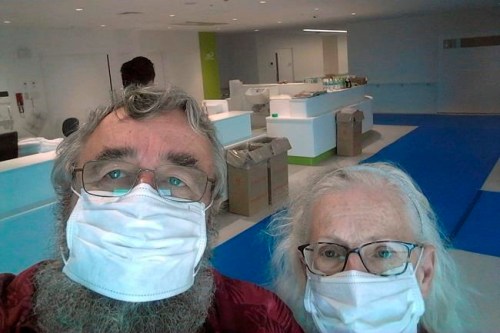
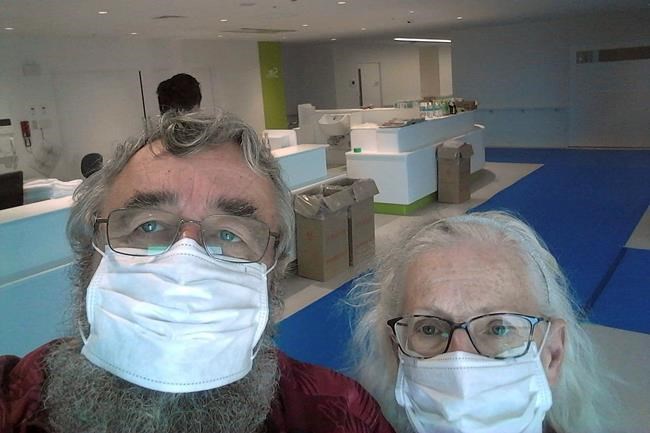
American Greg Yerex, who was diagnosed along with his wife, Rose Yerex, on the Diamond Princess, said he had no symptoms and felt as healthy as he did on any other normal day.
“If I was home, I would be out doing everything I normally do,” he said in an interview conducted via Facebook calls when the couple were still hospitalized in Nagoya, Japan. Rose Yerex tested negative when she got to the hospital.
For Greg Yerex, it was the couple’s mental health that faced the biggest threat as they they spent days in quarantine, isolated from friends and family and deprived of any direct human contact.
“It’s like being a prisoner,” he said. “You pace, you worry, you fret, you imagine all sorts of things. You have no control.”
Greg Yerex said that he and his wife, who have since been released from the hospital, plan to go to counselling to work through the mental stress they experienced.
Fellow cruise passenger Rebecca Frasure knows how they feel.
“I don’t get to speak with anyone,” she said in a Facebook call while still hospitalized in Nagoya. “I have a little window in my room, but cannot leave. The only contact I have is through Facebook messenger. I would never wish this on anyone.”
Frasure said one of the things she found most frustrating was waiting for her test results to come back. Patients who have been diagnosed with the virus must have two consecutive negative tests before they can be released.

Frasure is now out of the hospital, but is worried about being stigmatized by her home community.
“Are they going to be afraid?” she wondered. ”Are they going to criticize me for being home, thinking I brought virus back with me?”
___
This story corrects that the Gulf War was in 1991, not 1999.
___
Milko reported from Jakarta, Indonesia. Associated Press video producer Olivia Zhang in Beijing contributed to this report.
___
The Associated Press Health and Science Department receives support from the Howard Hughes Medical Institute’s Department of Science Education. The AP is solely responsible for all content.
How to protect yourself and others from COVID-19

Posted:
COVID-19 is now impacting the lives of Canadians on many levels and people across the country are seeking answers to numerous important questions they have about the novel coronavirus. Below is a summary:
Related Articles
Canada grapples with Trump's new travel ban






Advertisement Advertise With Us
Advertisement Advertise With Us