COVID-19 burnout: Can-do attitude gives way to anxiety, despair for many
Advertisement
Read this article for free:
or
Already have an account? Log in here »
To continue reading, please subscribe:

Digital Subscription
One year of digital access for only $205*
- Enjoy unlimited reading on winnipegfreepress.com
- Read the E-Edition, our digital replica newspaper
- Access News Break, our award-winning app
- Play interactive puzzles
*First annual payment billed as $205.00 + GST for one year. This annual subscription will automatically renew at $233.00 + GST every 52 weeks (10% off the regular annual price of $259.35). Offer available to new and qualified returning subscribers only. Cancel any time.
To continue reading, please subscribe:
Add Free Press access to your Brandon Sun subscription for only an additional
$1 for the first 4 weeks*
- Enjoy unlimited reading on winnipegfreepress.com
- Read the E-Edition, our digital replica newspaper
- Access News Break, our award-winning app
- Play interactive puzzles
*Your next Brandon Sun subscription payment will increase by $1.00 and you will be charged $17.95 plus GST for four weeks. After four weeks, your payment will increase to $24.95 plus GST every four weeks.
Read unlimited articles for free today:
or
Already have an account? Log in here »
Hey there, time traveller!
This article was published 06/05/2020 (2341 days ago), so information in it may no longer be current.
Mike Davis politely asked a close friend recently to stop sending him happy photos of his two teenage boys playing board games or going for neighbourhood walks.
For Davis, who lives alone, seeing merry images of family togetherness during the COVID-19 lockdown had become almost too much to bear.
“He has been great about texting me… but I actually asked him stop sharing updates about what his family was doing,” Davis said. “In my head it reinforced that sense of loneliness.”
Eight weeks into Canada’s coronavirus lockdown, nerves are frayed. The novelty has worn off. Anxiety has replaced our can-do attitude, and experts aren’t surprised.
An Angus Reid study released last week painted a picture of a country whose optimism and resilience has become “literally depressed” by the coronavirus pandemic. Half of Canadians reported a worsening of their mental health, while one in 10 said it had worsened “a lot.”
A few weeks ago, we were posting push-up challenges on social media. We were eager to learn new languages, bake bread, sew our own masks, enjoy virtual happy hour with friends.
But many are now finding it a tough slog. That warm and fuzzy we’re-all-in-this-together feeling has given way to a crushing sense of uncertainty and isolation.
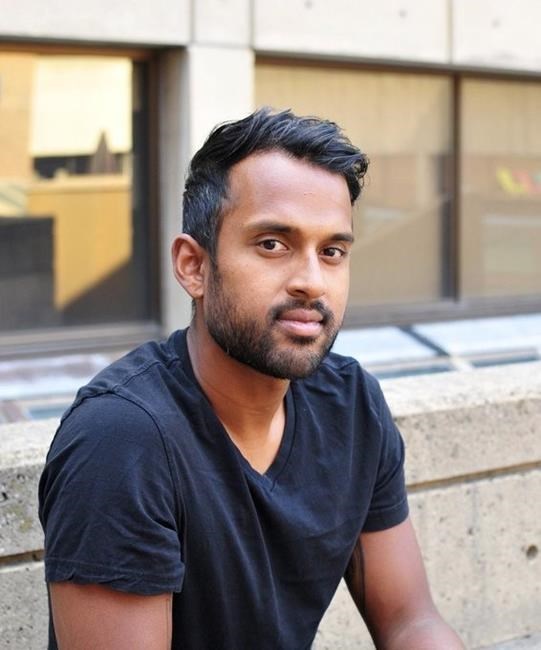
“It’s setting in what’s happening to our daily life, and the challenges in sitting with the discomfort, and the longer that lasts, the more hopeless people may feel,” said Robin Mazumder, a former occupational therapist who worked for several years in mental health. “And it’s hard to be joyful or be just happy when there’s a very uncertain future, and now it’s been several weeks of this consistent kind of stress.”
The 46-year-old Davis, a government employee who’s working from his home in Greely, Ont., just outside Ottawa, said he’s seen “glimpses” of quarantine burnout.
“I find that I go through waves … I have a cat (Shinny), so that helps a little bit,” he said.
But recently he’s “snapped back” a couple of times at his best friend over text, even though they usually never argue.
“The next day he’ll be like, ‘Are you all right man?'” said Davis.
“I need to be conscious of: Where’s my head at? I need to be very deliberate.”
If social isolation continues for two more months, 22 per cent of Canadians believe they will experience “high levels” of depression, according to a survey by Mental Health Research Canada in late April.
Distress centres across Canada have also seen a surge in demand.
Stephanie MacKendrick, CEO of Crisis Services Canada, a national suicide-specific helpline, said the 100 or so community distress centres across the country have seen 30 to 50 per cent more crisis calls since the pandemic started. She called it a “huge increase.”
Gordon Flett, a York University professor and a Canada Research Chair in personality and health, expects to see increased depression, demoralization, and stress-related illnesses the longer this plays out.
“Whether people are talking about cabin fever or climbing the walls or isolation burnout… it’s natural, because this is a stressor on multiple levels,” Flett said.
Flett mentioned the recent suicide of prominent New York doctor Lorna Breen, who’d worked on the coronavirus front lines. John Mondello, a 23-year-old New York City EMT just three months on the job, also died late last month from a self-inflicted gunshot wound.
“I think this is going to have a much stronger toll and impact on people than we even realize,” Flett said.
Fears over physical well-being and personal finances are cited as the main worries in a Nanos poll released Wednesday by the Mental Health Commission of Canada.
People are feeling lonely and isolated, and uncertain about the future, Flett said. And even many who aren’t normally susceptible to mental health issues are now vulnerable. Add to that, the things we enjoy such as sports — Flett is a big sports fan — are gone.
“You’ve got this confluence of factors that are all pointing to the same nasty outcomes. And, what becomes key is who’s more able to adapt to this,” he said.
Grace Churchill, a Toronto entrepreneurial and executive coach, reached an emotional breaking point recently where she stopped feeling anything.
“It was almost like my body couldn’t take any more,” said Churchill. “I got to this numb place of nothing felt like anything, like ‘Where did my emotions go?’ It was like ‘Nope! Emoting is done for the day.’
“Literally I think my emotions just shut down… maybe just the body’s reacting to ‘you’ve had enough.'”
Coronavirus burnout is spilling into the streets. Churchill was on a recent walk and was about to step into the street to give an oncoming person space. Instead, the man came to an abrupt halt and gave Churchill an angry eye roll.
Haleh Bahrami has stopped walking on the West Vancouver seawall after a glowering stranger admonished her recently for taking up too much space.
“We’re just really all feeling it,” said Bahrami, who works in health care and is a mom of two teenagers. “The part that is the scariest is the unknown. They keep talking about this second wave. What if it’s worse than this one? What if restrictions become even harder when you can’t even go out for a walk? How will people behave? Will I have my normal life back?”
Sasha Gollish, a competitive track athlete and sessional lecturer in the University of Toronto’s Faculty of Applied Science and Engineering, said she’s grown “really anxious” when anyone comes near her, even people she knows.
“So what happens when this pandemic is over? Am I going to be more nervous around people I know and don’t know?” she said. “I do worry abut everyone (unintentionally) trying to get me sick.
“My back and hamstrings are tired of sitting and they remind me of that often.
And I’m growing tired of the emails telling me how to take care of my mental health. I agree that it is essential, but they are starting to feel like a nag.”
Mazumder, who’s doing his PhD studies on the psychological impacts of urban design, said it doesn’t help that our society has become one that rewards impatience.
“Everywhere we look it’s Uber Eats, ‘I want it now.’ Amazon Prime, ‘I want it now,'” he said. “Our capacity to tolerate uncomfortable situations probably has never been that great. Rapid advances in technology and immediacy, in conjunction with a situation that we have very little control and have to sit with for a long time, is just breeding disaster.”
Mazumder, who worked for five years in various clinical mental health settings, said even he feels the toll of isolation fatigue. He once drew energy from morning workouts or walks, but now sometimes wears “my pyjamas to my office, and stare at my computer until the anxiety tells me to start working.”
Mazumder said it’s typical for people facing mental health issues to stop doing the things that help keep them healthy, like exercising, meditation or other forms of self-care.
People need that “encouragement to just push through,” he said. “But it’s a bit of a vicious cycle. It took me forever last week to get out of the house for a bike ride. I did, and when I got back I was like ‘Oh my god, that was amazing.’ And then the next day I was like ‘I can’t do it’ again. There’s just a mental wall.”
Provincial leaders are beginning to announce the gradual loosening of restrictions. But even the process of returning to normal can cause anxiety, said Jennifer Hollinshead, a clinical counsellor and founder of Peak Resilience, which is hosting free online support groups.

“People need direction right now. People need to know what’s okay, what’s not okay, especially in the reopening process,” said Hollinshead. “It’s a feeling of tippy-toeing around the world. Should I be going for a run? Should I be going to the grocery store? I’ve talked to people who were kind of joking but not really about going to the grocery store and holding their breath. People are nervous.”
As the summer stretches ahead as blank pages on the calendar, Mazumder said it might help to remember one of Prime Minister Justin Trudeau’s early press conferences on Canada’s battle against coronavirus.
“He drew parallels between military service, saying ‘This is your turn to serve your country,'” he said. “To say that I’m doing anything even remotely close to someone in the trenches would be ridiculous, but just recognizing that there is labour involved in this. There’s emotional labour, the stress of it. It’s an act of service and service takes energy.
“It’s not easy and you’re tired and burnt-out for a reason. And if you don’t learn a new language or computer-coding skill or paint amazing things right now, that’s fine. Getting through each day and supporting people around you, doing as much as you can is enough.”
This report by The Canadian Press was first published May 6, 2020.