Picture-perfect plan to help pet rescues

Photographer pledges half of proceeds to cash-starved no-kill shelter

Advertisement

Advertise with us

A Winnipeg wildlife photographer is using the second love of her life to help rescue the first.

Read this article for free:


or

Already have an account? Log in here »

To continue reading, please subscribe:

Subscribe and receive a limited-edition Free Press branded hat or tote.

Digital Subscription

One year of digital access for only $205*

  • Enjoy unlimited reading on winnipegfreepress.com
  • Read the E-Edition, our digital replica newspaper
  • Access News Break, our award-winning app
  • Play interactive puzzles

*First annual payment billed as $205.00 + GST for one year. This annual subscription will automatically renew at $233.00 + GST every 52 weeks (10% off the regular annual price of $259.35). Offer available to new and qualified returning subscribers only. Cancel any time.

To continue reading, please subscribe:

Add Free Press access to your Brandon Sun subscription for only an additional

$1 for the first 4 weeks*

  • Enjoy unlimited reading on winnipegfreepress.com
  • Read the E-Edition, our digital replica newspaper
  • Access News Break, our award-winning app
  • Play interactive puzzles
Start now

*Your next Brandon Sun subscription payment will increase by $1.00 and you will be charged $17.95 plus GST for four weeks. After four weeks, your payment will increase to $24.95 plus GST every four weeks.

Opinion

Hey there, time traveller!
This article was published 23/06/2020 (2244 days ago), so information in it may no longer be current.

A Winnipeg wildlife photographer is using the second love of her life to help rescue the first.

Yvonne Kipling is launching “Photos for Rescues,” in which she’ll donate 50 per cent of the proceeds from her wildlife print sales in July, August and September to the Winnipeg Pet Rescue Shelter.

Kipling will also donate 50 per cent of the proceeds from her family and pet portrait bookings for those three months to the no-kill shelter, which has been struggling since the start of the global COVID-19 pandemic.
JESSE BOILY / WINNIPEG FREE PRESS
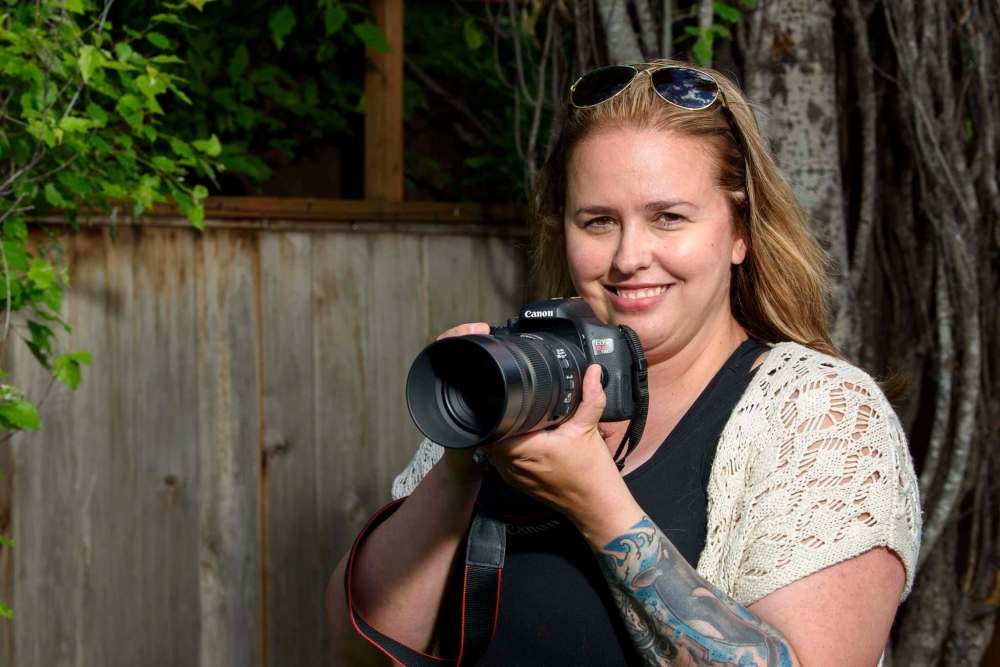
'I feel lucky because a lot of people go their entire life and never find their true passion, and for me photography is it,' wildlife photographer Yvonne Kipling says.
JESSE BOILY / WINNIPEG FREE PRESS 'I feel lucky because a lot of people go their entire life and never find their true passion, and for me photography is it,' wildlife photographer Yvonne Kipling says.

“I’ve always been a dog lover, but I love all animals in general and specifically rescue animals,” Kipling, 37, said of her campaign. “I always tell my husband that if we won the lottery I’d open an animal sanctuary for all kinds of rescues.”

That lifelong love of animals blossomed about 10 years ago into her second passion — taking photos of Manitoba’s wilderness creatures in their natural habitat.

When she’s not at her full-time job as a provincial civil servant, Kipling scours the countryside in search of owls, eagles, moose, bear, wolves and other wildlife to capture with her camera.

“It (wildlife and nature) photography is my passion. It truly is. I feel lucky because a lot of people go their entire life and never find their true passion, and for me photography is it,” she said. “I like to use my skills to help people and animals in general.

“It’s just something that I love. It’s hard to put into words. It’s not easy to walk out your door and spot an eagle. You have to work for it, hunt for it. When I take a picture I’m, like, ‘Wow!’ I’m always after that next ‘Wow!’ moment. I love that I can do it in Manitoba.”

For the fundraiser, potential buyers can peruse her prints online at yvonnekipling.com and contact her via email about which one they’d like to purchase to support the shelter. The prices range from $50 for an 8×10 to $100 for a 24×36 photo.
JESSE BOILY / WINNIPEG FREE PRESS
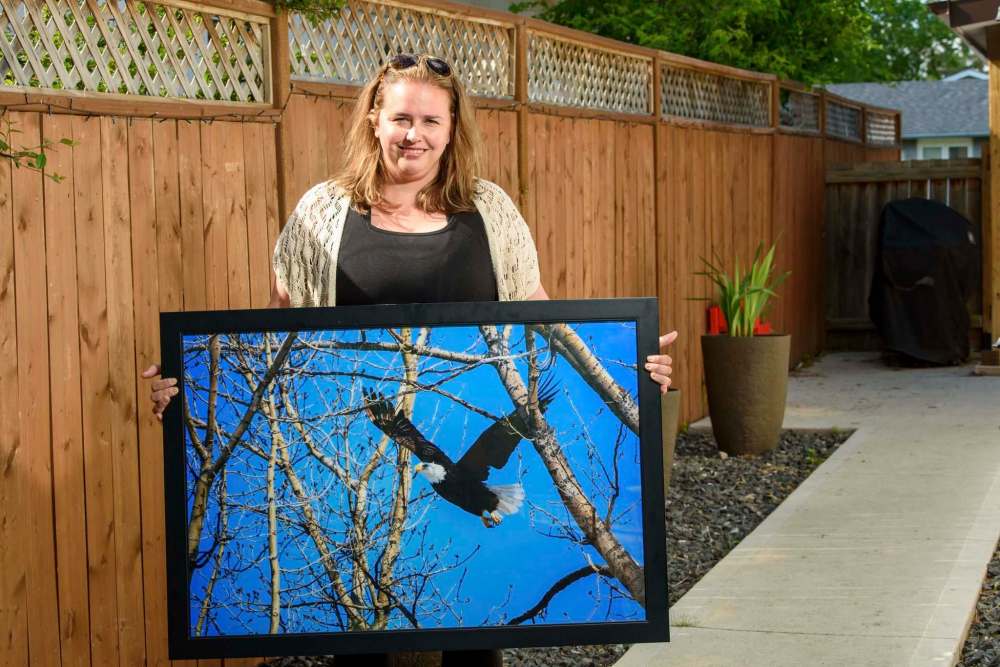
Yvonne Kipling says she loves the thrill of finding, and then successfully photographing, wildlife such as this eagle.
JESSE BOILY / WINNIPEG FREE PRESS Yvonne Kipling says she loves the thrill of finding, and then successfully photographing, wildlife such as this eagle.

“With the pandemic we’ve been going through, some of the rescues have suffered,” she said. “Anything I can do to help out animal shelters is important. They need our help. I’d love to be able to raise $5,000 for them or even more. I just want to raise as much money as I can to help.”

Kipling has a particular fondness for Winnipeg Pet Rescue Shelter — two of the three dogs she has owned in recent years were obtained from the no-kill shelter after being rescued in northern Manitoba.

“The shelter has a special place in my heart,” she said. “But also I love that they are Manitoba’s first no-kill shelter. They do a lot of good work in the community. This is just one small way I can help out in the rescue community.”

Carla Martinelli-Irvine, founder and executive director of the no-kill shelter at 3062 Portage Ave., said the Photos for Rescues fundraiser couldn’t come at a better time.

“We are honoured,” Martinelli-Irvine said this week, who calls Kipling’s photography “unbelievable,” particularly her shots of eagles. “I could kiss and hug her… She is very kind and philanthropic.”

The shelter was deemed an essential service and has remained open throughout the pandemic, with limits on the number of visitors allowed, strict social distancing and sanitization, and mandatory mask-wearing.
JESSE BOILY / WINNIPEG FREE PRESS
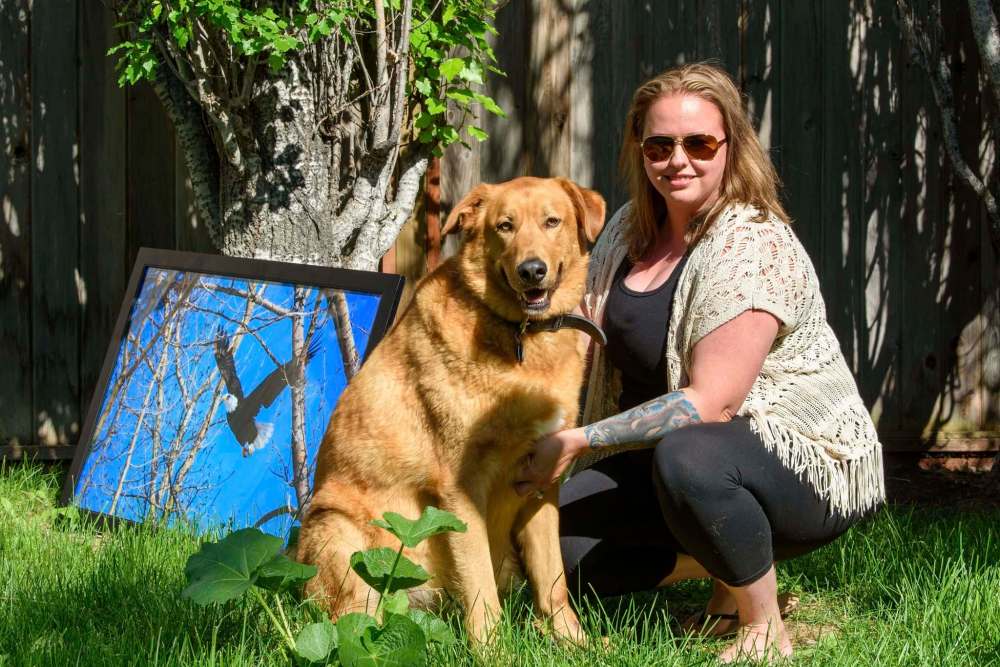
Yvonne Kipling, with her rescue dog Jimbo, says she has a special place in her heart for pet rescue shelters.
JESSE BOILY / WINNIPEG FREE PRESS Yvonne Kipling, with her rescue dog Jimbo, says she has a special place in her heart for pet rescue shelters.

But the shelter founder said the novel coronavirus epidemic caused a hefty chunk of donations and adoptions to evaporate.

“It’s hit us very hard,” she said. “The first month (March) our donations were down over 70 per cent. That’s very significant, but I never laid off anyone. People who donated monthly we lost, because many were laid off work.

“We are always desperate for donations. We’re 100 per cent donor supported. We don’t get any government funding. If donations go down, the shelter is in trouble.”

The shelter handles roughly 1,000 animals, mainly dogs and cats, every year and faces an uphill battle to afford expensive medications and vet bills.

“Everybody loves the concept of no-kill, but it’s very expensive to keep open,” Martinelli-Irvine, 59, said. “Many of the animals at the shelter are injured or abused and need veterinary work and that can be expensive.

“We have coin-collection canisters throughout the city and all the businesses around the city were closed, so that hurt us. And all of our community fundraising events were cancelled for the year.”
Yvonne Kipling photo
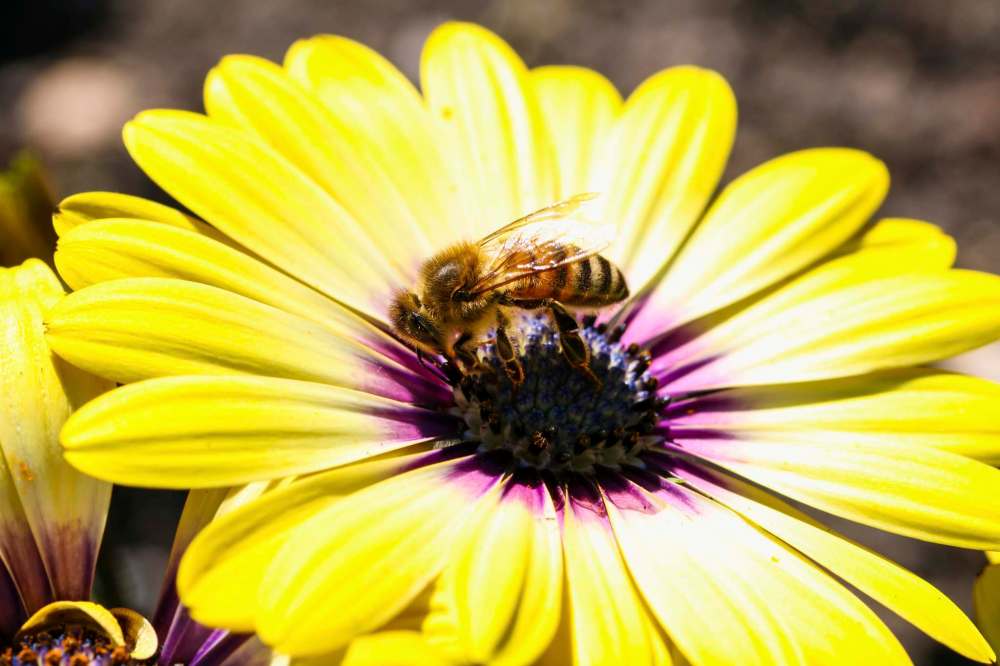
A wasp lands on a Spanish margriet flower.
Yvonne Kipling photo A wasp lands on a Spanish margriet flower.

The shelter continued in-person adoptions, but asked customers to visit only if they were serious about making a rescue animal part of their home. The number of visitors allowed at the shelter has been raised to 15 from six.

“We’ve started to see older cats getting adopted, cats who’ve been with us a long time. That’s really positive,” Martinelli-Irvine said. “As soon as the cages empty out, they fill up again.”

doug.speirs@freepress.mb.ca

History

Updated on Tuesday, June 23, 2020 9:33 PM CDT: File fixed to display properly.

Report Error Submit a Tip

More Stories

Icy relationship with U.S. beginning to thaw at border, data shows; American visits to Manitoba hit five-year high

Nicole Buffie 5 minute read Preview

Icy relationship with U.S. beginning to thaw at border, data shows; American visits to Manitoba hit five-year high

Nicole Buffie 5 minute read Yesterday at 5:32 PM CDT

As Canadians begin to lower their elbows and start to cross the U.S. border again, Americans are coming to Manitoba in numbers not seen in years.

Read
Yesterday at 5:32 PM CDT

Proposed Transcona development — which could add 20,000 people — gets thumbs down from residents

Joyanne Pursaga 5 minute read Preview

Proposed Transcona development — which could add 20,000 people — gets thumbs down from residents

Joyanne Pursaga 5 minute read 6:15 PM CDT

Dozens of Winnipeggers fear plans to make way for up to 20,000 more people to live in south Transcona would dramatically alter their neighbourhood and tie hefty fees for new services to their property titles.

If city council adopts the proposed South Transcona secondary plan, all future development applications would need to conform to its goals. The affected area is located south of Dugald Road, north of St. Boniface Road, east of Plessis Road and west of Murdock Road.

Homeowner Virginia Page Jähne fears the plan could add a massive tab to the title of her 4.3-acre property to cover services required for the development.

“My main concern is that they are wanting to put $1.4 million onto my title to pay for this. Now, they say that I will not have to pay it unless I subdivide. But if a person comes by and wants to buy from me … and they see that $1.4 million … what’s the first thing (they’re) going to do?” said Page Jähne, in an interview.

Read
6:15 PM CDT

Moving rail lines outside city would make Winnipeg ‘major transportation hub’

Carol Sanders 6 minute read Preview

Moving rail lines outside city would make Winnipeg ‘major transportation hub’

Carol Sanders 6 minute read Wednesday, Aug. 12, 2026

After decades of calls to move rail traffic to the outskirts of Winnipeg, a plan that would benefit residents, railways and taxpayers is now on track, says the former Winnipegger leading the way.

A rail line bypass south of the city, using Crown-owned land and the Manitoba Hydro corridor, would take 20 years to complete, remove 120 railway crossings that are a safety risk and free up about 250 acres of Winnipeg land over time for development, Lloyd Axworthy said Wednesday.

“The visions that we have have to be implemented,” Axworthy said at a news conference announcing the launch of a 90-day feasibility study to move freight rail traffic out of Winnipeg’s urban core along Manitoba Hydro’s southern transmission corridor, connecting east to west along the Perimeter Highway.

The former federal transport minister and Manitoba MP was tasked by Premier Wab Kinew in October 2024 to lead a two-year rail relocation feasibility study.

Read
Wednesday, Aug. 12, 2026

‘No CUSMA, no booze-ma’: Kinew

Malak Abas 4 minute read Preview

‘No CUSMA, no booze-ma’: Kinew

Malak Abas 4 minute read Wednesday, Aug. 12, 2026

With the next round of tariffs set to hit Canadian goods next week, and a new report suggesting Manitobans could be severely impacted if the Canada-U.S.-Mexico agreement on trade breaks down, Premier Wab Kinew pledged Wednesday to keep working with the U.S. ambassador — and keep American booze off Manitoba shelves, for now.

Read
Wednesday, Aug. 12, 2026

WRHA directs three care homes to accommodate surge of hospital patients

Malak Abas 5 minute read Preview

WRHA directs three care homes to accommodate surge of hospital patients

Malak Abas 5 minute read Updated: 5:01 PM CDT

The Winnipeg Regional Health Authority has directed three long-term care centres to make space for hospital patients, citing “exceptionally high demand for care across the health-care system.”

Read
Updated: 5:01 PM CDT

PCs say Hutterite colonies singled out by Bill 21

Alex Lambert 4 minute read Preview

PCs say Hutterite colonies singled out by Bill 21

Alex Lambert 4 minute read 2:01 AM CDT

SOURIS — Members of Hutterite colonies in the province took aim at the NDP government’s proposed changes to drinking water legislation during a public meeting Thursday in Souris.

The meeting was hosted by Progressive Conservative MLA Colleen Robbins (Spruce Woods) to hear from rural residents about their concerns over Bill 21, which the government says will improve oversight on wells and other water systems in the province.

“There’s not enough clarity, but I feel that the overreach that this bill will bring is not clearly defined, and it could have a lot of negative consequences,” attendee Gilbert Hofer, a member of Green Acres colony near Wawanesa, said after the meeting, which drew about 20 people.

The legislation would allow public health officers to designate the type of water source based on its intended use, water quality and use duration rather than solely the number of connections it has.

Read
2:01 AM CDT