Private school plans including smaller classes show stark inequities in education
Advertisement
Read this article for free:
or
Already have an account? Log in here »
To continue reading, please subscribe:

Digital Subscription
One year of digital access for only $205*
- Enjoy unlimited reading on winnipegfreepress.com
- Read the E-Edition, our digital replica newspaper
- Access News Break, our award-winning app
- Play interactive puzzles
*First annual payment billed as $205.00 + GST for one year. This annual subscription will automatically renew at $233.00 + GST every 52 weeks (10% off the regular annual price of $259.35). Offer available to new and qualified returning subscribers only. Cancel any time.
To continue reading, please subscribe:
Add Free Press access to your Brandon Sun subscription for only an additional
$1 for the first 4 weeks*
- Enjoy unlimited reading on winnipegfreepress.com
- Read the E-Edition, our digital replica newspaper
- Access News Break, our award-winning app
- Play interactive puzzles
*Your next Brandon Sun subscription payment will increase by $1.00 and you will be charged $17.95 plus GST for four weeks. After four weeks, your payment will increase to $24.95 plus GST every four weeks.
Read unlimited articles for free today:
or
Already have an account? Log in here »
Hey there, time traveller!
This article was published 11/08/2020 (2200 days ago), so information in it may no longer be current.
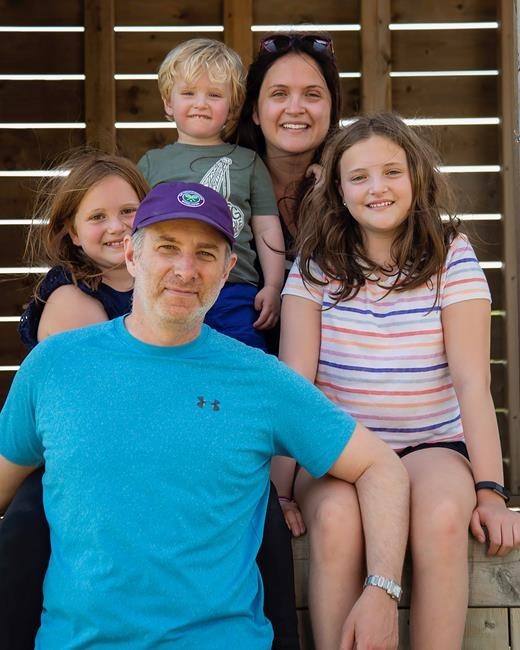
TORONTO – With children in both public and private schools, Toronto mom Karuna Satov is weighing two very different back-to-school pandemic plans.
Her younger son and daughter’s downtown private elementary school is offering smaller class sizes, an expanded outdoor program, air purifiers in every room, more handwashing stations, and additional teachers to allow for smaller cohorts and greater supervision.
Things are less clear at her 13-year-old’s public high school, and Satov fears long-standing inequities between each system will be especially stark this year.
She notes the school board has told families to expect an alternating schedule of in-person and remote classes.
But Satov wants to know more about the particular curriculum at her daughter’s performing arts school since experts warn singing increases the risk of COVID-19 spread. She’s also uncertain remote learning will work, recalling difficulties her daughter had last spring.
“Everything is so unclear as to what’s happening,” says Satov, criticizing the province for not committing enough money to guarantee smaller class sizes across all grades, increase staff and improve infrastructure in the public system.
“From appearances, the Ontario government is not really working with educators.”
In contrast, Satov says she’s feeling good about sending her four- and 10-year-olds to the Mabin School this fall, despite the pandemic stretching finances.
They registered her youngest for kindergarten back in February but became unsure it was worth the $27,000 tuition if the pandemic forced remote learning this fall. They ultimately decided it was worth it the day before Ontario announced its reopening plan July 30.
Of course, not many families have the resources to make such choices, says the executive director of the advocacy group People for Education, who expects the back-to-school rollout will widen inequities — including those within the public system.
“Everything about COVID has amplified the socio-economic divide,” says Annie Kidder, noting some public school families are looking into hiring tutors to essentially form their own micro-schools.
While some educators report increased interest in private school enrolment this year, Kidder says the uncertainties of the pandemic make it hard to predict whether any trend might be developing.
“Anytime there’s any kind of upheaval in the education system people talk about a flight to private schools, but it’s actually never really happened,” she says.
“It’s remained relatively steady for years. The average in Canada was 95 per cent of kids going to public schools. Now it’s 93 per cent and that change has happened over the last two decades.”
Still, it’s easy to see why public school families with the means to do so may be tempted to go private.
While Ontario has provided additional funding for COVID-19-related health and safety measures, critics including the Toronto District School Board say it’s not nearly enough to lower elementary class sizes to the 15-to-20 student range that might meet the physical distancing advice of experts.
The TDSB and several other health and education groups are pushing for changes before school resumes Sept. 8, while Kidder suggests delaying the start date to allow for increased measures.
Back in June, Ontario suggested an in-class framework that capped class sizes at 15, and that’s the model many private schools have been working towards all summer, says Sarah Craig, executive director of the Conference of Independent Schools of Ontario, which represents 45 schools including many of the province’s largest and most established.
She says that will remain the case, even though Ontario’s latest reopening plan has not asked schools to reduce elementary class sizes.
“There’s definitely support from SickKids hospital and the other children’s hospitals in the province to (implement) smaller cohorts, especially to support contact tracing if there was a case or an outbreak,” says Craig, estimating that her schools are spending anywhere from hundreds of thousands of dollars to millions in additional salaries and COVID-related measures.
Mabin principal Nancy Steinhauer says she can sympathize with public school boards hamstrung by tight budgets, as well as red tape and bureaucracy.
Before joining Mabin, Steinhauer was an inner city principal in the public system and knows how challenging it can be to shift course.
“There’s more red tape, there’s more restrictions, there’s more bureaucracy and in an independent school there’s virtually no bureaucracy,” says Steinhauer, who also fears inequities will deepen this year.
“And we are funded differently so you know I really feel strongly that the provincial government needs to fund more (public school) staff so that kids could be cohorted properly.”
Steinhauer says she expects to welcome about 130 kids from junior kindergarten to Grade 6 this fall, when they will find many new COVID-19 measures. They include four extra teachers and one extra teaching assistant, and leased three floors in a nearby building to house Grades 4 to 6.
Steinhauer adds she’s also seeking a permit to teach in a nearby park because the school itself does not have much greenspace, and she has installed more sinks.
“Almost every classroom has access to a sink in the classroom now,” she says.
Even though it won’t have the resources of Mabin, Satov suspects her daughter’s new public school will have more precautions than others because it’s specialized.
It’s also in one of the designated regions of the province that is mandating secondary school cohorts of 15 students and an alternating schedule of in-person and remote classes.
She notes her daughter’s previous public school was crowded and seemed underfunded.
“Last year, she had a class of 37 kids … in her Grade 8 class, and there was no soap in the bathroom,” Satov says.
“If she was going to just a regular public school I don’t know what we would do.”
This report by The Canadian Press was first published Aug. 11, 2020.