COVID-19 could make transition to standard time smoother, say experts
Advertisement
Read this article for free:
or
Already have an account? Log in here »
To continue reading, please subscribe:

Digital Subscription
One year of digital access for only $205*
- Enjoy unlimited reading on winnipegfreepress.com
- Read the E-Edition, our digital replica newspaper
- Access News Break, our award-winning app
- Play interactive puzzles
*First annual payment billed as $205.00 + GST for one year. This annual subscription will automatically renew at $233.00 + GST every 52 weeks (10% off the regular annual price of $259.35). Offer available to new and qualified returning subscribers only. Cancel any time.
To continue reading, please subscribe:
Add Free Press access to your Brandon Sun subscription for only an additional
$1 for the first 4 weeks*
- Enjoy unlimited reading on winnipegfreepress.com
- Read the E-Edition, our digital replica newspaper
- Access News Break, our award-winning app
- Play interactive puzzles
*Your next Brandon Sun subscription payment will increase by $1.00 and you will be charged $17.95 plus GST for four weeks. After four weeks, your payment will increase to $24.95 plus GST every four weeks.
Read unlimited articles for free today:
or
Already have an account? Log in here »
Hey there, time traveller!
This article was published 30/10/2020 (2155 days ago), so information in it may no longer be current.
Just when you thought 2020 couldn’t get any darker, the end of daylight time this weekend will make dusk come one hour earlier.
Much of Canada is set to turn back the clocks at 2 a.m. on Sunday, giving people an extra hour of sleep in exchange for darker evenings as winter sets in.
The return to standard time is reigniting the debate about whether the rest of Canada should follow Yukon in moving to a singular year-round time setting, as legislators in several provinces consider doing away with the seasonal ritual.
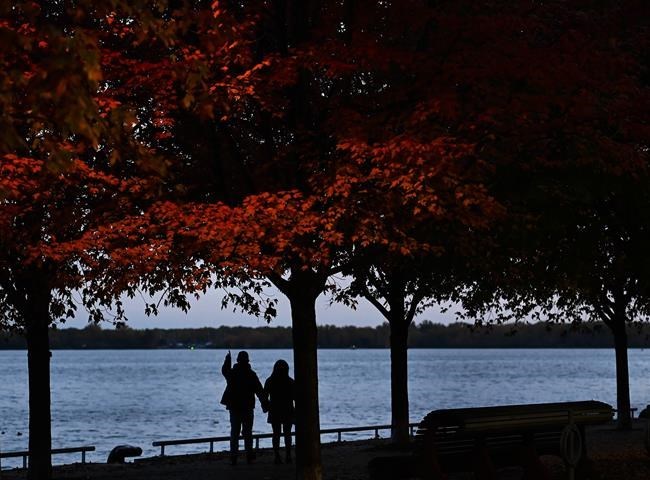
But experts say “falling back” may feel a little different this year as the COVID-19 pandemic has upended our usual schedules.
Some professors predict the time-warping nature of the crisis could ease the adjustment, while a permanent-time proponent says the one-hour shift will compound the discombobulation of life under lockdown.
While the twice-yearly tradition continues to be a source of fervid contention, University of Toronto medical professor Donald Redelmeier says one thing is as certain as the sun rises: We have bigger worries.
“The daylight savings time effect, if it exists, is going to be astonishingly small this year,” said Redelmeier.
“All those adverse effects are tiny compared to the huge hassles that have been caused by the COVID-19 pandemic.”
Many of the concerns about time toggling revolve around how it impacts circadian rhythms, the body’s internal clock that regulates sleep-wake cycles, which is largely governed by exposure to natural light.
Critics say that shifting the times of sunrise and sunset throws this biological system out of sync.
The American Academy of Sleep Medicine issued a position paper this month pushing for a permanent switch to standard time, citing studies that link the clock reset to public health and safety risks ranging from mood changes to an uptick in traffic collisions.
But Redelmeier, a senior scientist at health research organization ICES, predicts that the putative negative side-effects of the time change will be eclipsed, if not alleviated, by the global upheaval of the pandemic.
As far as sleep habits are concerned, Redelmeier said the work-from-home lifestyle has probably been a boon to chronic snooze-button hitters, allowing many workers to catch up on their beauty rest rather than plodding through grooming routines and sitting in rush-hour traffic.
The researcher at Sunnybrook Hospital, which is home to Canada’s busiest trauma centre, is skeptical of the contention that the switch to standard time reduces road safety by extending dark evenings, which is linked to higher risks of crashes. He points to a 2017 paper in the British Medical Journal suggesting that the academic literature on the issue is inconclusive at best.
But taking the claim at face value, Redelmeier said this supposed short-term impact on crashes would be negligible given reported plunges in traffic levels since the pandemic began, which at least in Toronto, has led to a dramatic drop in pedestrian deaths.
But a movement to keep the clocks fixed is picking up steam in Canada after Yukon moved to permanent daylight time in March. Parts of Saskatchewan and Nunavut have also settled on one time year-round.
Lawmakers in British Columbia, Alberta and Ontario put forward proposals to stay on daylight time, provided that their neighbouring provinces or U.S. states follow suit. Public surveys in the West suggest there’s widespread support for the measure, and some advocates say COVID-19 fatigue could solidify that sentiment for many Canadians.
“People have been fed up with the time switch for a long time,” said Wendy Hall, a professor emeritus at the University of British Columbia’s school of nursing.
“When you’re already dealing with COVID, and you’re already dealing with lots of stress in your life, having one more stressor, which is the time shift, is really difficult for people.”
Hall said she helped conduct a small survey of parents of children with insomnia suggesting that some kids are sleeping more under lockdown, while others are struggling to get some shut-eye.
She expects these disruptions will only become more acute when standard time ushers in early sunsets, potentially prompting a short-term downswing in mood.
But Steve Joordens, a psychology professor at University of Toronto, believes a bit more morning sunshine may be welcome given the gloomy state of affairs.
“We already have to wake up to the realization that COVID is still here,” said Joordens. “A little bit of brightness could give us a little bit of a push.”

As COVID-19 has eliminated many of our normal routines, Joordens said the change in light patterns could provide a natural sense of structure by making people feel more energized in the morning and ready for bed at an earlier hour.
These effects would wear off in a few weeks, Joordens said. But in these troublesome times, he reckons an extra hour of rest couldn’t hurt as Canadians brace for a winter of contagion-fuelled discontent.
“Who knows how far along we are on this marathon, but it has an end, and we’re running towards that end,” said Joordens. “What we need during all this COVID is to keep time.”
This report by The Canadian Press was first published Oct. 30, 2020.
Note to readers: This is a corrected story. A previous version erroneously said that the American Academy of Sleep Medicine is advocating for a permanent shift to daylight time. In fact, the academy is in favour of year-round standard time.