Peace Tower flag lowered on Canada Day to honour Indigenous children: Trudeau

Advertisement

Advertise with us

OTTAWA - Prime Minister Justin Trudeau said he asked that the national flag on the Peace Tower remain at half-mast for Canada Day to honour the Indigenous children who died in residential schools.

Read this article for free:


or

Already have an account? Log in here »

To continue reading, please subscribe:

Subscribe and receive a limited-edition Free Press branded hat or tote.

Digital Subscription

One year of digital access for only $205*

  • Enjoy unlimited reading on winnipegfreepress.com
  • Read the E-Edition, our digital replica newspaper
  • Access News Break, our award-winning app
  • Play interactive puzzles

*First annual payment billed as $205.00 + GST for one year. This annual subscription will automatically renew at $233.00 + GST every 52 weeks (10% off the regular annual price of $259.35). Offer available to new and qualified returning subscribers only. Cancel any time.

To continue reading, please subscribe:

Add Free Press access to your Brandon Sun subscription for only an additional

$1 for the first 4 weeks*

  • Enjoy unlimited reading on winnipegfreepress.com
  • Read the E-Edition, our digital replica newspaper
  • Access News Break, our award-winning app
  • Play interactive puzzles
Start now

*Your next Brandon Sun subscription payment will increase by $1.00 and you will be charged $17.95 plus GST for four weeks. After four weeks, your payment will increase to $24.95 plus GST every four weeks.

Hey there, time traveller!
This article was published 30/06/2021 (1897 days ago), so information in it may no longer be current.

OTTAWA – Prime Minister Justin Trudeau said he asked that the national flag on the Peace Tower remain at half-mast for Canada Day to honour the Indigenous children who died in residential schools.

In a post on his Twitter account Wednesday, Trudeau said he made the decision as he and many Canadians reflect on the tragedy of the institutions.

Hours later, the Lower Kootenay Band in British Columbia said a search using ground-penetrating radar had found 182 human remains in unmarked graves at a site close to a former residential school in Cranbrook.

The Canadian flag on the Peace Tower flies at half-mast on Parliament Hill in Ottawa on Wednesday, June 2, 2021. Prime Minister Justin Trudeau says he asked that the national Canadian flag on the Peace Tower remain at half-mast for Canada day as Canadians continue to honour the Indigenous children who died in residential schools. THE CANADIAN PRESS/Sean Kilpatrick

Speaking at a news conference in Ottawa, Trudeau said it’s not just for institutions and governments to act to right the wrongs that were done to Indigenous people but it’s also for individual Canadians to have conversations on what should be done.

“We have to know not everyone is going to be celebrating tomorrow, and understanding their pain and their anger and reflecting on that and thinking about how each of us can commit ourselves (to do better),” he said.

“Each of us, in our daily lives can say, ‘This is part of my problem, my responsibility, as a Canadian, to think about how I can bend this curve towards justice, towards reconciliation.'”

Trudeau, who just finished quarantining after returning from Europe, said he got a text message from his son Xavier asking him whether his father will cancel Canada Day because of the history of residential schools.

“I told him it’s going to be a day where, yes, we will celebrate the great things about this country but we will mostly reflect on the work that we all have to do as individuals and as institutions to be better,” Trudeau said.

“That’s what this Canada Day, I think, will be about for a lot of families. It’s certainly what it’s going to be about for my family.”

Cowessess First Nation last week said that ground-penetrating radar detected 751 unmarked graves at the former Marieval Indian Residential School east of Regina, Sask., a few weeks after the finding of what are believed to be the remains of 215 children in Kamloops, B.C.

Canadian Heritage plans to still go ahead with virtual Canada Day events like last year, with an online music show featuring English, French and Indigenous artists.

Mikisew Cree First Nation in Alberta urged its members to wear orange tomorrow as a day of reflection and remembrance to pray for those found in British Columbia and Saskatchewan.

Chief Peter Powder said it has been an incredibly difficult time for all Indigenous Peoples.

“We need to seek the advice of our elders. We need to share our pain, to heal, to pray and to plan how to move forward,” he said in a statement.

“We need to find those who are missing and finally allow them to rest in peace. We can’t possibly dance and celebrate this Canada Day and pretend everything is OK because it’s not. We must and we will dig for the truth.”

Several cities and communities across the country have decided to forgo parts of their usual Canada Day festivities.

Events will be partially or fully cancelled in Saint John, Fredericton, Victoria, Wilmot Township in Ontario’s Waterloo region, and St. Albert, a city northwest of Edmonton, in solidarity with mourning Indigenous communities.

Several communities in Yukon including Dawson City, Teslin, Carmacks and Haines Junction have also chosen to scrap celebrations in light of the discovery of unmarked graves at former residential schools.

This report was first published by The Canadian Press on June 30, 2021.

This story was produced with the financial assistance of the Facebook and Canadian Press News Fellowship.

Report Error Submit a Tip

More Stories

Climate: ‘No good outcomes’

Gwynne Dyer 5 minute read 2:00 AM CDT

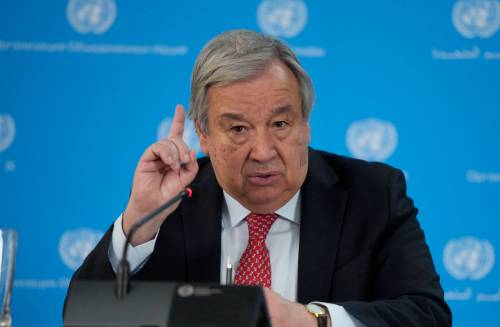
‘EL NIÑO is being supersized before our eyes,’ United Nations Secretary-General António Guterres said last week.

“The science leaves no room for doubt: the planet is in uncharted waters, and those waters are heating up. The world is in the danger zone of extreme weather.”

He’s right — we are in even deeper trouble than we thought on the climate front.

Zeke Hausfather, a leading American climate scientist, warns that 2027 is almost certain to be the hottest year. It will be, he said, “a climate time-machine, temporarily driving global average temperatures to levels not normally expected until the late 2030s.” (Note the “temporarily.” We’ll get back to that.)

Enrolment up at alternative schools

Maggie Macintosh 5 minute read Preview

Enrolment up at alternative schools

Maggie Macintosh 5 minute read Monday, Sep. 7, 2026

Independent schools are preparing to welcome a record number of students as more families pay for faith-based instruction and secular alternatives.

The overwhelming majority of Manitoba children — 200,000 — are starting in the public school system this fall. Since 2000, the percentage of students enrolled elsewhere — in homeschools, funded and non-funded independent schools — has nearly doubled, to 12 per cent from seven per cent.

“If money was no object, we could fill dozens and dozens more classrooms with the demand for independent education,” said Andrew Micklefield, executive director of the Manitoba Federation of Independent Schools, who is a former Tory government house leader.

The King’s School, Dasmesh School, Springs Christian Academy, Beautiful Saviour Lutheran School, Steinbach Christian School and IQRA Islamic School have all either upscaled at some point over the last five years or are actively in the process of expanding their footprint.

Read
Monday, Sep. 7, 2026

Winkler-based internet provider delivering high-speed service to 30 rural and First Nations Manitoba communities

Nicole Buffie 3 minute read Preview

Winkler-based internet provider delivering high-speed service to 30 rural and First Nations Manitoba communities

Nicole Buffie 3 minute read Yesterday at 7:12 PM CDT

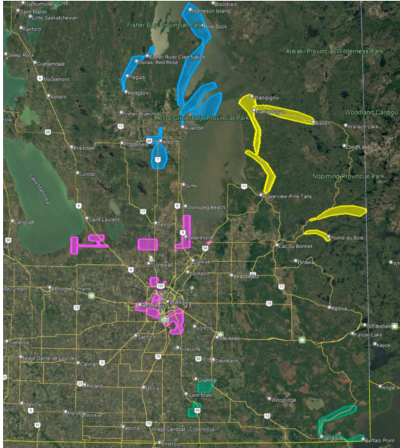
Valley Fiber says it is undertaking one of its largest fibre optic projects and is building infrastructure that will deliver internet to 10,000 homes and businesses in rural and First Nations communities across Manitoba.

“These communities will now have access to the fastest internet network in Manitoba, and it will power their lives and their business,” Ryan Klassen, chief executive officer of the Winkler-based internet provider, said Tuesday from Fisher River Cree Nation.

The province has granted Valley Fiber use of two of its underused cables on the existing Manitoba Hydro fibre optic network for up to 20 years as part of the project, which will connect nearly 30 communities — including Buffalo Point, Hollow Water, Black River and Peguis First Nations, along with Fisher River and Fox Lake Cree Nations — to high-speed internet.

Construction should be finished by 2027.

Read
Yesterday at 7:12 PM CDT

Double climate whammy hits home

Editorial 4 minute read Preview

Double climate whammy hits home

Editorial 4 minute read 2:00 AM CDT

It’s a bit of a one-two punch. First, the show-and-tell of what global warming could be bringing us. Then, the fact we’ve already failed our best chance of halting climate change.

Read
2:00 AM CDT

Forgo faceoff and augment wife’s self-esteem

Maureen Scurfield 5 minute read 2:00 AM CDT

DEAR MISS LONELYHEARTS: I’m married to a woman who’s older than I am, and it’s the second marriages for both of us. She’s beautiful, even after having what she calls “a few nips and tucks.”

Seriously, it was more than a few.

Her former husband insisted she had to appear a lot younger than him — so ridiculous!

I’ve never seen even one picture of her when she was not wrinkle-free.

Why our democracy depends on your vote

Erna Buffie 5 minute read 2:00 AM CDT

Some years ago, I did some pretty in-depth research on ancient Athens and its democratic system of government as part of a documentary film I was pitching. It was actually a lot of fun, because I was looking at ways their democratic beliefs and practices were both similar to and different from ours.

Some of the differences were quite striking, such as the fact that only Athenian-born males 18 years of age and over could participate. Or the fact their executive branch was selected by a totally random lottery system — a system one expert described as akin to picking names out of a phone book.

Then there was the practice of ostracism, a procedure I found particularly attractive. Essentially, every year the citizens of Athens chose a political figure who was becoming too powerful or pushing for a more authoritarian regime and voted to banish him from the city for 10 years.

Needless to say, I can think of quite a few politicians I’d like to see subjected to that procedure.