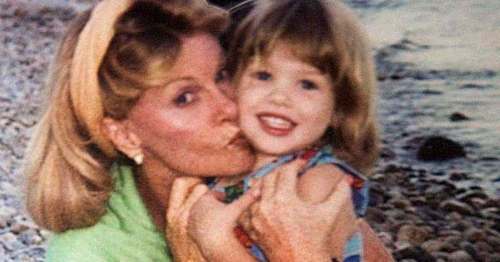
How a little girl put a human face to the 9/11 tragedy

Advertisement
Read this article for free:
or
Already have an account? Log in here »
To continue reading, please subscribe:

Digital Subscription
One year of digital access for only $205*
- Enjoy unlimited reading on winnipegfreepress.com
- Read the E-Edition, our digital replica newspaper
- Access News Break, our award-winning app
- Play interactive puzzles
*First annual payment billed as $205.00 + GST for one year. This annual subscription will automatically renew at $233.00 + GST every 52 weeks (10% off the regular annual price of $259.35). Offer available to new and qualified returning subscribers only. Cancel any time.
To continue reading, please subscribe:
Add Free Press access to your Brandon Sun subscription for only an additional
$1 for the first 4 weeks*
- Enjoy unlimited reading on winnipegfreepress.com
- Read the E-Edition, our digital replica newspaper
- Access News Break, our award-winning app
- Play interactive puzzles
*Your next Brandon Sun subscription payment will increase by $1.00 and you will be charged $17.95 plus GST for four weeks. After four weeks, your payment will increase to $24.95 plus GST every four weeks.
Read unlimited articles for free today:
or
Already have an account? Log in here »
Hey there, time traveller!
This article was published 11/09/2021 (1858 days ago), so information in it may no longer be current.
In the unsettled days after it happened, before we referred to it as 9/11, the news was on all the time.
The TV in my family’s living room was permanently glued to CNN. On a loop, the footage of the north tower of the World Trade Center billowing smoke over Manhattan, after American Airlines Flight 11 plowed through it on a cloudless September morning. The footage of United Airlines Flight 175 making explosive contact with the south tower, caught live by news cameras already trained in on the first tower.
I didn’t see it when it actually happened. I was getting ready for school, in my first few weeks of Grade 11. There were no smartphones, so there were no push notifications, no news alerts or texts buzzing in my pocket. The news was broken to me not by a journalist on TV, but by a breathless 16-year-old classmate, late for first period.
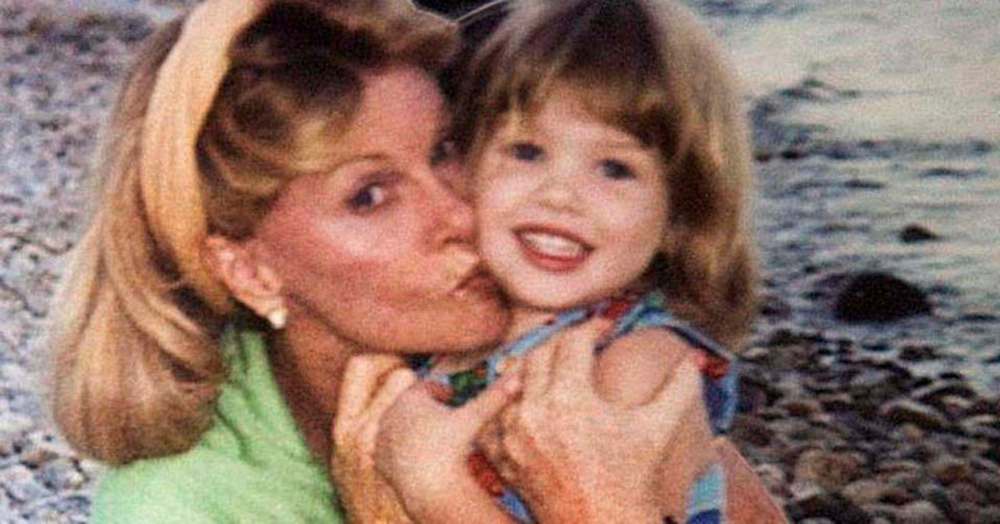
Eventually, CNN added a news crawl, listing the names and ages of the passengers aboard the hijacked planes. One of them stuck out to me: Juliana Valentine, 4. A little girl with a storybook name. I saw her name over and over again from the glow of that ever-present TV. I thought about how terrified she must have been. How terrified her mother must have been.
In the 20 years since it happened, I’ve thought a lot about Juliana Valentine, 4 — and, for a long time, that’s all I knew about her. A name on a manifest. In the years that immediately followed 9/11, the internet was still dial-up; the details of Juliana’s short life were not a Google search away, not like they are now.
Now, via a few simple clicks, I know that Juliana Valentine McCourt was from Connecticut. She was born on May 4. She had blue eyes and blond pigtails. She was a passenger on Flight 175, and she was travelling with her mom, Ruth. Juliana had a godmother, Paige, who was on Flight 11. They were going to Disneyland.
Last year, on what should have been her 23rd birthday, the National September 11 Memorial and Museum in New York City placed a white rose by her name. I learned that from Facebook.
In September 2019, Garrett M. Graff wrote a fascinating article for Wired called “Pagers, Pay Phones and Dialup: How We Communicated on 9/11” that also imagined what the experience of Sept. 11 would have been like if it had happened today: “We would Google ‘Taliban’ and end up reading Wikipedia to explain our new enemies to us, as Google Earth sleuths pointed out al-Qaida’s training camps outside Kandahar.”
Of course, as he points out, there’d also be Facebook Lives and Instagram stories. Perhaps the people on the planes would have grabbed furtive smartphone footage of what was happening to them. There would be countless images of death and destruction captured by people on the ground, and they would be posted in real time. There would be GoFundMe pages and hot takes and conspiracy theories and news explainers. Outrage in the form of 140-word tweets, grief in the form of prayer-hands emojis.
Graff argued that what made Sept. 11 so life-altering is that “experiencing tragedy collectively at such a nationalized and global scale was so new and unprecedented that day.” And now? “It seems likely that today we would turn not to one another for comfort, to grieve as a nation, but instead each burrow even deeper into our now ever-present phones, scrolling, clicking, liking, and emoji-ing as the tragedy unfolded.”

For, say, a 24-year-old, the age Juliana Valentine is supposed to be, it would be hard to remember a time before Google Images and Facebook. It would be hard to remember the collective experience of 9/11 at all if you were four years old when it happened — and it was something that happened on TV. In 2001, if you wanted to disengage from the news cycle, you changed the channel or turned the radio dial. It was still possible, then, to look away.
That’s not true for those to whom it happened, of course. The people left behind, the families ripped apart by the attacks themselves and the ensuing, decades-spanning wars — they still live with it. Juliana’s story is one of thousands from that day. The internet, and its ever-faster currents of information — coupled with the pull to document instead of experience — can indeed have a flattening, fragmenting and desensitizing effect as a tragedy is unfolding. But it can also connect us with the individual human stories from that day, stories that deserve to be shared and remembered.
The first responder. The family still hoping for a positive ID of a loved one’s remains. Or the little girl who never made it to Disneyland.
jen.zoratti@freepress.mb.ca
Twitter: @JenZoratti
Jen Zoratti is a columnist and feature writer working in the Arts & Life department, as well as the author of the weekly newsletter NEXT. A National Newspaper Award finalist for arts and entertainment writing, Jen is a graduate of the Creative Communications program at RRC Polytech and was a music writer before joining the Free Press in 2013. Read more about Jen.
Every piece of reporting Jen produces is reviewed by an editing team before it is posted online or published in print – part of the Free Press‘s tradition, since 1872, of producing reliable independent journalism. Read more about Free Press’s history and mandate, and learn how our newsroom operates.
Our newsroom depends on a growing audience of readers to power our journalism. If you are not a paid reader, please consider becoming a subscriber.
Our newsroom depends on its audience of readers to power our journalism. Thank you for your support.
Jen Zoratti is a columnist and feature writer working in the Arts & Life department, as well as the author of the weekly newsletter NEXT. A National Newspaper Award finalist for arts and entertainment writing, Jen is a graduate of the Creative Communications program at RRC Polytech and was a music writer before joining the Free Press in 2013. Read more about Jen.
Every piece of reporting Jen produces is reviewed by an editing team before it is posted online or published in print – part of the Free Press‘s tradition, since 1872, of producing reliable independent journalism. Read more about Free Press’s history and mandate, and learn how our newsroom operates.
Our newsroom depends on a growing audience of readers to power our journalism. If you are not a paid reader, please consider becoming a subscriber.
Our newsroom depends on its audience of readers to power our journalism. Thank you for your support.
Advertisement Advertise With Us
Advertisement Advertise With Us