Buffeted by weather, a historic Black town strives to endure
Advertisement
Read this article for free:
or
Already have an account? Log in here »
To continue reading, please subscribe:

Digital Subscription
One year of digital access for only $205*
- Enjoy unlimited reading on winnipegfreepress.com
- Read the E-Edition, our digital replica newspaper
- Access News Break, our award-winning app
- Play interactive puzzles
*First annual payment billed as $205.00 + GST for one year. This annual subscription will automatically renew at $233.00 + GST every 52 weeks (10% off the regular annual price of $259.35). Offer available to new and qualified returning subscribers only. Cancel any time.
To continue reading, please subscribe:
Add Free Press access to your Brandon Sun subscription for only an additional
$1 for the first 4 weeks*
- Enjoy unlimited reading on winnipegfreepress.com
- Read the E-Edition, our digital replica newspaper
- Access News Break, our award-winning app
- Play interactive puzzles
*Your next Brandon Sun subscription payment will increase by $1.00 and you will be charged $17.95 plus GST for four weeks. After four weeks, your payment will increase to $24.95 plus GST every four weeks.
Read unlimited articles for free today:
or
Already have an account? Log in here »
Hey there, time traveller!
This article was published 28/04/2022 (1606 days ago), so information in it may no longer be current.
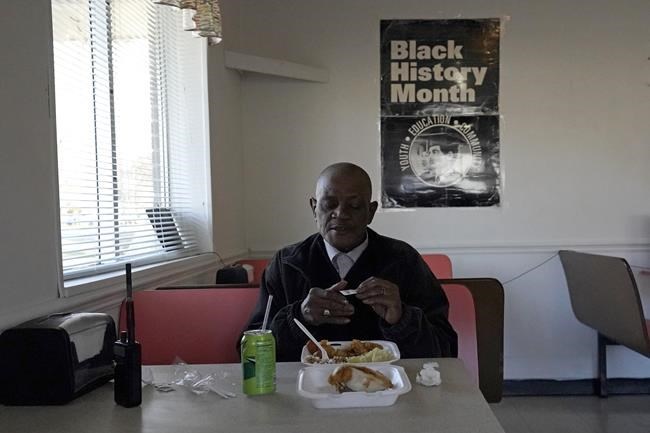
PRINCEVILLE, N.C. (AP) — As she exits her hometown’s only restaurant clutching an order of cabbage and hush puppies, Carolyn Suggs Bandy pauses to boast about a place that stakes its claim as the oldest town chartered by Black Americans nearly 140 years ago.
“It is sacred to me,” says Bandy, 65. “We got roots in this town.”
Yet Princeville, on the banks of the Tar River in eastern North Carolina, is one hurricane away from disaster.
The land has flooded many times. Two hurricanes 17 years apart created catastrophic flooding in the town, which was built on swampy, low-lying land in a bend in the river. And weather is hardly the only thing buffeting Princeville through the decades. It has endured racism, bigotry and attempts by white neighbors to erase it from the map, and from existence.
Now, with a changing climate, the future is more uncertain than ever. Hurricanes are likely to be more intense. Melting glaciers are causing sea levels to rise, making more flooding inevitable.
With each calamity comes a suggestion: Maybe the town should pick up and relocate to safer ground. Many residents, though, say Princeville should — must — stay put. On this land, they see connections — to both a shared history and a continuing fight for survival.
“These are sacred African-American grounds,” says Bobbie Jones, Princeville’s two-term mayor, using words that echo Bandy’s. “How dare we be asked to move our town?”
___
When freed slaves settled the land that is now Princeville, they didn’t choose the site because it was the best land. It was all the former slaves could afford.
“It was absolutely worthless,” says Jones, who grew up just outside the town limits. “Nobody wanted it. Nobody could see anything positive for the future of the swampland.”
Despite the poor location, the town thrived, growing from a population of 379 in 1880 to 552 at the turn of the 20th century. It had a school, churches and numerous businesses. The 2020 U.S. Census put the town’s population at 1,254, a steep decline from a decade earlier.
The town, incorporated in 1885, calls itself the oldest town chartered by Black Americans. Other towns also make that claim. Princeville — named in honor of Turner Prince, an African American carpenter who was born a slave and became one of the town’s first residents — survived multiple attempts by white neighbors to have its charter revoked.
But most dangerous to Princeville’s survival today is its unfortunate location. The town sits in a bend in the Tar River, 124 miles from the Atlantic Ocean at the edge of North Carolina’s coastal plain. When slow-moving storms come ashore and move inland, drenching rains drain into the rivers and flood towns along the banks.
An earthen dike surrounds the town on three sides, and it held nature at bay for more than 30 years. Then, in September 1999, Hurricane Floyd hit. Swollen by rain, pushed by winds, the Tar surged over, around and even under the dike, washing homes from their foundations and the dead from their graves.
“When Floyd came, it seemed like the end of the world,” says Navy veteran Alex Noble, 84, whose house took on several feet of water despite being about a mile from the river. “It seemed like you just were turned outdoors. You know, everything was wide open.”
Firefighter Kermit Perkins, whose mother was mayor at the time, remembers floating past utility poles, the power lines within easy reach of the wooden stick he was carrying.
“In that moment, in that boat, you didn’t know what the future was going to hold,” he says. “You didn’t know whether there was going to be a Princeville or not.”
The U.S. Army Corps of Engineers made plans to expand the levee to better protect the town. But then, in 2016, Hurricane Matthew struck, bringing more devastating flooding that left an estimated 80% of the town underwater, according to the Coastal Dynamics Design Lab.
Flooding is likely to get worse. Hurricanes will be “wetter and are likely to be more intense,” according a summary of the state’s climate written by N.C. State University, and melting glaciers are likely to increase sea levels.
Now, with a nearly $40 million plan to improve the levee, people hope for respite from the flooding. But as another hurricane season approaches, work has yet to begin. Updated computer modeling revealed that the original plan would have caused flooding in other areas. The corps is trying to come up with a better design.
The delay has frustrated Jones, as he said during the recent virtual celebration of Founders Day.
“If they can do it in the 1800s, certainly we can do it in 2022,” Jones said that day. “Our forefathers didn’t quit. Therefore, we can never quit.”
___
If there is to be a tomorrow for Princeville, it will rely on two accomplishments: restoring its history and bringing in new blood.
The town is full of single-family homes and an apartment complex interspersed with empty buildings that have been boarded up and abandoned as a result of the two latest floods. A church sits with its windows covered in plywood.
Commerce focuses on a small strip with a barber shop and a liquor store flanking a convenience store where residents can get snack foods, buy lottery tickets and fill up with gas. A separate building holds the small sit-down restaurant where Bandy got her food.
There’s no boat access to the river, and an old baptismal site is blocked off by a chain-link fence. The town park consists of a few outbuildings and a football field with old-style goalposts. It currently serves as a COVID-19 vaccination site.
As for basic services, you can’t bank, and the last grocery — called “New Beginnings” — closed in 2017, two years after it opened. There’s also a Dollar General store. Though the firehouse was rebuilt, the town no longer has its own police force and instead relies on deputies from the Edgecombe County Sheriff’s Office.
Jones thinks the town’s compelling past could be a lure for tourism. Theming a community around its history, after all, has proved lucrative and restorative for many places. But after so much flooding, very little of historic Princeville is left.
The clapboard, double-chimneyed town hall stands next to the rebuilt fire station with bits of tattered insulation flapping in the breeze. It’s hoped the building can be converted into a museum.
The Mt. Zion Primitive Baptist Church, with its two front doors and original stained-glass windows, was restored after Floyd but inundated again during Matthew. It remains shuttered, its walls still ripped out several feet high, its congregation worshipping at a nearby sanctuary.
In front of the church stands a marble monument to co-founder Abraham Wooten, whose house on Mutual Boulevard, is believed to be the oldest structure in town — with parts of it thought to date to the 1870s. But it remains exposed to the elements, vines creeping along the eaves and choking the old stove pipe on the roof.
Historical consultant Kelsi Dew says the town is seeking funds to preserve the house and would like to see it placed on the National Register of Historic Places. But in another irony for Princeville, Dew says raising the house above flood levels would make it ineligible for a listing, “as it would compromise the historical context.”
Luring new business into Princeville will likely involve offering incentives such as tax breaks, the kind that are offered by state governments seeking to land a major manufacturer. Housing is an issue, too: While some homes are being elevated, other homeowners have accepted buyouts from the N.C. Hazard Mitigation Grant Program.
The town has purchased two tracts of land totaling 141 acres. There, its leaders hope, will rise new homes and businesses, possibly a hotel and a truck stop — all located near the proposed Interstate 87, which is set to connect the state capital of Raleigh to Norfolk, Virginia.
Even with an improved levee, no one can guarantee the town won’t flood again. It would cost some $200 million, according to a 2014 Corps draft study, to truly protect the town from a Floyd-level storm, “more than can be justified and more than the state or community can afford.”
And many struggling towns trying to keep and attract young people have found their efforts insufficient.
Betty Cobb, 74 and another lifelong resident, knows that young people graduate from high school or college and aren’t looking to come back.
“Now, my grandson and my granddaughter, who’s graduating this year, have grown up over here. Anything they want to do, they had to leave Princeville,” Cobb says. “So, I’m thinking as long as we don’t have things of that nature in place, they’re not going to, people are not going to come back here and raise their children.”
___
The challenges are obvious. But give up? Those who live in Princeville aren’t there. Not yet.
Deborah Shaw has lived all 61 of her years in Princeville, 31 of them working for the sheriff’s office. Even with the lure of a new town and new surroundings, Shaw says, Princeville calls her back.
“You always get an itch to go other places,” Shaw says. “But you’re always going to return back to your original spot. And Princeville is my original spot.”
Tracey Knight was in Princeville in 1999 when her family’s trailer park was flooded. Knight moved to Georgia in 2005 and came back to the area in 2013. When she opened Tray-Seas Soul Food on Main Street last November, in “one of the failingest” spots in town, people thought she was crazy.
“They said that no one ever makes it here in this building,” says Knight. “And I was like, `Wow. Well, I’m going to be the one that makes it here.’”
Why take the risk? “Faith,” she says. “You’ve got to keep the faith.”
And Noble, who came to Princeville with his wife in 1963, thinks of the freed slaves who built Princeville, and what they might say to today’s residents.
“You know, they always said, ‘Don’t give up. Don’t give up,’” he says. And that’s what we got to do. Stick with it. … You know, we didn’t come this far to turn around.”