At 25, Backyard Bird Count shows power of citizen science
Advertisement
Read this article for free:
or
Already have an account? Log in here »
To continue reading, please subscribe:

Digital Subscription
One year of digital access for only $205*
- Enjoy unlimited reading on winnipegfreepress.com
- Read the E-Edition, our digital replica newspaper
- Access News Break, our award-winning app
- Play interactive puzzles
*First annual payment billed as $205.00 + GST for one year. This annual subscription will automatically renew at $233.00 + GST every 52 weeks (10% off the regular annual price of $259.35). Offer available to new and qualified returning subscribers only. Cancel any time.
To continue reading, please subscribe:
Add Free Press access to your Brandon Sun subscription for only an additional
$1 for the first 4 weeks*
- Enjoy unlimited reading on winnipegfreepress.com
- Read the E-Edition, our digital replica newspaper
- Access News Break, our award-winning app
- Play interactive puzzles
*Your next Brandon Sun subscription payment will increase by $1.00 and you will be charged $17.95 plus GST for four weeks. After four weeks, your payment will increase to $24.95 plus GST every four weeks.
Read unlimited articles for free today:
or
Already have an account? Log in here »
Hey there, time traveller!
This article was published 15/02/2023 (1308 days ago), so information in it may no longer be current.
It’s a given that when the Great Backyard Bird Count begins Friday, Steve and Janet Kistler of Hart County, Kentucky, will be joining in. They’ve done so every year since the now-global tradition began 25 years ago.
For Moira Dalibor, a middle-school math teacher a couple hours away in Lexington, this will be the first count. She’s leading a group of students and parents to an arboretum for an exercise in data-gathering.
They’re expected to be among hundreds of thousands of people around the world counting and recording over four days, Feb. 17-20. Last year, about 385,000 people from 192 countries took part in the Great Backyard Bird Count, or GBBC.
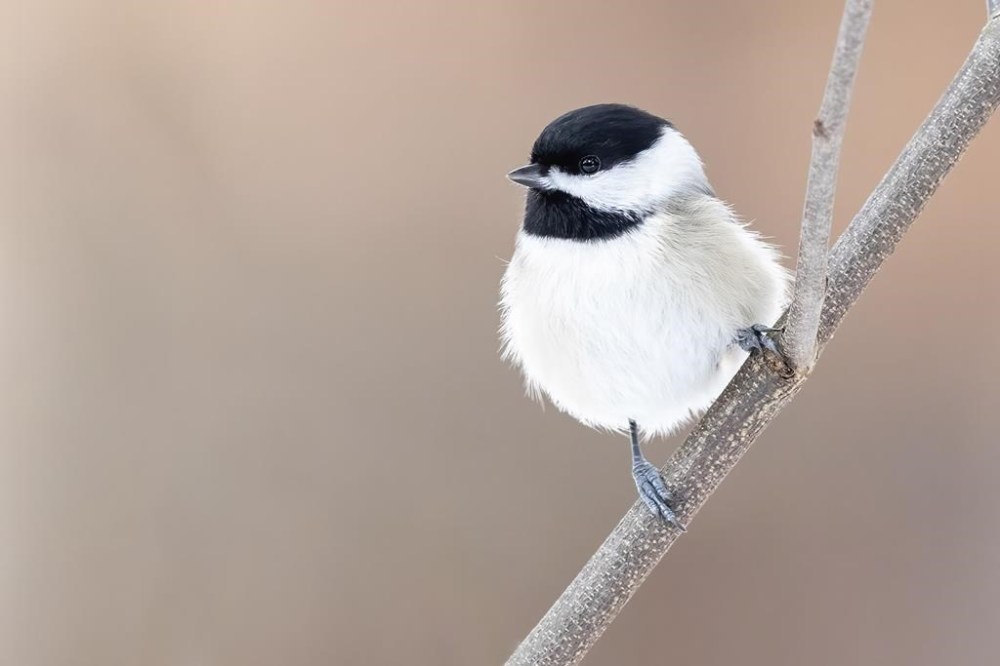
“Every year we see increased participation,” and 2022 was a big jump, says Becca Rodomsky-Bish, the project’s leader at the Cornell Lab of Ornithology, in Ithaca, New York, which organizes the count along with the National Audubon Society and Birds Canada.
In India, which had the highest participation outside the U.S. last year, tens of thousands of people submitted bird checklists — a 28% increase from 2021.
This global data goes into the eBird database used by scientists for research on bird populations, which have declined sharply overall in past decades. It’s part of a rise in citizen science projects in which volunteers collect data about the natural world for use by researchers.
And if it gets more people interested in bird-watching, so much the better, says Steve Kistler.
“It’s fun and important to get the numbers, but it’s just a joyful thing to do,” says Kistler, 71, who leads bird-watching trips near his home and abroad.
Many bird-watchers use eBird year-round, and it has collected huge amounts of data — often between 1 million and 2 million bird checklists a month from around the world in the past couple of years, says Rodomsky-Bish.
Those numbers help researchers track the ups and downs of various species, which then helps determine the direction of conservation efforts.
“The net number of birds around the world — we’re losing them,” says Rodomsky-Bish.
A 2019 study by Cornell researchers found there were 3 billion fewer birds in North America than in 1970.
“The bad news is that the declines are coming out strong and hard in the data,” Rodomsky-Bish adds. “The good news is if we didn’t have that data, we wouldn’t know. And that helps a lot of areas take direct action.”
The pandemic contributed to the surge in interest in the GBBC and birds in general, she says.
“Birds were company during this period of isolation,” she says, and observing them “is an accessible way to connect with the natural world. Birds are everywhere. You don’t have to leave your house. They will come. … And they’re charismatic. They’re fun and fascinating to watch.”
Compared to other counts — including Audubon’s 123-year-old Christmas Bird Count and the Cornell Lab’s Project FeederWatch — the GBBC is accessible to beginners.
How it works: Participants watch birds, whether that means looking out the window for 15 minutes or taking a longer trip to a nature area. Organizers recommend the Merlin bird ID app to distinguish birds by size, shape, song or other characteristics. Many participants also carry field guides and binoculars along with their phones.
They then enter the findings into the eBird app.
“Anyone can say, ‘I can contribute to science — it’s easy. I can identify one bird over a four-day period and I’ve done my part,’” says Rodomsky-Bish.
Counting in February, she says, provides a snapshot right before many birds start their annual migrations.
Dalibor, who teaches at the Redwood Cooperative School in Kentucky, has been preparing her classes with information about local species and practicing with the Merlin app. The kids will record bird sightings with pencils and clipboards, and parent volunteers will enter those numbers on phones.
“It’ll be authentic data that we collected ourselves that real scientists are going to use. There’s purpose and action behind it, which is special for them, being connected to the wider world,” Dalibor says.
Giving young children an appreciation of nature is the priority for Ganeshwar SV, director of the Salem Ornithological Foundation in India. He helps get schools involved in conservation programs, including the GBBC, and says the goal “is not to count but to just enjoy birds.”
“In rural areas, it’s not unusual for children to wander around and use catapults (slingshots) and to kill birds,” he says. Now, “the hands that used catapults to hit birds are the same hands that are building nest boxes and taking notes about birds and their behavior.”
The students don’t have smartphones, he says, and “wouldn’t have seen a binocular in real life.” They write up their sightings in notebooks.
Steve Kistler, in rural Kentucky, advises beginners to “start easy, birding around home. Or join a group going out that day.”

Don’t worry about exact counts, he says: “If 50 grackles fly by in a flock, you get pretty good at estimating. For the purposes of what you’re doing, we don’t have to have it down to the last grackle.”
Bird counts can get competitive, too.
“If you can beat last year’s number of species, well that’s a good day,” Kistler says.
___
For more AP stories on birds, go to https://apnews.com/hub/birds.