‘Getting older’: Campaign provides representation of adults with Down syndrome

Advertisement

Advertise with us

For Sean Hughes, it's important to talk about people with Down syndrome getting older and how individuals like him can live fulfilling and independent lives.

Read this article for free:


or

Already have an account? Log in here »

To continue reading, please subscribe:

Subscribe and receive a limited-edition Free Press branded hat or tote.

Digital Subscription

One year of digital access for only $205*

  • Enjoy unlimited reading on winnipegfreepress.com
  • Read the E-Edition, our digital replica newspaper
  • Access News Break, our award-winning app
  • Play interactive puzzles

*First annual payment billed as $205.00 + GST for one year. This annual subscription will automatically renew at $233.00 + GST every 52 weeks (10% off the regular annual price of $259.35). Offer available to new and qualified returning subscribers only. Cancel any time.

To continue reading, please subscribe:

Add Free Press access to your Brandon Sun subscription for only an additional

$1 for the first 4 weeks*

  • Enjoy unlimited reading on winnipegfreepress.com
  • Read the E-Edition, our digital replica newspaper
  • Access News Break, our award-winning app
  • Play interactive puzzles
Start now

*Your next Brandon Sun subscription payment will increase by $1.00 and you will be charged $17.95 plus GST for four weeks. After four weeks, your payment will increase to $24.95 plus GST every four weeks.

Hey there, time traveller!
This article was published 01/04/2023 (1260 days ago), so information in it may no longer be current.

For Sean Hughes, it’s important to talk about people with Down syndrome getting older and how individuals like him can live fulfilling and independent lives.

“Just enjoy life,” said Hughes of Kitchener, Ont., who will be celebrating his 50th birthday this year.

Over the last 40 years, the life expectancy for an individual with Down syndrome has increased. The Canadian Down Syndrome Society says that in 1983 the life expectancy was about 25 years. Today, it’s more than 60 years.
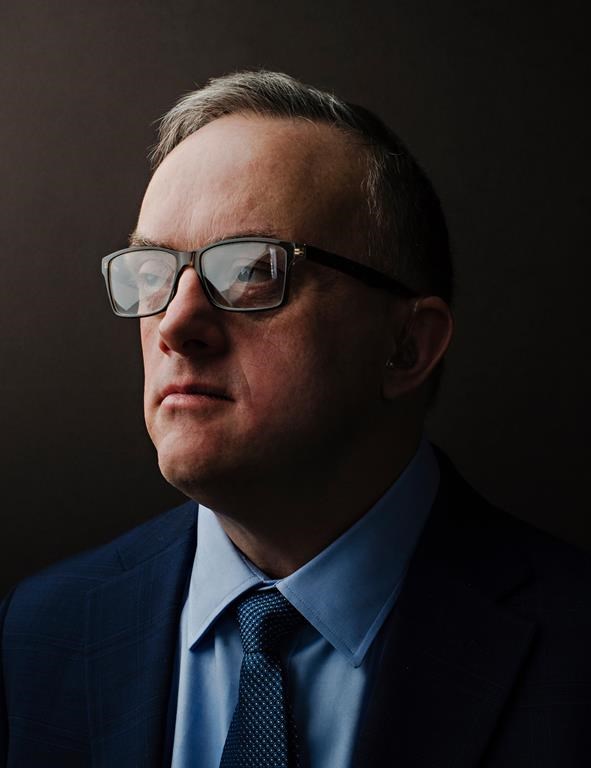
Sean Hughes, 49, from Kitchener, Ont., is shown in this handout image for the Canadian Down Syndrome Society's campaign
Sean Hughes, 49, from Kitchener, Ont., is shown in this handout image for the Canadian Down Syndrome Society's campaign "Here I Am," which shows representation of older adults living with Down syndrome. THE CANADIAN PRESS/HO-One for the Wall-Hilary Gauld **MANDATORY CREDIT **

However, there is little media representation for older adults living with Down syndrome and that’s prompted a campaign that aims to break the stereotype that people with the genetic condition don’t live into their senior years.

The campaign from the Canadian Down Syndrome Society, called “Here I Am,” is a photo essay that shows 13 people who have Down syndrome between the ages of 44 and 75. The photos were taken by professional photographer Hilary Gauld, of Waterloo, Ont., who has been capturing the lives of people with Down syndrome for nearly a decade.

“The art is being able to take the energy and personality of who you’re photographing, and relay that in a still image,” said Gauld.

“My hope is that people can feel the lived experiences of these people and to celebrate how far this community has come to grow visibility across all ages but especially for those who are older, and make space for them in the larger community.

“While statistics show that the average life expectancy has increased for people with Down syndrome, the visibility of seniors and elders remains limited.”

Gauld began working with the Canadian Down Syndrome Society in 2022 on a campaign called “Love Means,” which shows people with Down syndrome and what love looks like for them in platonic and romantic forms.

Laura LaChance, executive director of the society, has a 30-year-old son with Down syndrome and found that there was a lot of representation for children, teens and young adults but struggled to see what life could be like for her son when he got older.

“Aging Canadians with Down syndrome and their caregivers should have comprehensive, unbiased information about aging issues, and have access to all of the government support that is available to them,” said LaChance.

“No parent should be left asking, ‘Who will provide care for my child once I’m gone?’ This photo essay raises awareness and challenges the stereotype that people with Down syndrome don’t live long lives.”

The society says that for the first time people with Down syndrome may start outliving their parents and primary caregivers.

Hughes lives in an apartment complex that offers a supported independent living program. One of his three sisters, Mary Beth Houston, said he has been working at a store packing groceries for 10 years and participates in various workshops and volunteer programs.

“We’ve talked about how getting older doesn’t mean that things stop,” said Houston. “He’s still a busy guy and he really enjoys the social aspect of being busy.”

Hughes is also preparing to swim competitively in the Ontario Special Olympics next year.

Hughes worked with Gauld on another project that features people with Down syndrome who have jobs outside of sheltered workshops.

“She is a very good talent,” said Hughes. “A very caring person.”

Earlier this year, the society started a program with LinkedIn called Inployable, which helps connect employers to people with Down syndrome.

“Although many people with Down syndrome have demonstrated abilities and aspirations to engage in meaningful work in the community, a large percentage of the Canadian population with Down syndrome remains unemployed, are underemployed, or may not be working to their full potential,” said LaChance.

“This initiative addresses that disparity. People with Down syndrome have a right to be employed in the community, where they can work alongside people of all abilities and earn competitive compensation.”

Gauld said there are misconceptions that people with Down syndrome can’t work, have meaningful paid employment and be valuable employees to companies

Houston said she and her brother talk about how people underestimate his capabilities.

“He’s tremendously capable. He can really step into any task and be very successful,” she said.

Houston added that it’s important for people with Down syndrome to have exposure within their community.

“That community involvement really has been a great part of his success and his ongoing development,” said Houston. “He’s still learning things every day, and I think that’s going to keep him young for a very long time.”

This report by The Canadian Press was first published April 1, 2023.

___

This story was produced with the financial assistance of the Meta and Canadian Press News Fellowship.

Report Error Submit a Tip

More Stories

‘We feel lucky — and a bit traumatized’: Tornado confirmed in River Heights Sunday

Malak Abas 6 minute read Preview

‘We feel lucky — and a bit traumatized’: Tornado confirmed in River Heights Sunday

Malak Abas 6 minute read Updated: Yesterday at 6:10 PM CDT

Tanner Lemieux wasn’t surprised to learn the violent winds that tore through River Heights and reached their peak near his home Sunday night have been classified as a tornado.

While driving back to his Lindsay Street home from a shopping trip with his wife Sunday, it became clear they were not in the middle of an ordinary thunderstorm when rain and wind started coming from every direction and hit every side of their truck.

The forceful wind made it impossible for him to open his door after they had parked. He climbed through the window, over the top of his vehicle, and the couple struggled to fight the whipping winds to make it into the house.

“As we were running in, the wind started pulling me backwards out of the door,” he told the Free Press while cleaning debris from his yard Thursday.

Read
Updated: Yesterday at 6:10 PM CDT

Rural venue lets artists shine on more intimate stage

Ben Waldman 4 minute read Preview

Rural venue lets artists shine on more intimate stage

Ben Waldman 4 minute read 6:31 PM CDT

With cooler temperatures on their way, Jocelyne Baribeau wants to break the linguistic ice between musicians with a new concert series at her home near Ste. Geneviève, about 30 minutes east of the Perimeter.

A onetime Western Canadian Music Award winner as best francophone artist, the St. Vital-raised Baribeau intends the Icebreakers series — which has its first concert this Sunday — to provide musicians with an intimate, rural setting to experiment and collaborate with peers with whom they might not otherwise share a bill.

“A goal for me to sort of erase a bit of that invisible line that we put. ‘It’s a French event,’ or ‘It’s an English event,’” says Baribeau, the vice-president of the Canadian Folk Music Awards.

“The more we can do that, the more opportunity there is for everyone. Music is music, and I don’t think it’s a language thing. You can feel a lot of things even when someone is singing in a language you don’t understand.”

Read
6:31 PM CDT

Artist’s inspired work brings Red River Métis story back to Portage and Main

Conrad Sweatman 8 minute read Preview

Artist’s inspired work brings Red River Métis story back to Portage and Main

Conrad Sweatman 8 minute read Updated: 2:47 PM CDT

Jennine Krauchi calls them the “grandmothers.” “They speak to you very silently. You never hear a word, but they speak,” Krauchi says, referring to the antique pieces of Métis needlework she’s carefully studied for years. But there are few precedents for her latest art project: a 85-foot-wide by 32-foot-high chain curtain of Métis needlework that drapes over the historic Bank of Montreal’s neoclassical facade.

Read
Updated: 2:47 PM CDT

What it means to be green… in a city beholden to the blue and gold

David Sanderson 8 minute read Preview

What it means to be green… in a city beholden to the blue and gold

David Sanderson 8 minute read 6:33 PM CDT

It’s not easy being green… if you’re a Winnipeg Blue Bombers season-ticket holder.

Dave Dech ordinarily arrives at his designated seat in Princess Auto Stadium fully decked out in blue and gold. That won’t be the situation this weekend, however, when the Bombers clash with their principal Canadian Football League rival, the Saskatchewan Roughriders, in the annual, sold-out Banjo Bowl game.

“No, I’ll be in green pretty much from head to toe. People sitting around us kid me, but by now they know if it’s the Banjo Bowl, Dave’s showing up in green,” says Dech, 63, possibly the biggest Saskatchewan supporter this side of Moosomin.

Not only does the married father of two grown sons have 25 Roughriders jerseys hanging in his closet — at press time, he was still mulling over which one to throw on for Saturday’s tilt — there is a main-floor lair in his and his wife Patti’s Westwood abode you’ll probably want to avoid if you suffer from prasinophobia — a fear of the colour green.

Read
6:33 PM CDT

Winnipeg-produced podcast Careers Under Construction keeps rolling for Pederson Group

Aaron Epp 5 minute read Preview

Winnipeg-produced podcast Careers Under Construction keeps rolling for Pederson Group

Aaron Epp 5 minute read 7:52 PM CDT

It could have been the CEO’s corner office or a boardroom, but instead it’s a media production studio.

Eight storeys above the corner of Portage Avenue and Main Street, the 300-square-foot room in the Pederson Group’s headquarters at 201 Portage Ave. is outfitted with comfortable chairs, a plant and black drapes that block out natural light and control the acoustics.

There are three video cameras, two computers, a few microphones and a variety of portable video lights. All told, the equipment is worth more than $70,000.

It’s here where two of the Winnipeg recruitment firm’s five staff members — Justis Pederson, president and CEO, and Cassie Bezan, director of creative communications — produce Careers Under Construction, a weekly, hour-long podcast featuring interviews Pederson conducts with Manitoba business people.

Read
7:52 PM CDT

‘Dynacare sucks’: premier muses about bringing lab services back into public system

Carol Sanders 6 minute read Preview

‘Dynacare sucks’: premier muses about bringing lab services back into public system

Carol Sanders 6 minute read Wednesday, Sep. 9, 2026

Premier Wab Kinew says Manitoba may bring Dynacare’s diagnostic lab services back into the public system rather than continue to sign contracts with the for-profit company.

“Dynacare sucks. They’ve made an absolute mess of this situation,” the premier said Wednesday, the day the company’s 350 employees reported back to work after the labour board halted their strike after just one day.

Kinew first made the remark about Dynacare in a CBC radio interview Wednesday morning and added he is “not happy with them.”

Dynacare performs the majority of non-emergency blood and urine tests in the province.

Read
Wednesday, Sep. 9, 2026