‘Too much to learn’: Schools race to catch up kids’ reading
Advertisement
Read this article for free:
or
Already have an account? Log in here »
To continue reading, please subscribe:

Digital Subscription
One year of digital access for only $205*
- Enjoy unlimited reading on winnipegfreepress.com
- Read the E-Edition, our digital replica newspaper
- Access News Break, our award-winning app
- Play interactive puzzles
*First annual payment billed as $205.00 + GST for one year. This annual subscription will automatically renew at $233.00 + GST every 52 weeks (10% off the regular annual price of $259.35). Offer available to new and qualified returning subscribers only. Cancel any time.
To continue reading, please subscribe:
Add Free Press access to your Brandon Sun subscription for only an additional
$1 for the first 4 weeks*
- Enjoy unlimited reading on winnipegfreepress.com
- Read the E-Edition, our digital replica newspaper
- Access News Break, our award-winning app
- Play interactive puzzles
*Your next Brandon Sun subscription payment will increase by $1.00 and you will be charged $17.95 plus GST for four weeks. After four weeks, your payment will increase to $24.95 plus GST every four weeks.
Read unlimited articles for free today:
or
Already have an account? Log in here »
Hey there, time traveller!
This article was published 20/04/2023 (1258 days ago), so information in it may no longer be current.
ATLANTA (AP) — Michael Crowder stands nervously at the front of his third grade classroom, his mustard-yellow polo shirt buttoned to the top.
“Give us some vowels,” says his teacher, La’Neeka Gilbert-Jackson. His eyes search a chart, but he doesn’t land on an answer. “Let’s help him out,” Gilbert-Jackson says.
“A-E-I-O-U,” the class says in unison.
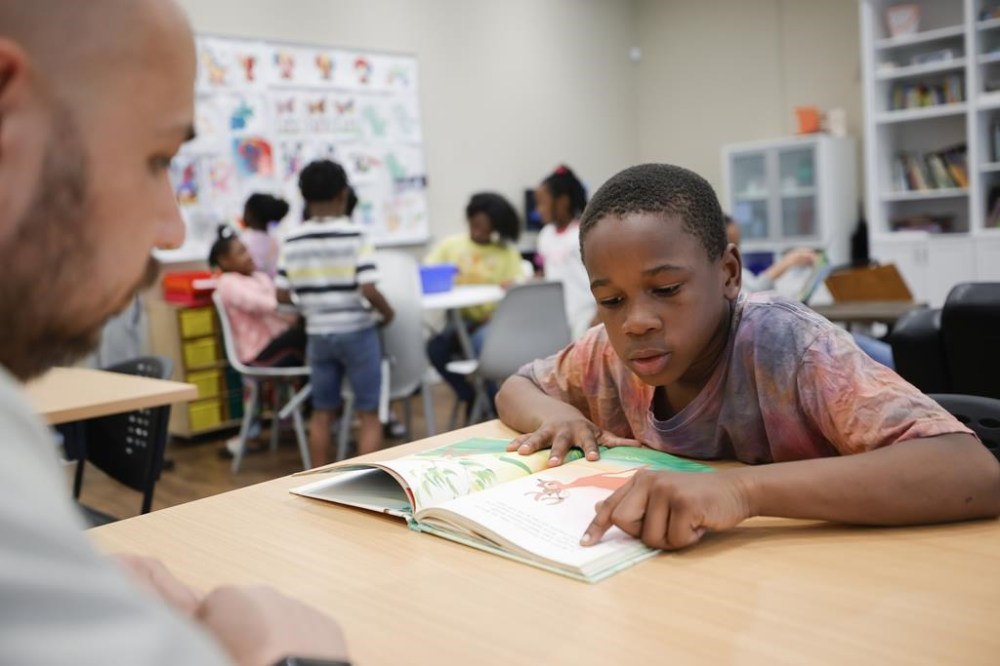
Michael missed most of first grade, the foundational year for learning to read. It was the first fall of the pandemic, and for months Atlanta only offered school online. Michael’s mom had just had a baby, and there was no quiet place in their small apartment. He missed part of second grade, too. So, like most of his classmates at his Atlanta school, he isn’t reading at the level expected for a third grader.
That poses an urgent problem.
Third grade is the last chance for Michael’s class to master reading with help from teachers before they face more rigorous expectations. If Michael and his classmates don’t read fluently by the time this school year ends, research shows they’re less likely to complete high school. Pandemic-fueled school interruptions have raised the stakes. Nationally, third graders lost more ground in reading than kids in older grades.
To address learning loss, Atlanta has been one of the only cities in the country to add class time — 30 minutes a day for three years.
Gilbert-Jackson hopes it will be enough. The school year has been a race to prepare her students for future classes, where reading well is a gateway to everything else.
“Yes, I work you hard,” she says about her students. “Because we have too much to learn.”
Right before December vacation, Gilbert-Jackson’s class is subdued and visibly tired. But Gilbert-Jackson moves on with her lessons.
She reviews suffixes, how to spell words ending in -ch, -tch, and how to make words plural. Some students have spellings memorized; for those who don’t, Gilbert-Jackson explains the rules. It’s a phonics-based program the district now mandates for all third graders, in line with science-backed curricula gaining momentum across the country.
It can be dry and tedious stuff, replete with obscure jargon like “digraph” and “trigraph.” The strong readers nod and respond, but the students still learning the basics look lost.
To inject fun into the lesson, Gilbert-Jackson turns it into a quiz game.
“Teach,” Gilbert-Jackson calls out. “How do you spell teach?”
Students choose between “teach” and “teatch.”
“Yes!” some of the children shout.
Only half got it right.
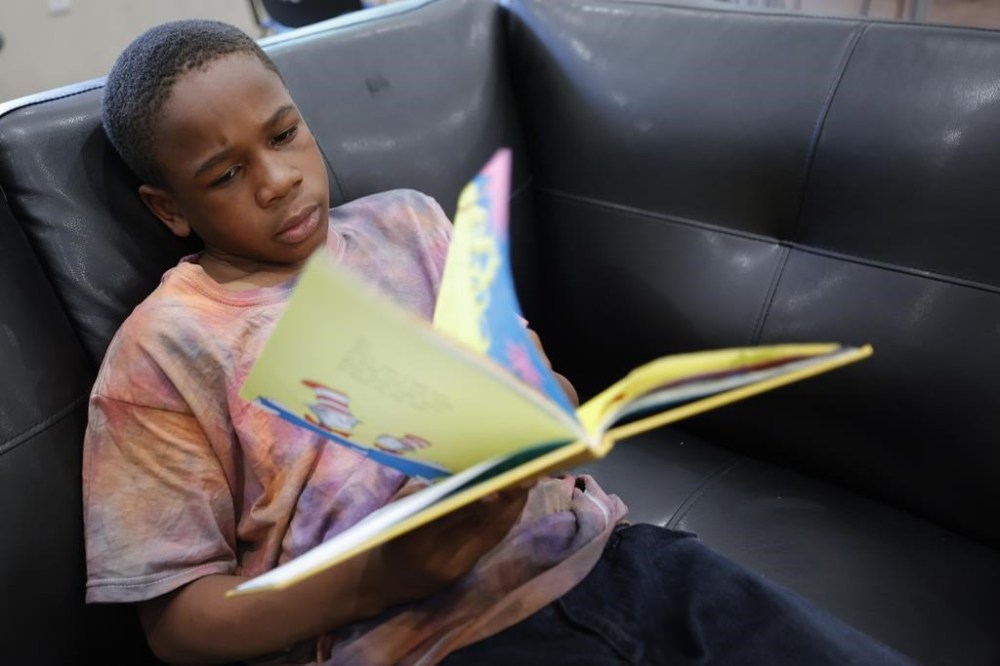
As the first semester draws to a close, 14 of Gilbert-Jackson’s 19 students aren’t meeting expectations for reading. That includes Michael.
Gilbert-Jackson has an important advantage: She taught Michael and most of his classmates in first grade and second grade, and followed them to third. She knows how much school many of them missed — and why. The strategy was adopted by Boyd Elementary to give students consistency through the crisis.
The long-term connection — or perhaps just the continuity of attending school daily — has helped Michael start reading. At the end of first grade he knew two of the so-called “sight words” —“a” and “the.” By that point, first graders were expected to have memorized 200 of these high-frequency words that aren’t easily decodable by new readers.
Now, midway through third grade, he is reading like a mid-year first grader. It’s progress, Gilbert-Jackson says.
“I see a change in him,” says Michael’s stepfather, Rico Morton. “I feel like he has the potential to be someone.”
Michael isn’t the only student who’s still far behind.
In a couple cases, Gilbert-Jackson believes students’ parents were doing work for them when school was online. “Let’s say she does go to fourth grade: Nobody is going to read anything to her,” she says of one such student. “I don’t want to set them up for failure.”
On paper, Atlanta’ policy is to promote elementary school students who “master” reading, math and other subjects. But how often the district actually holds students back is unclear. Atlanta’s school system did not respond to requests for data.
Atlanta students can attend four weeks of summer school, but that likely won’t be enough to catch them up.
Before leaving for Christmas vacation, Gilbert-Jackson started reaching out to students’ parents to talk about how their children were progressing. The parents of some struggling readers don’t return her calls.
One day in late February, Gilbert-Jackson asks her students to revise a narrative they’d each been writing about a glowing rock.
One new student, a boy with a 100-watt smile, had transferred from another school. Instead of taking out his narrative, he chooses a book from the class library and starts writing. A few minutes later, he presents his notebook to Keione Vance, the teacher’s assistant.
“I know you just copied it,” she says.
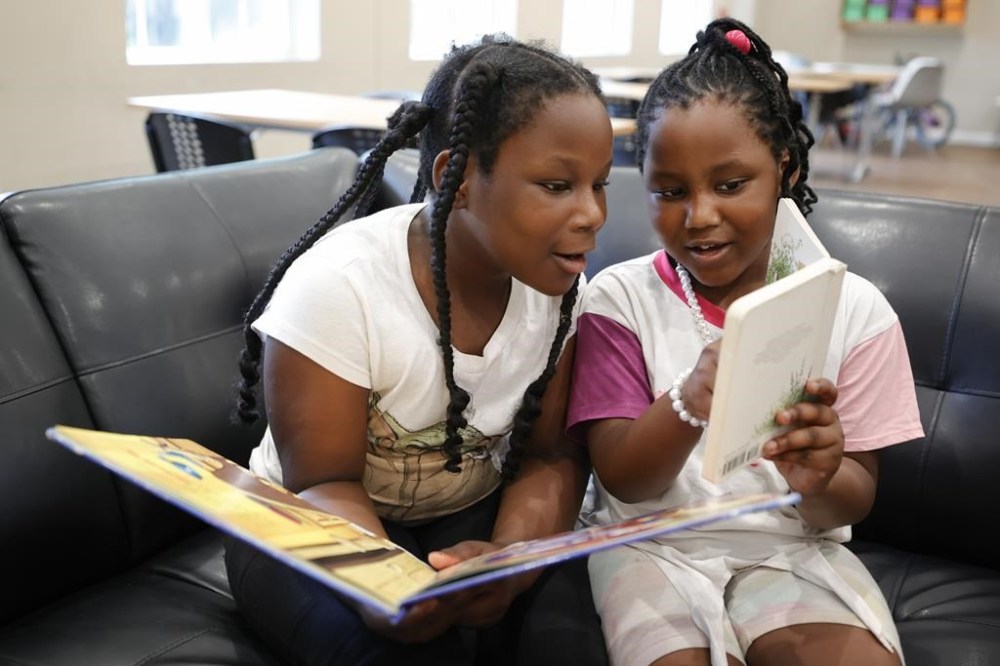
She asks him to read to her. He happily starts on the book, aimed at a first grade reading level. He struggles with words: nice, true, voice, sure, might, outside, and because.
When he arrived in November, it appeared he needed “to learn everything from first, second and third grade,” says Gilbert-Jackson.
Gilbert-Jackson worries she isn’t serving her new students as well as she’d like. “This train has been running for three years,” she says. “I can’t start over.”
As the other students keep working, some ask Gilbert-Jackson to read their stories. Some are written in complete sentences. Others lack punctuation and have misspellings throughout.
“Mrs. Gilbert-Jackson cannot be the person who says when your final draft is ready,” she tells the class. “I’m not going to be there when you are in fourth grade.”

Gilbert-Jackson and the other third grade teachers are so concerned about their students’ reading and math skills, they decided after Christmas break to cut back on social studies and science.
The extra time may have helped. Now only seven of the 19 students are below grade level in reading. Of the students who are still behind, Gilbert-Jackson is the least worried about one: Michael Crowder. She’s confident he’ll find a way to navigate the new world ahead of him — even if there is too much to learn.
“He wants it,” she says. “He’ll catch up.”
____
The Associated Press education team receives support from the Carnegie Corporation of New York. The AP is solely responsible for all content.