Detroit enclave built on auto industry struggles under $20M water debt

Advertisement

Advertise with us

HIGHLAND PARK, Mich. (AP) — Kevin Houston scanned the Michigan street where his fixer-upper and older homes bridge gaps between the vacant, overgrown lots and abandoned, ramshackle houses, boarded-up businesses and potholed streets of Highland Park.

Read this article for free:


or

Already have an account? Log in here »

To continue reading, please subscribe:

Subscribe and receive a limited-edition Free Press branded hat or tote.

Digital Subscription

One year of digital access for only $205*

  • Enjoy unlimited reading on winnipegfreepress.com
  • Read the E-Edition, our digital replica newspaper
  • Access News Break, our award-winning app
  • Play interactive puzzles

*First annual payment billed as $205.00 + GST for one year. This annual subscription will automatically renew at $233.00 + GST every 52 weeks (10% off the regular annual price of $259.35). Offer available to new and qualified returning subscribers only. Cancel any time.

To continue reading, please subscribe:

Add Free Press access to your Brandon Sun subscription for only an additional

$1 for the first 4 weeks*

  • Enjoy unlimited reading on winnipegfreepress.com
  • Read the E-Edition, our digital replica newspaper
  • Access News Break, our award-winning app
  • Play interactive puzzles
Start now

*Your next Brandon Sun subscription payment will increase by $1.00 and you will be charged $17.95 plus GST for four weeks. After four weeks, your payment will increase to $24.95 plus GST every four weeks.

Hey there, time traveller!
This article was published 19/05/2023 (1233 days ago), so information in it may no longer be current.

HIGHLAND PARK, Mich. (AP) — Kevin Houston scanned the Michigan street where his fixer-upper and older homes bridge gaps between the vacant, overgrown lots and abandoned, ramshackle houses, boarded-up businesses and potholed streets of Highland Park.

“It’s not a bad place to live,” Houston said. “It’s not the best.”

The community nearly surrounded by Detroit is teetering on the edge of bankruptcy because it cannot pay its bills to the utility providing drinking water and sewage services to a city that was once a thriving auto manufacturing town. It serves as an example of blue collar cities that lost their way amid changes to manufacturing and are now shells of their past, plagued by neighborhood malaise, neglect and deep poverty.
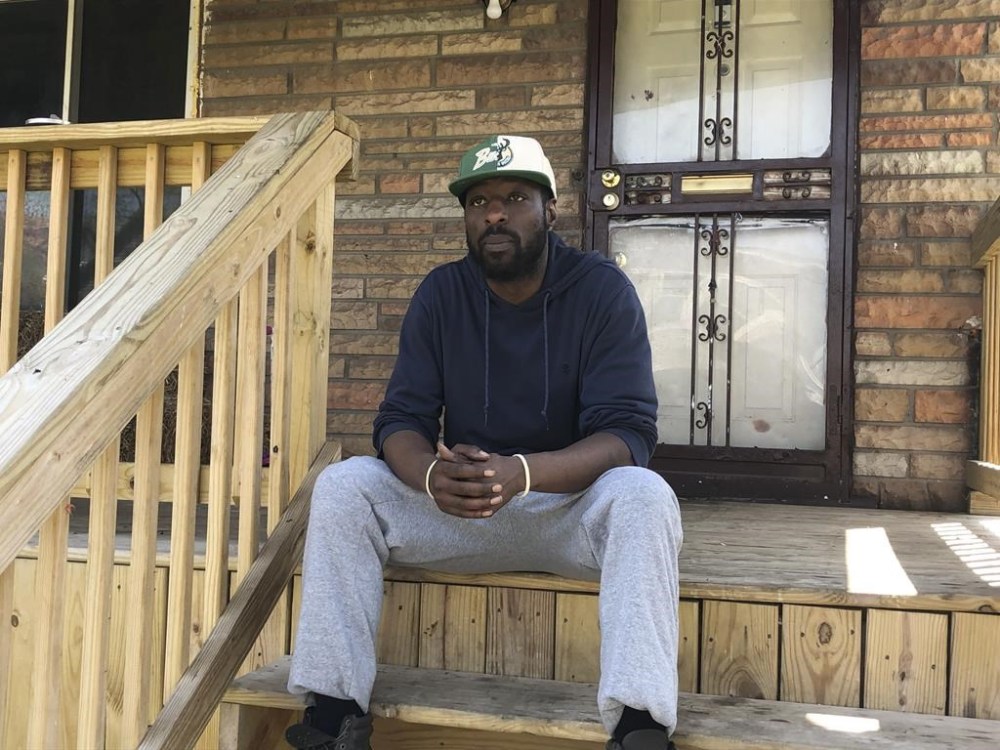
Kevin Houston sits on the front steps of his home, May 9, 2023, in Highland Park, Mich., a small enclave of Detroit that is considering chapter 9 bankruptcy due to a $20 million debt to a regional water authority. Houston grew up in Highland Park and acknowledges that the city has too many vacant houses and overgrown lots. He says Highland Park is
Kevin Houston sits on the front steps of his home, May 9, 2023, in Highland Park, Mich., a small enclave of Detroit that is considering chapter 9 bankruptcy due to a $20 million debt to a regional water authority. Houston grew up in Highland Park and acknowledges that the city has too many vacant houses and overgrown lots. He says Highland Park is "not a bad place to live" but "it's not the best." (AP Photo/Corey Williams)

Over 50,000 people lived there in 1930. Homes — elegant and spacious — rivaled some of those built in Detroit. The city is just under 3 square miles (7.8 square kilometers) and is a shell of its auto baron past, when manufacturing boomed and money flowed. Fewer than 9,000 now call it home. The auto companies are long gone, leaving strip malls and retail shops to bolster the city’s dwindling business tax base.

And, owing about $20 million to a regional water service, Highland Park is considering municipal bankruptcy — a strategy that a decade ago allowed Detroit to erase or restructure $7 billion in debt — to keep its financial future afloat.

Troubled cities like Highland Park are the toughest cases in America to figure out how to fix, because they have so few assets to build on, said Alan Mallach, author of a soon-to-be-released book, “Smaller Cities in a Shrinking World: Learning to Thrive Without Growth.”

“They have appalling levels of poverty and abandonment,” Mallach said. “A city like Highland Park probably cannot turn itself around all by itself. They just don’t have the resources.”

Highland Park and communities like it have been fading as jobs dry up and families move away, but before the decline began, the auto and manufacturing industries helped build up some of these inner ring suburbs.

In 1907, Henry Ford bought 160 acres of land for what would be his Highland Park Ford Plant. The first moving assembly line started a few years later at the plant. Immigrants and other workers eager to earn $5 per day flocked to the area.

A building boom followed that included thousands of homes along tree-canopied streets.

“Highland Park was really a shining city on a hill. It was really the place to live,” said Jeff Horner, urban studies professor at Wayne State University in Detroit. Horner credits Ford with turning the city into an important and successful suburb run by his political friends.

Ford would move its auto production operations to nearby Dearborn in the 1920s. The automaker would keep a tractor plant in Highland Park and Chrysler, now Stellantis, had its headquarters in the city. But both moved away in the 1990s.

Like Detroit and other large urban cities, white residents began fleeing Highland Park in the 1950s for the suburbs. Jobs followed. About 85% of Highland Park’s residents are Black. The median household income is about $25,000 and about 40% of the population lives in poverty, according to the U.S. Census.

Neighborhood malaise and neglect are overpowering in some parts of the city. In a rat-infested, vacant apartment building in early February, authorities found the bodies of three aspiring rappers. The trio were to perform Jan. 21 at a club in Detroit when they disappeared.
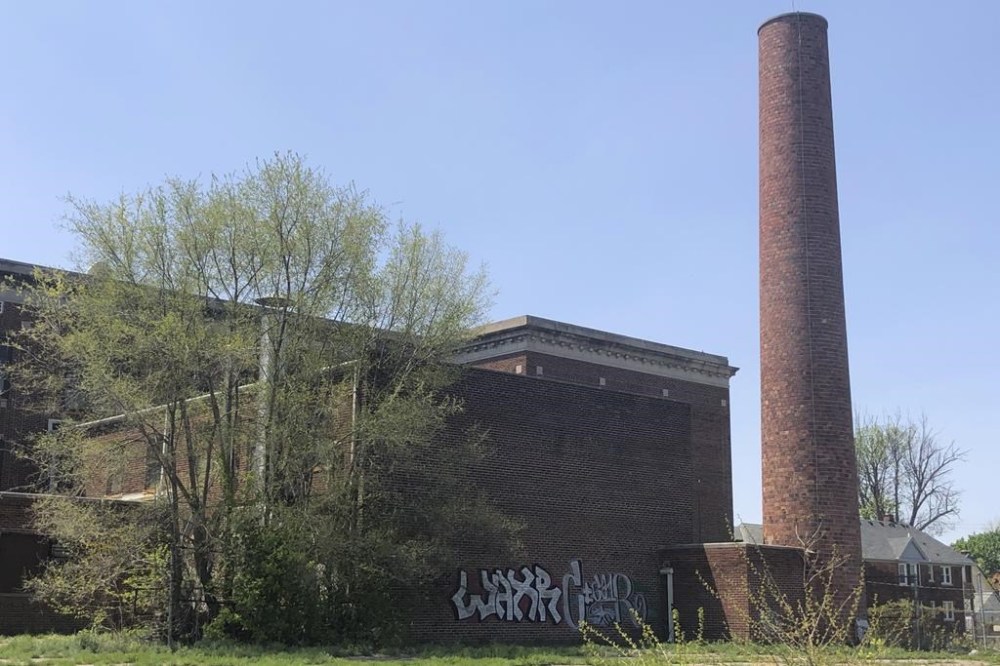
The abandoned Ford School in Highland Park, Mich., is seen on May 9, 2023. The school is one of the many abandoned buildings in the small Detroit enclave. In 1907, Ford Motor Co. founder Henry Ford bought 160 acres of land for what would be his Highland Park Ford Plant. More than 50,000 people lived in Highland Park in 1930. Fewer than 9,000 now call it home. The city is considering chapter 9 bankruptcy due to a $20 million debt owed to a regional water authority. (AP Photo/Corey Williams)

“There’s very little left there in terms of a tax base that built this city,” Horner said. “Any time you’re a small, inner ring suburb that can’t grow in land you have to bring in a tax base. You have to bring in more residents.”

Highland Park has said that property taxes in the 2022 fiscal year were about $9.6 million. Estimated revenues for the coming fiscal year are expected to be about $12.6 million, according to Mayor Glenda McDonald’s proposed 2023-24 budget.

Income and property taxes, respectively, would account for $4.7 million and $2.6 million in revenue. Another $3.5 million would come from state revenue, according to the proposed budget.

McDonald declined to comment due to ongoing court-ordered mediation over the water debt with the Great Lakes Water Authority.

The debt owed to the Great Lakes Water Authority stretches back to at least the 1990s when the water system was run by the Detroit Water and Sewerage Department.

In 2014, the state determined Highland Park was in a financial emergency and appointed a manager. A court granted the water department a $19 million judgment in 2015 against Highland Park. The ongoing mediation is expected to lead to a plan for how the debt will be paid.

Highland Park has not made any payments for sewer services since April 2021 and has paid less than 1% of its water service charges since 2012, according to the water authority.

The water authority says other communities in the system have incurred charges due to Highland Park’s nonpayment. Once the judgment is paid those communities will be reimbursed, the authority said.

And those communities have “no sympathy” for Highland Park, said Eric Lupher, president of the Citizens Research Council of Michigan.

“They don’t want to float the city anymore, floating their debt while the city figures this out,” Lupher said. “They want what’s best for Highland Park, but they’re not willing to pay Highland Park’s way.”
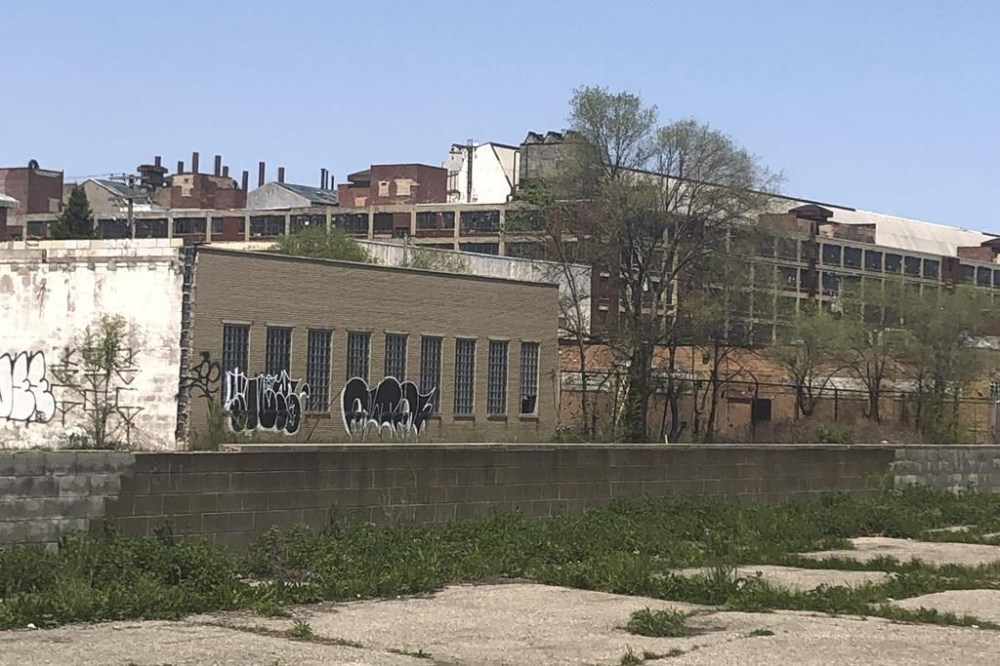
An old factory building in Highland Park, Mich., a small Detroit enclave is seen on May 9, 2023. More than 50,000 people lived in Highland Park in 1930. Fewer than 9,000 now call it home. The city is considering chapter 9 bankruptcy due to a $20 million debt owed to a regional water authority. (AP Photo/Corey Williams)

Democratic Gov. Gretchen Whitmer’s office has said the water authority and Highland Park need to find a solution that doesn’t push the cost to homeowners or businesses.

In April, Highland Park’s council voted 3-2 to ask Whitmer to move quickly on a municipal bankruptcy.

The state Treasurer’s office is looking into the city’s request for a financial review.

Bankruptcy would be only a “Band-Aid” for Highland Park, Mallach said.

“It’s not just the water debt,” Mallach said. “The city is not able to generate enough revenue to provide adequate services or reverse the downward spiral of its properties. Any benefit from bankruptcy would probably disappear over the course of the next five years or so.”

However, Houston, the 40-year-old resident who remembers when every Highland Park house had a family in it, said he can’t disagree with the bankruptcy option.

“If it’s the best way to get out of it, you have to do what you have to do,” he said.

Report Error Submit a Tip

More Stories

Puzzles Palace

1 minute read Monday, Jul. 27, 2026

To solve our puzzles, please subscribe with this special offer: |

Six high school hockey programs ceased operations following new Hockey Manitoba policy

Joshua Frey-Sam 7 minute read Preview

Six high school hockey programs ceased operations following new Hockey Manitoba policy

Joshua Frey-Sam 7 minute read Updated: Yesterday at 8:19 PM CDT

She lived the best of both worlds.

For the last three years, the 17-year-old wore a sweater for two different hockey programs — her high school team and AAA club in the Manitoba Female Hockey League — and was preparing to flourish in both colours again this winter.

Recently, however, the blue-liner was disappointed to learn she is no longer eligible to play her Grade 12 season with her school owing to a new policy imposed by Hockey Manitoba that bans players from participating in the Manitoba Women’s High School Hockey League if they are rostered on a U18 AAA team.

The rule applies to all athletes who play for both Winnipeg-based and rural AAA teams.

Read
Updated: Yesterday at 8:19 PM CDT

Province looks to seize notorious drug den

Erik Pindera 5 minute read Preview

Province looks to seize notorious drug den

Erik Pindera 5 minute read 12:00 PM CDT

Provincial justice officials are trying to seize a Dominion Street drug den that has been the source of trouble in the West End for years.

The owner of 982 Dominion St., 45-year-old Robert Edward Johnson, was most recently arrested in June along with several others after a lengthy Winnipeg Police investigation into thefts and illicit drug sales connected to the house.

“The residence has a reputation within the neighbourhood as being a location where individuals habitually attend for the purpose of purchasing and/or consuming controlled substances,” reads a statement of claim filed by the province’s director of civil forfeiture in the Court of King’s Bench last week.

“For several years, the residence has been associated with criminal activity, violence, and disorder, resulting in numerous police attendances and complaints from members of the surrounding community.”

Read
12:00 PM CDT

Broadening prediction-market gambling a bad idea

Editorial 4 minute read Preview

Broadening prediction-market gambling a bad idea

Editorial 4 minute read 2:01 AM CDT

Let’s make a prediction: sooner or later, when Canadian governments find a way to take their own cut of the action, prediction-contract gambling on everything from sports to entertainment to political decisions is going to come to Canada.

And that’s a horrible, dangerous, pernicious idea.

Unless you have particular access to information — either inside information or strategic information based on skills or education — you’re not likely to make money at it. In fact, structurally, you’re likely to lose. In prediction markets, you basically pay an amount, plus fees from the company involved, to bet on whether something will or will not happen within a certain time frame. The amount you pay for your contract depends on how other people are also betting.

As Wealthsimple describes it, “You buy whichever side you think is right. Prices move with demand, so if the market leans towards one outcome, the more that side costs. If a lot of people are backing the TSX to finish above 38,000, yes gets more expensive and no gets cheaper.”

Read
2:01 AM CDT

Volunteer pop-up library axed from Manitoba Youth Centre

Matthew Frank 4 minute read Preview

Volunteer pop-up library axed from Manitoba Youth Centre

Matthew Frank 4 minute read Updated: 11:25 AM CDT

Manitoba Corrections has cancelled a pop-up library program at the Manitoba Youth Centre, leaving inmates without librarian services and fewer options to borrow certain books.

The Prison Libraries Committee, part of the non-profit Manitoba Library Association, operated and funded the volunteer program since 2024 before it was shut down by the province last month. The group previously partnered with the province to offer the service because the facility has no dedicated library of its own.

“It is concerning that community members who are incarcerated, especially youth, are losing out on meaningful programming, access to information and rehabilitation efforts, which are offered at no cost to (Manitoba) Corrections. We urge Manitoba Justice to promote more library services and programming, not less,” said a Sept. 24 letter from the non-profit addressed to the justice minister.

Ashley Huot, chair of the Prison Libraries Committee, said she was puzzled when she received an email last month from Manitoba Corrections stating that the pop-up library was no longer needed.

Read
Updated: 11:25 AM CDT

May be whiff of truth to ex’s odour ardour

Maureen Scurfield 5 minute read 2:01 AM CDT

DEAR MISS LONELYHEARTS: I ran into an old boyfriend I used to curl on a team with, and we went for drinks. We’ve been almost eight years apart, and I couldn’t remember why we broke up, as we always had such a great time together.

It wasn’t until the second date — this time on a weekend — that it came back to me, with a jolt. Pee-yew! I remembered he doesn’t use deodorant on weekends. Why? He enjoys his own body odour. I recalled that a bit too late, and it was just as awful as ever! I went home early.

Tonight, he called and I refused him another date. I said, “Think back. You remember why we broke up?” Then he said, “Oh yeah, you hated my no-deodorant weekend policy. Well, guess what? Some women don’t mind!” I said I really doubted that, and that ended the conversation. Miss L., wouldn’t any women find stinky underarms offensive?

— Sensitive Nose, Fort Richmond