When you adopt a desert tortoise, prepare for a surprisingly social and zippy pet
Advertisement
Read this article for free:
or
Already have an account? Log in here »
To continue reading, please subscribe:

Digital Subscription
One year of digital access for only $205*
- Enjoy unlimited reading on winnipegfreepress.com
- Read the E-Edition, our digital replica newspaper
- Access News Break, our award-winning app
- Play interactive puzzles
*First annual payment billed as $205.00 + GST for one year. This annual subscription will automatically renew at $233.00 + GST every 52 weeks (10% off the regular annual price of $259.35). Offer available to new and qualified returning subscribers only. Cancel any time.
To continue reading, please subscribe:
Add Free Press access to your Brandon Sun subscription for only an additional
$1 for the first 4 weeks*
- Enjoy unlimited reading on winnipegfreepress.com
- Read the E-Edition, our digital replica newspaper
- Access News Break, our award-winning app
- Play interactive puzzles
*Your next Brandon Sun subscription payment will increase by $1.00 and you will be charged $17.95 plus GST for four weeks. After four weeks, your payment will increase to $24.95 plus GST every four weeks.
Read unlimited articles for free today:
or
Already have an account? Log in here »
Hey there, time traveller!
This article was published 23/05/2023 (1229 days ago), so information in it may no longer be current.
PHOENIX (AP) — They’re not fluffy, they don’t play fetch and they certainly don’t roll over. But there is such a thing as a lap tortoise.
What’s more, pet tortoises can wag their tails, will plod on up to greet you and some can even recognize their own names. The surprising warmth of this ancient cold-blooded creature has made them popular pets for families with pet dander allergies and for retirees.
After years of living pet-free (save one vicious betta fish), my family and I decided to adopt a captive desert tortoise. Fittingly, it was a slow and steady process.
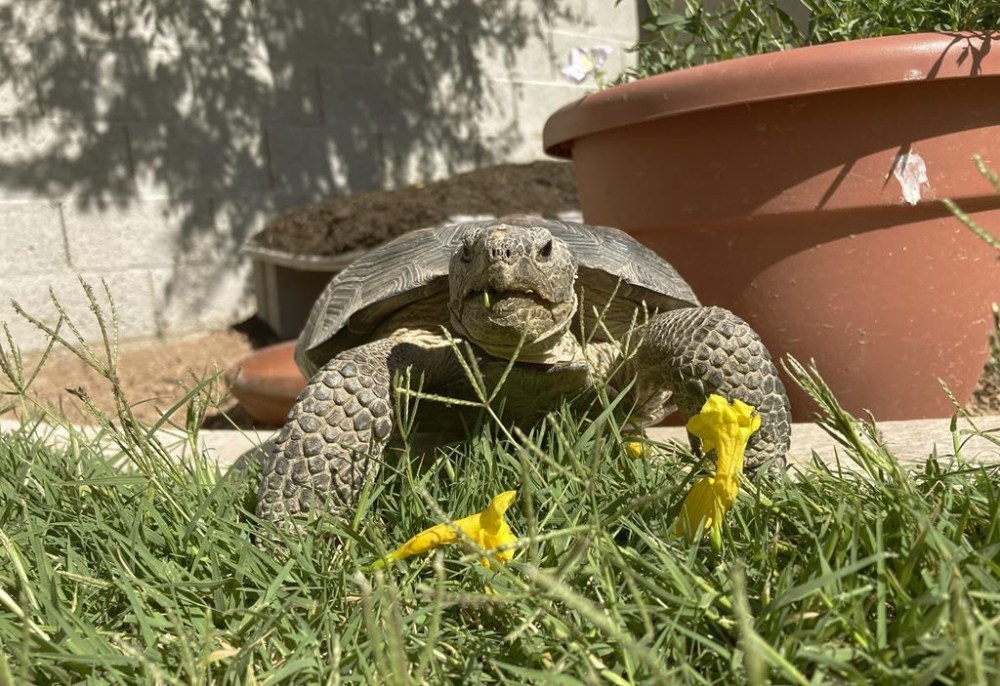
In Arizona where we live, the state runs a captive desert tortoise adoption program. The adoption is free, but requires an application, including photos and a diagram of the tortoise’s new home. We spent hours setting up her habitat in our backyard, digging out rocks, fashioning a burrow and planting tortoise-friendly flowers.
Building the habitat takes time. But the tortoise itself is a pretty low-maintenance pet.
Tortoises sleep through the winter, a process known as brumation in the reptile world. They need a cozy den to keep them safe and warm. In the wild, they dig it themselves. Human-made burrows can be built out of large PVC pipes, plastic garbage cans or some cinderblocks with WonderBoard as the roof.
For families with kids, there’s an extra benefit of the brumation process, says Lynda Misiak, who administers the desert tortoise permit process in California.
“The tortoise is awake, they play with it, they get tired of it, it goes to sleep. It wakes up in the spring and they have a brand-new pet,” she quips.
Desert tortoises are herbivores and munch on Bermuda grass, weeds and many native plants. They also don’t need water daily, since they’re well-adapted to their desert homes. And you don’t need a second tortoise to keep your pet company.
“The funny thing about tortoises is they love people, but they don’t love each other,” said Sherri Graves of the nonprofit Tortoise Group, which helps people adopt and rehome tortoises.
So why does the Arizona Fish and Game Department have an adoption program? Because of the problem of overbreeding. It’s unsafe for captive tortoises to be released into the wild, because they can spread diseases to dwindling native populations. And backyard breeding, which is now illegal in Arizona, means more baby tortoises than adoptive families. Add to that a 50-plus-year lifespan and the result is hundreds of tortoises surrendered to the state every year.
The reptile pet trade can be fraught, with poaching a particular concern for certain turtles. So finding a reputable group to adopt from is important.
Tegan Wolf, who runs Arizona’s adoption program, says there are roughly 200 tortoises at her center, and about 150 of them are babies.
“People are still breeding them in captivity. They start out so small and then people don’t realize how big they get,” she said. “And then they have 15 of them roaming their backyard.”
We met with Wolf on a recent sun-baked Arizona day when we picked up our desert tortoise, now named Dotty for the light brown spots on her shell. Dotty is about a foot (30 centimeters) long, with scrappy legs made for digging. Her neck can extend out several inches, and she has a bubblegum pink tongue that pokes out when she’s chowing down.
Our first observation about her behavior: She’s very curious. Minutes into the drive home, she pulled herself up the side of the cardboard box she was in and stretched her head up high to see what was happening.
Other unexpected behaviors: She was much zippier than we imagined, exploring the yard at a rapid pace. She was surprisingly friendly, trotting up to greet us when we would go out to visit her and even clambering into our laps when we sat cross-legged in her habitat. And when she sleeps, she doesn’t tuck up inside her shell, as cartoons would have us believe. Instead, she splays out, legs akimbo, head frequently lolling to the side.
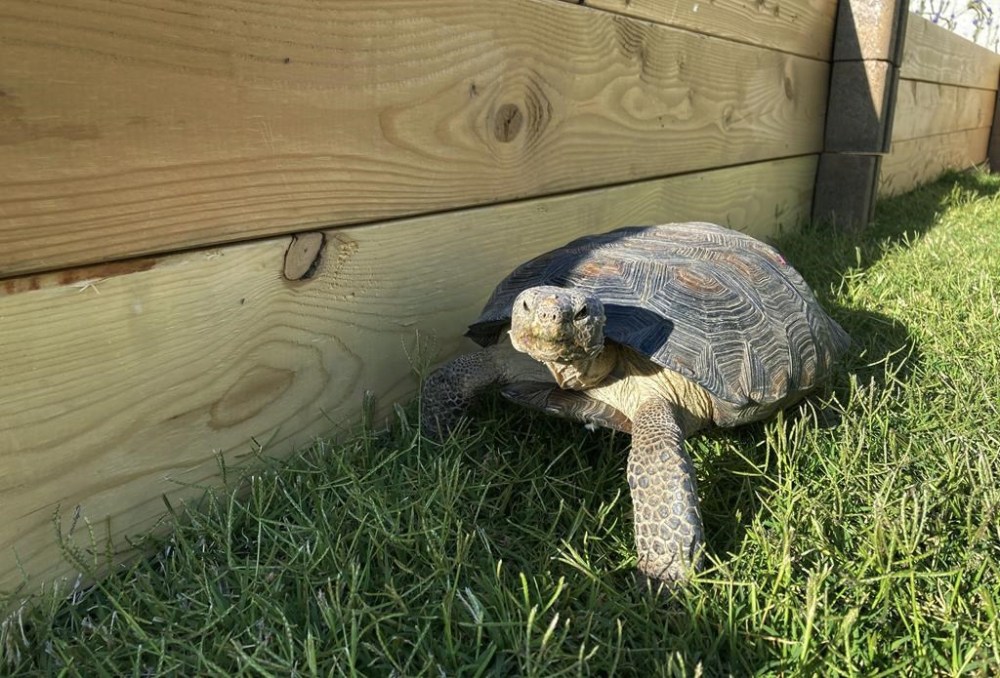
One thing to beware of: Like other reptiles, tortoises can carry salmonella. So people, especially kids, should wash their hands after touching or interacting with them.
Dotty is an Arizona native, which means it’s relatively easy to set up a habitat that suits her needs in the Sonoran Desert. Most of her diet consists of our lawn, which she happily grazes on. The rest comes from plants in our garden or the pockets of our daughter, who picks bright yellow trumpet flowers from the schoolyard to hand-feed to her.
But there are other types of tortoises that people keep as pets. One popular variety is the African sulcata, the largest mainland tortoise, which can easily hit 100 pounds (45 kilograms) and grow 2 1/2 feet long (76 centimeters). Their size and longevity can overwhelm pet owners, and they are frequently rehomed.
“The sulcatas are a huge problem in California,” said Misiak. “People get them, and they don’t have any idea what they’re getting into.”
For people who live in the Southwest, Wolf says the native desert tortoises are a better fit.
“These guys are better suited for the backyard. They don’t dig huge holes, they don’t rearrange backyard furniture” like the sulcatas can, she said. Adult desert tortoises are much smaller, reaching a bit over a foot (30 centimeters) in length and weighing about 8 to 12 pounds (3.6 to 6.8 kilograms).

There are other varieties for those living in cold-weather climates, including the smaller Russian tortoises, which can live in heated indoor enclosures.
One of the big things to keep in mind when taking the plunge is that a tortoise can easily outlive its owner.
“This is a long-term commitment,” said Misiak.
—-
For more AP story about pets, go to https://apnews.com/hub/pets.