Health survey at Pride events aims to broaden knowledge on chronic conditions

Advertisement

Advertise with us

Researchers are hoping that LGBTQ people celebrating at Pride festivals will take 15 minutes during the revelry to share information about their health and experiences with health-care and social services.

Read this article for free:


or

Already have an account? Log in here »

To continue reading, please subscribe:

Subscribe and receive a limited-edition Free Press branded hat or tote.

Digital Subscription

One year of digital access for only $205*

  • Enjoy unlimited reading on winnipegfreepress.com
  • Read the E-Edition, our digital replica newspaper
  • Access News Break, our award-winning app
  • Play interactive puzzles

*First annual payment billed as $205.00 + GST for one year. This annual subscription will automatically renew at $233.00 + GST every 52 weeks (10% off the regular annual price of $259.35). Offer available to new and qualified returning subscribers only. Cancel any time.

To continue reading, please subscribe:

Add Free Press access to your Brandon Sun subscription for only an additional

$1 for the first 4 weeks*

  • Enjoy unlimited reading on winnipegfreepress.com
  • Read the E-Edition, our digital replica newspaper
  • Access News Break, our award-winning app
  • Play interactive puzzles
Start now

*Your next Brandon Sun subscription payment will increase by $1.00 and you will be charged $17.95 plus GST for four weeks. After four weeks, your payment will increase to $24.95 plus GST every four weeks.

Hey there, time traveller!
This article was published 22/06/2023 (1199 days ago), so information in it may no longer be current.

Researchers are hoping that LGBTQ people celebrating at Pride festivals will take 15 minutes during the revelry to share information about their health and experiences with health-care and social services.

The Community-Based Research Centre (CBRC) is sending researchers who are part of LGBTQ and two-spirit communities to more than 20 Pride events across Canada to collect data for the “Our Health” study, with a focus on chronic diseases such as diabetes, cancer and fibromyalgia.

The experiences of transgender, gay, bisexual, lesbian, queer and two-spirit people living with chronic diseases, including the impact of COVID-19 and their access to services, have been underrepresented in health research, said Anu Radha Verma, chronic health research manager at CBRC.
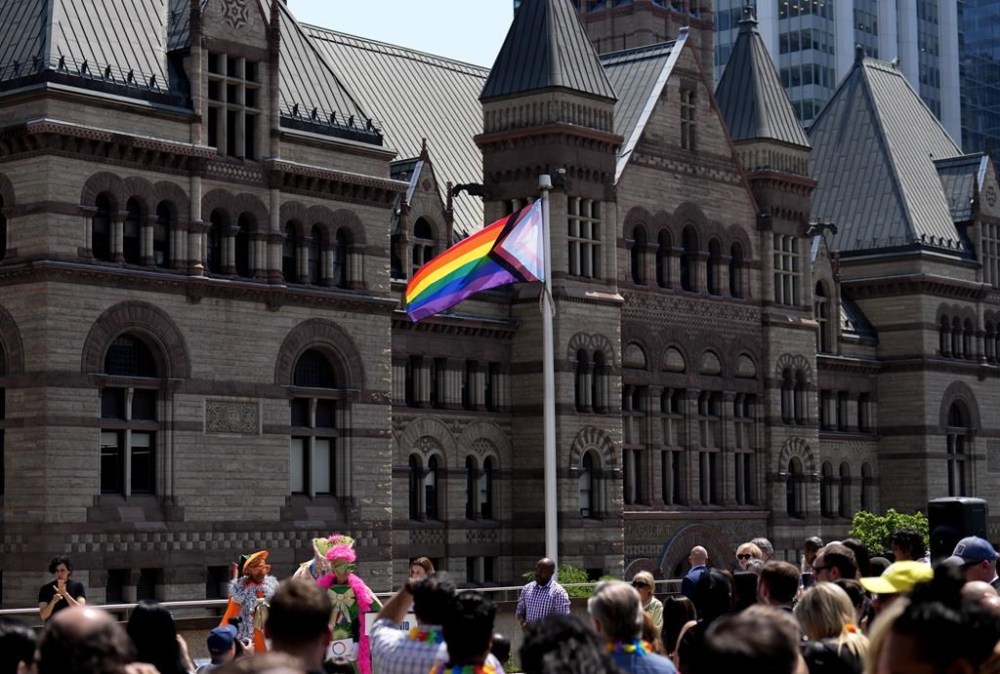
City of Toronto officially proclaim June as Pride Month in Toronto and raise the Progress Pride flag at City Hall in Toronto on Thursday, June 1, 2023. Researchers are hoping that LGBTQ people celebrating at Pride festivals will take 15 minutes during the revelry to share information about their health and experiences with health-care and social services. THE CANADIAN PRESS/Nathan Denette

“For so long when we talk about queer and trans and two-spirit health, we only have talked about sexually transmitted and bloodborne illnesses,” Verma said.

“We really need to be talking also about all of these additional dimensions of our health.”

The survey also asks participants about “how they navigate” health issues, including whether their health costs are covered by public or private insurance, she said. It also asks about substance use and experiences of discrimination.

The survey responses are anonymous and confidential, Verma said.

The CBRC did an “Our Health” study last year, but it was all online and took 30 minutes to an hour to complete. This year’s survey only takes about 15 minutes to do and it’s the first time that researchers are going out to Pride events to recruit participants, she said.

Having quality health data is critical to pinpointing what kinds of changes are needed in health-care and social services, as well as developing prevention programs and securing funding, Verma said.

“When we look at the resources that are available out there, whether those be public education campaigns or groups and all of that, we don’t really see queer and trans and two-spirit people represented in those,” she said.

“So there’s an opportunity for our strategies around chronic disease to be more attuned to queer and transgender and two-spirit people’s lives.”

The act of doing the survey itself is also important to ensuring that LGBTQ communities have a voice in health care, said Alphonso King Jr., a community leader, activist and drag queen in Toronto known as Jade Elektra.

“It is no different than a person of colour seeing themselves represented in television or in film or any of those things,” King said.

“When you actually realize that people recognize that you exist, it is so important.”

Although Pride weekend in Toronto, which starts on Friday, is largely a “party atmosphere,” King is encouraging people to take the time to participate in the study.

“If you have the opportunity to take the survey, please do because your information is just as important as everyone else’s and it could actually form and change the way things are done in the future,” King said.

The CBRC aims to get about 10,000 people across Canada to complete the survey, Verma said, noting the reception was positive at Pride events they’ve already attended in Winnipeg, Regina and Saskatoon.

At Pride Winnipeg alone, almost 800 people participated, she said.

People can scan a QR code and do the survey on their phones, or they can use tablets provided at the event, Verma said. It can be done in English, French or Spanish and participants receive a $10 honorarium.

The “Our Health” survey is an important way to build trust between LGBTQ2S communities and the health-care system, as well as drive improvement, said Daniel Grace, Canada Research Chair in Sexual and Gender Minority Health and associate professor at the Dalla Lana School of Public Health at the University of Toronto.

“We know that many people experience health care in really negative ways due to transphobia and homophobia, to anti-Black and anti-Indigenous racism,” said Grace, who is a past board member and a contributing researcher for CBRC.

“It’s essential that we not only collect information to better appreciate barriers to health services, but that we action on that, we mobilize on it, we hold health-care providers and governments accountable,” he said.

The “Our Health” survey team will be at Pride events this summer:

In June: Toronto and Steinbach, Man..

In July: Victoria; Sudbury, Ont.; Fredericton, N.B.; Halifax, N.S.; Charlottetown.

In August: Bathurst, N.B.; Vancouver; Saint John, N.B.; Montreal; New Westminster, B.C.; Edmonton; Ottawa; Sherbrooke, Que.; Calgary; St. John’s.

In September: Quebec City.

This report by The Canadian Press was first published June 22, 2023.

Canadian Press health coverage receives support through a partnership with the Canadian Medical Association. CP is solely responsible for this content.
Report Error Submit a Tip

More Stories

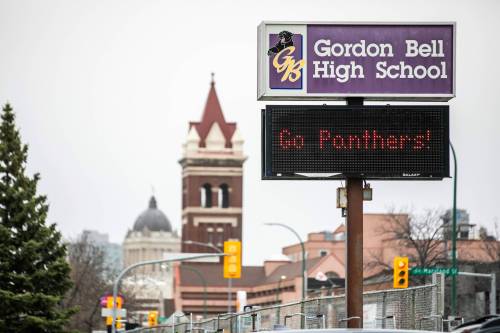
Gordon Bell rings in a century

Maggie Macintosh 13 minute read Preview

Gordon Bell rings in a century

Maggie Macintosh 13 minute read Updated: Yesterday at 8:06 PM CDT

Mischka Valencia had gotten used to the hum of heavy machinery at Gordon Bell High School.

“Ever since I’ve been here, it’s all been under construction,” the Grade 12 student said, standing on the sidelines of the brightly painted revamped outdoor basketball court. “I had no idea this was a court.”

The Filipina teenager landed in Winnipeg several months after the inner-city campus had transformed into a construction site.

It was the fall of 2023 and Mischka’s priorities were fitting in, befriending classmates and learning a third language via first-period French.

Read
Updated: Yesterday at 8:06 PM CDT

Province looks to seize notorious drug den

Erik Pindera 5 minute read Preview

Province looks to seize notorious drug den

Erik Pindera 5 minute read 12:00 PM CDT

Provincial justice officials are trying to seize a Dominion Street drug den that has been the source of trouble in the West End for years.

The owner of 982 Dominion St., 45-year-old Robert Edward Johnson, was most recently arrested in June along with several others after a lengthy Winnipeg Police investigation into thefts and illicit drug sales connected to the house.

“The residence has a reputation within the neighbourhood as being a location where individuals habitually attend for the purpose of purchasing and/or consuming controlled substances,” reads a statement of claim filed by the province’s director of civil forfeiture in the Court of King’s Bench last week.

“For several years, the residence has been associated with criminal activity, violence, and disorder, resulting in numerous police attendances and complaints from members of the surrounding community.”

Read
12:00 PM CDT

Creative powerhouse Perry Rosemond never lost Winnipeg roots

Ben Waldman 7 minute read Preview

Creative powerhouse Perry Rosemond never lost Winnipeg roots

Ben Waldman 7 minute read 6:00 AM CDT

He created King of Kensington, directed the troops in the Royal Canadian Air Farce, and his creative eye was behind the lens for television shows starring Johnny Cash, Tom Jones, Mr. Dress-Up and the Friendly Giant.

He also wrote and developed the Canadian version of Sesame Street during his time as the head of school and preschool programming for CBC in Toronto, and directed a televised special in 2002 for Winnipeg sketch comedy troupe Royal Liechtenstein Theatre Company.

But before his name featured in the credits of some of the most iconic and influential pieces of the Cancon canon, Perry Rosemond was an only child living in a crammed, multi-generational home in Winnipeg’s North End, racing each day to beat the morning bell next door at William Whyte School.

In memoirs that have yet to be published, the late television producer recalled his childhood. “(T)here were 14 of us in the house at 193 Andrews St., and it wasn’t that big of a house,” he writes.

Read
6:00 AM CDT

Gillingham talks trash, pledges big bin boost

Joyanne Pursaga 4 minute read Preview

Gillingham talks trash, pledges big bin boost

Joyanne Pursaga 4 minute read Yesterday at 2:01 AM CDT

Scott Gillingham says he would add hundreds of locked garbage bins downtown to prevent unsightly trash piles if re-elected as mayor.

Read
Yesterday at 2:01 AM CDT

May be whiff of truth to ex’s odour ardour

Maureen Scurfield 5 minute read 2:01 AM CDT

DEAR MISS LONELYHEARTS: I ran into an old boyfriend I used to curl on a team with, and we went for drinks. We’ve been almost eight years apart, and I couldn’t remember why we broke up, as we always had such a great time together.

It wasn’t until the second date — this time on a weekend — that it came back to me, with a jolt. Pee-yew! I remembered he doesn’t use deodorant on weekends. Why? He enjoys his own body odour. I recalled that a bit too late, and it was just as awful as ever! I went home early.

Tonight, he called and I refused him another date. I said, “Think back. You remember why we broke up?” Then he said, “Oh yeah, you hated my no-deodorant weekend policy. Well, guess what? Some women don’t mind!” I said I really doubted that, and that ended the conversation. Miss L., wouldn’t any women find stinky underarms offensive?

— Sensitive Nose, Fort Richmond

Clock ticks down on destruction of records documenting residential school abuses

Marsha McLeod 13 minute read Preview

Clock ticks down on destruction of records documenting residential school abuses

Marsha McLeod 13 minute read Yesterday at 12:49 PM CDT

In less than a year, a private company is set to destroy the largest cache of records detailing the widespread abuse of Indigenous children at residential schools in Canada.

The destruction, which was ordered by an Ontario court in 2014 and later upheld by the Supreme Court, is set to take place on Sept. 19, 2027.

This countdown is igniting emotional conversations that seek to balance the immense historical value of the records alongside the confidentiality survivors were promised as part of the process of providing detailed testimony about abuses they’d suffered.

The records were created as part of the Indian Residential Schools Settlement Agreement, a class-action settlement stemming from survivors who began suing the federal government in the late 1990s over the harm they’d been subjected to at residential schools.

Read
Yesterday at 12:49 PM CDT