Here’s how to keep cool and stay safe during a heat wave

Advertisement

Advertise with us

LAS VEGAS (AP) — Scorching heat across the U.S. already has caused more than a dozen deaths in Texas alone and led to mounting misery for millions of people from the Pacific Northwest to the South.

Read this article for free:


or

Already have an account? Log in here »

To continue reading, please subscribe:

Subscribe and receive a limited-edition Free Press branded hat or tote.

Digital Subscription

One year of digital access for only $205*

  • Enjoy unlimited reading on winnipegfreepress.com
  • Read the E-Edition, our digital replica newspaper
  • Access News Break, our award-winning app
  • Play interactive puzzles

*First annual payment billed as $205.00 + GST for one year. This annual subscription will automatically renew at $233.00 + GST every 52 weeks (10% off the regular annual price of $259.35). Offer available to new and qualified returning subscribers only. Cancel any time.

To continue reading, please subscribe:

Add Free Press access to your Brandon Sun subscription for only an additional

$1 for the first 4 weeks*

  • Enjoy unlimited reading on winnipegfreepress.com
  • Read the E-Edition, our digital replica newspaper
  • Access News Break, our award-winning app
  • Play interactive puzzles
Start now

*Your next Brandon Sun subscription payment will increase by $1.00 and you will be charged $17.95 plus GST for four weeks. After four weeks, your payment will increase to $24.95 plus GST every four weeks.

Hey there, time traveller!
This article was published 29/06/2023 (1187 days ago), so information in it may no longer be current.

LAS VEGAS (AP) — Scorching heat across the U.S. already has caused more than a dozen deaths in Texas alone and led to mounting misery for millions of people from the Pacific Northwest to the South.

And the official end of summer is still months away.

Here’s a guide on how to keep cool and stay safe in the punishing temperatures as the latest heat wave ravaging the country spreads east.
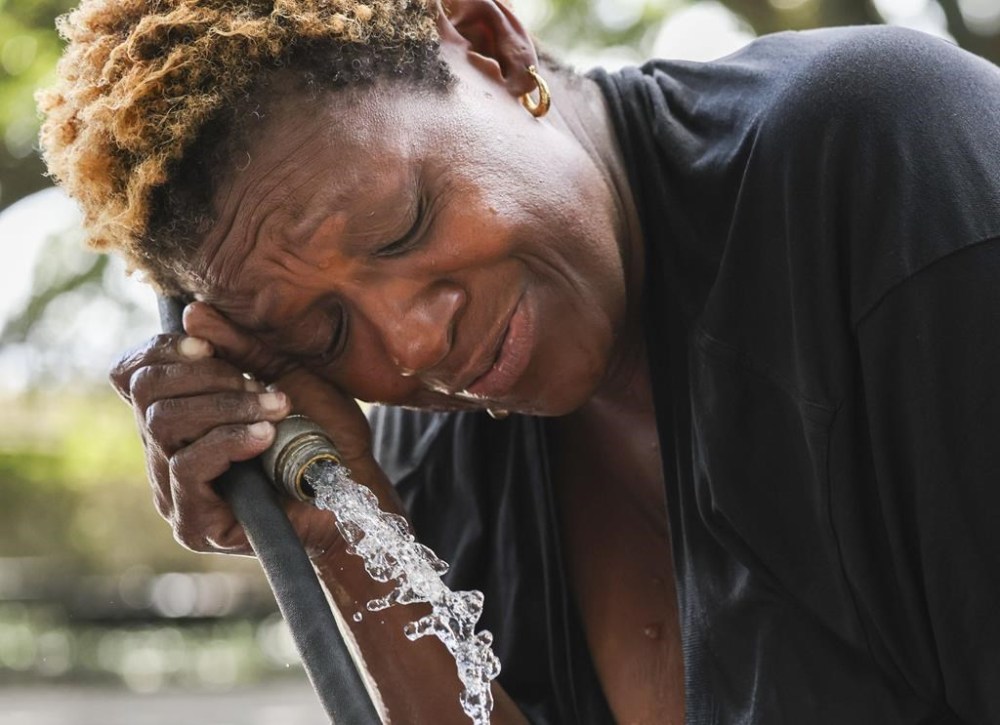
Judy Breland Morris cools off and washes herself off with a hose after she claims she was maced near Jackson Square, during an excessive heat warning in New Orleans, Tuesday, June 27, 2023. (Sophia Germer/The Times-Picayune/The New Orleans Advocate via AP)

WHY IS EXTREME HEAT DANGEROUS?

Heat kills more Americans than any other weather event, including tornadoes and flooding, even though most heat-related deaths are preventable through outreach and intervention, according to the Environmental Protection Agency.

“Heat is the silent killer. No one thinks about it,” said Ben Zaitchik, a professor and climate scientist at Johns Hopkins University whose research includes heat waves. “It’s getting hotter just about everywhere. That means even without a particular weather phenomenon, like what we’re seeing in Texas right now, we’re seeing temperatures we aren’t used to, and that in its own right is a risk.”

The body normally cools itself by sweating, but extreme heat can interrupt your ability to do that, potentially leading to heat exhaustion or heat stroke, organ failure or death.

Older adults, young children and people with chronic illnesses like diabetes are most at risk. But that doesn’t mean healthy people are immune, said Ashley Ward, director of the Heat Policy Innovation Hub at Duke University’s Nicholas Institute for Energy, Environment and Sustainability.

The heat can have adverse effects on people who work or exercise outdoors, for example, and also homeless people or those without efficient air conditioning or any at all.

WHAT ARE THE SIGNS OF HEAT-RELATED ILLNESS?

You might be experiencing a heat stroke if your body temperature reaches or surpasses 103 degrees. Other symptoms include nausea, headaches, thirst and a fast and strong heart rate.

The Centers for Disease Control and Prevention says heat stroke is a medical emergency and recommends that people with symptoms call 911.

Symptoms of heat exhaustion include heavy sweating, muscle cramps, dizziness, vomiting and cold, pale or clammy skin. The CDC says you should seek treatment if such symptoms worsen or last more an hour.
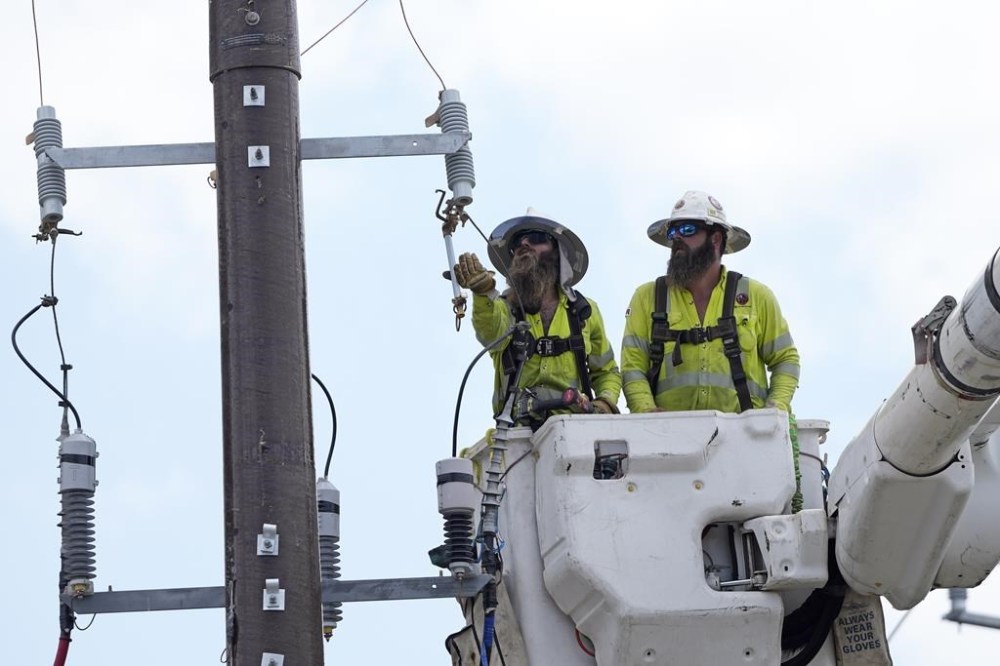
Workers repair a power line on Thursday, June 29, 2023, in Houston. An unrelenting heat wave in Texas is testing the state's power grid as demand soars during a second week of triple-digit temperatures. (AP Photo/David J. Phillip)

WHAT IF I DON’T HAVE AIR CONDITIONING AT HOME?

Spending just a few hours in an air-conditioned space can help your body stay cooler when you go back into the heat, according to the CDC. So take advantage of public spaces with air conditioning, like libraries and shopping malls.

During the day, cover your windows, turn off the lights and avoid using the stove or oven. If you live in a dry area, hang wet towels to cool the room.

At night, if temperatures drop, keep your windows and shutters open.

Ward, the Duke researcher, said it’s also important to think outside the box if you don’t have air conditioning. After taking a cool bath or shower, for example, sit in front of a fan while your skin is still damp.

She also recommends soaking your feet above the ankles and arms above the elbows in cool water for 10-15 minutes.

If you only have one fan, Ward said, prioritize creating a cool sleeping space rather than common areas.

“This is when your body really recovers from heat exposure during the day,” she said.

WHAT IF I HAVE TO BE OUTSIDE?

Tubers float the cool Comal River in New Braunfels, Texas, Thursday, June 29, 2023. Meteorologists say scorching temperatures brought on by a heat dome have taxed the Texas power grid and threaten to bring record highs to the state. (AP Photo/Eric Gay)

Stay hydrated, and don’t wait until you’re thirsty to drink fluids.

Limit your sun exposure by staying in the shade or using an umbrella. Wear sunglasses and a wide-brimmed hat or cap.

If you work outside and have access to cool water, consider soaking your shirt and repeating the process every hour or whenever it dries out, Ward said.

Homeless people should reach out to shelters for information on local resources, including temporary cooling centers.

DO I HAVE TO WORRY ABOUT BURN INJURIES?

Doctors at Arizona and Nevada burn centers have warned of injuries from contact with superheated roads and other surfaces.

This can happen, for example, if you collapse from dehydration or heat stroke and can’t get up off the hot ground.

But burns can also come from touching hot surfaces like leather seats or poolside concrete, so be careful when reaching for a metal door handle or a seat belt buckle and when getting out of a pool.

HOW DO I KEEP MY PETS SAFE?

Tubers float the cool Comal River in New Braunfels, Texas, Thursday, June 29, 2023. Meteorologists say scorching temperatures brought on by a heat dome have taxed the Texas power grid and threaten to bring record highs to the state. (AP Photo/Eric Gay)

Schedule your outdoor walks for when it’s coolest, like the early morning or evening, and protect your furry friends’ paws with breathable shoes.

Keep pets inside if you can, and if they must go out, make sure they have access to shade.

“A doghouse by itself is not shade,” Ward said. “That’s an oven.”

Never leave a pet in a hot car.

___

This story has been updated to correct the name of a Duke University institute to the Nicholas Institute for Energy, Environment and Sustainability. It also corrects Ashley Ward’s title to director of the Heat Policy Innovation Hub at the institute.


Report Error Submit a Tip

More Stories

Uncaring hubby fell flat at first hurdle

Maureen Scurfield 4 minute read 2:00 AM CDT

DEAR MISS LONELYHEARTS: I re-rented my favourite summer cabin this fall because I’m trying to finish my thesis. My husband of just over a year was very annoyed with me for going on my own, but didn’t say much about it because I paid.

I thought we were both OK with this arrangement, until I got the flu up at the lake very badly and couldn’t keep anything down. I felt faint. I phoned him and he said he was at a party with the guys. I could hear music and girls laughing.

He wouldn’t come for me, so at 4 a.m. when I was getting even more sick and scared, I drove back to the city unannounced.

I went straight to my parents’ house and pretty much fell through the door. Mom said to me when she grabbed me: “This is not right. You could have died in the ditch. Where is your husband?”

Winnipeg Police Service recognizes, honours residential school survivors as Orange Shirt Day approaches

Malak Abas 3 minute read Preview

Winnipeg Police Service recognizes, honours residential school survivors as Orange Shirt Day approaches

Malak Abas 3 minute read Yesterday at 7:27 PM CDT

Winnipeg Police Service members lit a sacred fire outside of their North District Station in recognition of residential school survivors ahead of the upcoming Orange Shirt Day.

“We know that the relationship between policing and Indigenous communities has not always been one of trust,” WPS Chief Gene Bowers told visitors at a gathering outside of the station Sunday afternoon.

“We cannot change that history, but we can acknowledge it, we can learn from it, and we can take responsibility for how we move forward.”

The sacred fire, guided by elder Mike Calder, will burn for 24 hours at the Sinclair Street station, and then be allowed to extinguish naturally. It’s the second year the WPS has lit a sacred fire in recognition of residential school survivors — last year, the fire was lit outside of WPS headquarters on Smith Street.

Read
Yesterday at 7:27 PM CDT

‘In Normandy, we remember’

Aaron Epp 4 minute read Preview

‘In Normandy, we remember’

Aaron Epp 4 minute read Saturday, Sep. 26, 2026

Travelling nearly 7,000 km from his home in France to Winnipeg gave Gabriel Zaranski a new perspective on warfare.

“It’s very different to speak about war in school (than) to speak with real people who (have fought) in a war,” he said. “We can feel the emotion when they speak … The testimony has more impact when it’s real soldiers.”

Zaranski is one of 14 Grade 12 students from Bayeux, a town in France’s Normandy region, in Winnipeg this week for a learning tour.

The students, who attend Lycée Arcisse de Caumont high school, met on Saturday with veterans from the Queen’s Own Cameron Highlanders of Canada, a local military regiment, to discuss their studies and the regiment’s role in the Second World War.

Read
Saturday, Sep. 26, 2026

Province invests $3.8M in culinary arts training facility for francophone high school students

Kelly-Anne Riess 3 minute read Preview

Province invests $3.8M in culinary arts training facility for francophone high school students

Kelly-Anne Riess 3 minute read Yesterday at 12:10 PM CDT

A new dedicated culinary arts training facility will give francophone high school students a place to learn the trade in French.

Read
Yesterday at 12:10 PM CDT

Bombers let another one slip away and face pivotal issue

Taylor Allen 7 minute read Preview

Bombers let another one slip away and face pivotal issue

Taylor Allen 7 minute read Saturday, Sep. 26, 2026

Mike O’Shea summed it up best.

“That one doesn’t feel very good.”

Nor should it.

The Winnipeg Blue Bombers started out hot Friday night, only to run out of gas down the stretch and allow the visiting Toronto Argonauts to steal a 30-28 victory.

Read
Saturday, Sep. 26, 2026

The wheels on the bus burned down, down, down…

Russell Wangersky 7 minute read Preview

The wheels on the bus burned down, down, down…

Russell Wangersky 7 minute read Saturday, Sep. 26, 2026

Up on the high ground, a year after the big forest fire in Newfoundland’s Conception Bay North, and the bare rock is startling.

It’s ghostly. The little birds flit and chirp from the naked silver bare-wood branches, and a solitary northern flicker makes its call from — somewhere. But mostly, it’s still, and silent. With the underbrush gone, you can see how little animal life is here right now.

But the most astounding thing is underfoot. On the high rock behind Adam’s Cove and away from the sea, not only are the trees and low brush gone, but much of the soil has burned away as well.

It burned very, very hot.

Read
Saturday, Sep. 26, 2026