

Saskatchewan’s social housing vacancy rate more than doubles in 10 years: documents
Advertisement
Read this article for free:
or
Already have an account? Log in here »
To continue reading, please subscribe:

Digital Subscription
One year of digital access for only $205*
- Enjoy unlimited reading on winnipegfreepress.com
- Read the E-Edition, our digital replica newspaper
- Access News Break, our award-winning app
- Play interactive puzzles
*First annual payment billed as $205.00 + GST for one year. This annual subscription will automatically renew at $233.00 + GST every 52 weeks (10% off the regular annual price of $259.35). Offer available to new and qualified returning subscribers only. Cancel any time.
To continue reading, please subscribe:
Add Free Press access to your Brandon Sun subscription for only an additional
$1 for the first 4 weeks*
- Enjoy unlimited reading on winnipegfreepress.com
- Read the E-Edition, our digital replica newspaper
- Access News Break, our award-winning app
- Play interactive puzzles
*Your next Brandon Sun subscription payment will increase by $1.00 and you will be charged $17.95 plus GST for four weeks. After four weeks, your payment will increase to $24.95 plus GST every four weeks.
Read unlimited articles for free today:
or
Already have an account? Log in here »
Hey there, time traveller!
This article was published 25/07/2023 (1153 days ago), so information in it may no longer be current.
REGINA – Documents show more housing units are sitting vacant in Saskatchewan, a problem the Opposition NDP says is a result of government mismanagement.
The Saskatchewan Housing Corporation documents, obtained by the NDP, reveal the vacancy rate of government housing has more than doubled over the past 10 years.
The documents say there were 1,193 vacant affordable homes for seniors and families in 2012, resulting in a seven-per-cent vacancy rate. That is compared to 3,161 vacant affordable homes, or an 18-per-cent vacancy rate, at the end of last year.
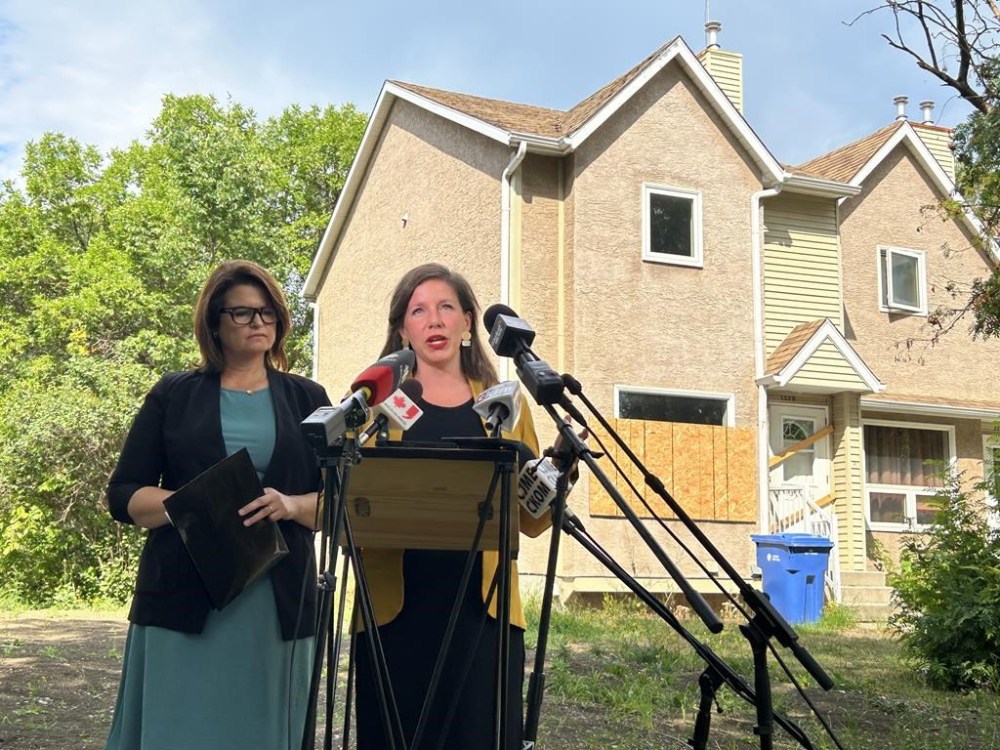
“This is a government that has simply failed on this file, and they’ve failed in a spectacular way,” said Opposition NDP Leader Carla Beck in front of a boarded-up townhouse run by the housing corporation.
“And I think we’re seeing the impacts of that in communities right across the province.”
NDP social services critic Meara Conway said the boarded-up home could be used by one of the families on the province’s growing wait list to access affordable housing.
“This is like a nice, quiet cul-de-sac,” Conway said. “There would be a lot of people who would want to live in this house, so fix it up, find a family that is on the wait list.”
The vacancy rate is more acute in the province’s major cities. In Regina, 691 homes were vacant at the end of last year, resulting in a 23-per-cent vacancy rate. In 2012, there were 116 vacant homes for a rate of four per cent.
Saskatoon saw 327 vacant homes, or a 13-per-cent vacancy rate, in 2022. In 2012, there were 75 vacant for a rate of three per cent.
Smaller cities — such as Prince Albert, Yorkton and Swift Current — also have vacancy rates in the double digits.
Conway said this comes at a time when homelessness is on the rise in Saskatchewan, noting a tent encampment outside Regina City Hall has become a backdrop of various issues in the city and province.
Changes to social income support payment programs have also left many who require assistance worse off, she added.
“The people of our province deserve better,” Conway said.
The Saskatchewan Party government has said it’s concerned about the high vacancy rate and that it’s working to fill the homes, spending roughly $75 million per year on maintenance.
It has said this includes repairing homes so people can safely live in them, noting some have been vandalized or damaged from past flooding.
Social Services Minister Gene Makowsky explained homes that are rentable may not be suited for some applicants. For example, he said units might not be able to accommodate someone’s accessibility needs or they could be too small for a family of three.
He said more privately run rentals have been built in cities, potentially drawing people away from wanting to live in a government-run home.
“In places like Regina or Saskatoon, there are some units that are chronically vacant based on the composition and the location,” he said.
Beck said affordable housing units in Saskatchewan represent nearly $1 billion in assets.
She said the public continues to pay to heat them even if they aren’t being used.
“I can’t imagine a scenario where this would be considered a well run public housing program when you got 25 per cent of your assets (in Regina) sitting empty at a time when people need them,” Beck said.
“The solution is simple. Get these people housed.”
Makowsky said the solution isn’t that simple, as those requiring assistance may be experiencing mental health and addictions challenges.
He said the province has partnered with community organizations to provide supportive housing for those who need it.
The province has also capped rents as part of a pilot project and has lowered the eligible age for seniors looking for a home, he said.
This report by The Canadian Press was first published July 25, 2023.