Hockey Canada summit to tackle toxic masculinity as a root problem in sport’s culture
Advertisement
Read this article for free:
or
Already have an account? Log in here »
To continue reading, please subscribe:

Digital Subscription
One year of digital access for only $205*
- Enjoy unlimited reading on winnipegfreepress.com
- Read the E-Edition, our digital replica newspaper
- Access News Break, our award-winning app
- Play interactive puzzles
*First annual payment billed as $205.00 + GST for one year. This annual subscription will automatically renew at $233.00 + GST every 52 weeks (10% off the regular annual price of $259.35). Offer available to new and qualified returning subscribers only. Cancel any time.
To continue reading, please subscribe:
Add Free Press access to your Brandon Sun subscription for only an additional
$1 for the first 4 weeks*
- Enjoy unlimited reading on winnipegfreepress.com
- Read the E-Edition, our digital replica newspaper
- Access News Break, our award-winning app
- Play interactive puzzles
*Your next Brandon Sun subscription payment will increase by $1.00 and you will be charged $17.95 plus GST for four weeks. After four weeks, your payment will increase to $24.95 plus GST every four weeks.
Read unlimited articles for free today:
or
Already have an account? Log in here »
Hey there, time traveller!
This article was published 06/09/2023 (1123 days ago), so information in it may no longer be current.
CALGARY – Sheldon Kennedy feels the weight of what will be discussed at Hockey Canada’s summit in Calgary.
The two-day “Beyond The Boards Summit” on Friday and Saturday is designed to tackle one root cause identified at the heart of racism, sexism, homophobia, discrimination and exclusion in hockey.
How masculinity is defined in hockey — glorifying toughness and violence, the “bro culture”, the “code of the locker room” — and how elite men’s hockey dominates the sport’s culture in Canada are on the agenda.
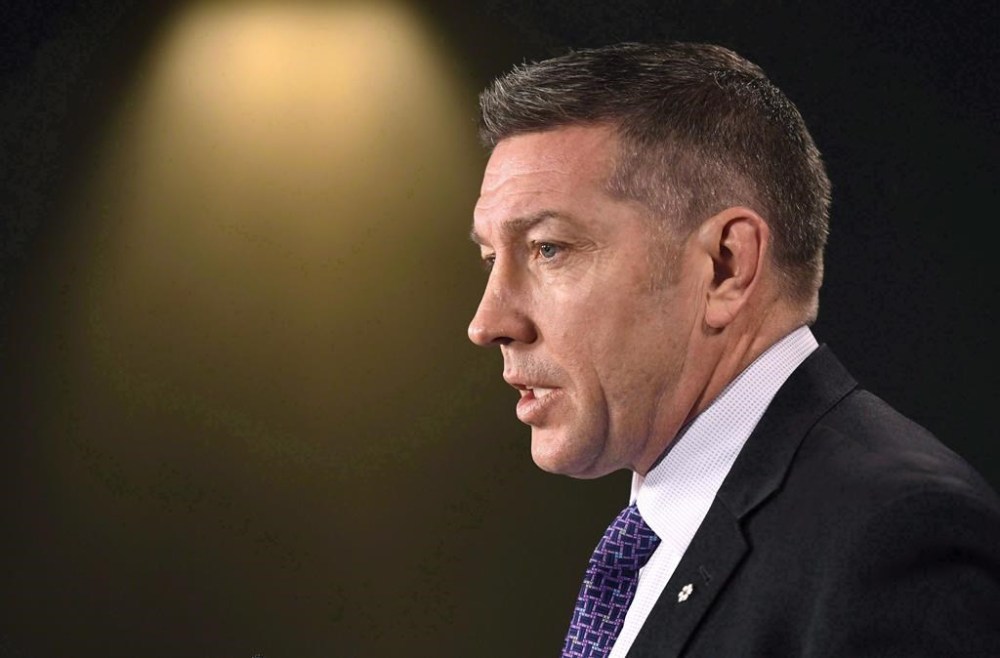
Kennedy, a former NHL player and survivor of sexual abuse in junior hockey by Graham James, will speak at the summit.
The member of Canada’s Sports Hall of Fame for his work in child abuse education and prevention says the summit is a pivotal chance to start making fundamental and needed changes in hockey’s culture.
“I really feel it’s important,” Kennedy told The Canadian Press. “It’s critical that we get this right. The biggest thing is the acceptance of the fact that we have a problem and we need to deal with it.
“It might be awkward for some, it might be exciting for others, it might be very uncomfortable, but I think change brings all of those feelings when it happens. We’re talking about change. I think the game needs to change.
“I can relate to being an outsider. I was teased on the ice for many years about being shacked up with Graham James. People walked on pine cones around Sheldon or didn’t include him.”
All provincial and territorial members, the Canadian Junior Hockey League, the Canadian Hockey League, the American Hockey League, the NHL, the International Ice Hockey Federation and the new Professional Women’s Hockey League will be represented among summit attendees, said Hockey Canada chief operating officer Pat McLaughlin.
The agenda was developed based on research by Teresa Fowler, an assistant professor at Concordia University in Edmonton, who has written hockey works well for white heterosexual males and not as well for others.
“To get to the root, we have to start peeling off all of those layers,” Fowler told CP. “What spills out from hypermasculinity are those things … racism, homophobia.
“One of the outcomes of hypermasculinity that kind of brought us to this point is sexism. And in our data, sexism just stunk everywhere, but the players themselves didn’t identify it as sexism. That’s just the nature of the culture of men’s ice hockey.”
Wilton Littlechild will open the summit with a land acknowledgment and elder blessing.
Hockey Canada board chair Hugh Fraser, who is Black, is a Friday keynote speaker, although a deeper dive on racism in hockey will be a tackled at a later summit, said McLaughlin.
“This is the one in a series. We want to get at the ‘isms’ as we move forward,” he explained. “It’s really, really important that we start somewhere and so we’ve started with toxic masculinity.
“Each topic, or part of culture that we’re trying to get at, that will determine who the audience is as we move forward. This particular audience will be really around what Dr. Fowler’s talking about and it will be incredibly uncomfortable and intentionally so. It needs to be.”
Bill Proudman, a co-founder of White Men As Full Diversity Partners and who has worked with the NHL, is among the summit’s presenters. New federal sports minister Carla Qualtrough is also scheduled to speak Friday.
Hockey Canada has undergone a leadership overhaul in the 15 months since it became public the organization settled a lawsuit with a woman who alleged she was gang raped by members of the Canadian junior men’s hockey team at a gala event in London, Ont., in 2018.
The allegations have not been proven in court. Revelations that Hockey Canada used part of registration fees to settle such lawsuits fuelled a firestorm of criticism and pushed the organization into crisis.
The scrutiny magnified other longer-standing issues, including the unaffordability of hockey for low-income people and abusive hazing that has been the subject of player lawsuits against junior hockey leagues and teams.
Kennedy takes a one-issue-at-a-time approach. He wants people leaving the summit feeling ready to change, and not overwhelmed.
“When I look at my story, it’s about bystanders and it’s about how many people didn’t do anything,” Kennedy said.

“We need to be able to empower, encourage and engage those people in charge and the people participating to feel safe enough to step up and step in when they see bad behaviour happening.
“It’s about psychological safety. People feeling safe enough to be who they are, to be able to bring an issue forward, a concern forward and have it get dealt with.”
This report by The Canadian Press was first published Sept. 6, 2023.
This is a corrected story. An earlier version of this story stated there will be no BIPOC presenters at the summit. Hockey Canada board chair Hugh Fraser is a keynote speaker Friday.
Note to readers: An earlier version of this story stated there will be no BIPOC presenters at the summit. Hockey Canada board chair Hugh Fraser is a keynote speaker Friday.
Related Articles
City school division named in new Graham James lawsuit
Advertisement Advertise With Us
Advertisement Advertise With Us