The CDC has relaxed COVID guidelines. Will schools and day cares follow suit?
Advertisement
Read this article for free:
or
Already have an account? Log in here »
To continue reading, please subscribe:

Digital Subscription
One year of digital access for only $205*
- Enjoy unlimited reading on winnipegfreepress.com
- Read the E-Edition, our digital replica newspaper
- Access News Break, our award-winning app
- Play interactive puzzles
*First annual payment billed as $205.00 + GST for one year. This annual subscription will automatically renew at $233.00 + GST every 52 weeks (10% off the regular annual price of $259.35). Offer available to new and qualified returning subscribers only. Cancel any time.
To continue reading, please subscribe:
Add Free Press access to your Brandon Sun subscription for only an additional
$1 for the first 4 weeks*
- Enjoy unlimited reading on winnipegfreepress.com
- Read the E-Edition, our digital replica newspaper
- Access News Break, our award-winning app
- Play interactive puzzles
*Your next Brandon Sun subscription payment will increase by $1.00 and you will be charged $17.95 plus GST for four weeks. After four weeks, your payment will increase to $24.95 plus GST every four weeks.
Read unlimited articles for free today:
or
Already have an account? Log in here »
Hey there, time traveller!
This article was published 01/03/2024 (943 days ago), so information in it may no longer be current.
BOSTON (AP) — Four years after the COVID-19 pandemic closed schools and upended child care, the CDC says parents can start treating the virus like other respiratory illnesses.
Gone are mandated isolation periods and masking. But will schools and child care centers agree?
In case you’ve lost track: Before Friday, all Americans, including school children, were supposed to stay home for at least five days if they had COVID-19 and then mask for a set period of time, according to the Centers for Disease Control and Prevention.
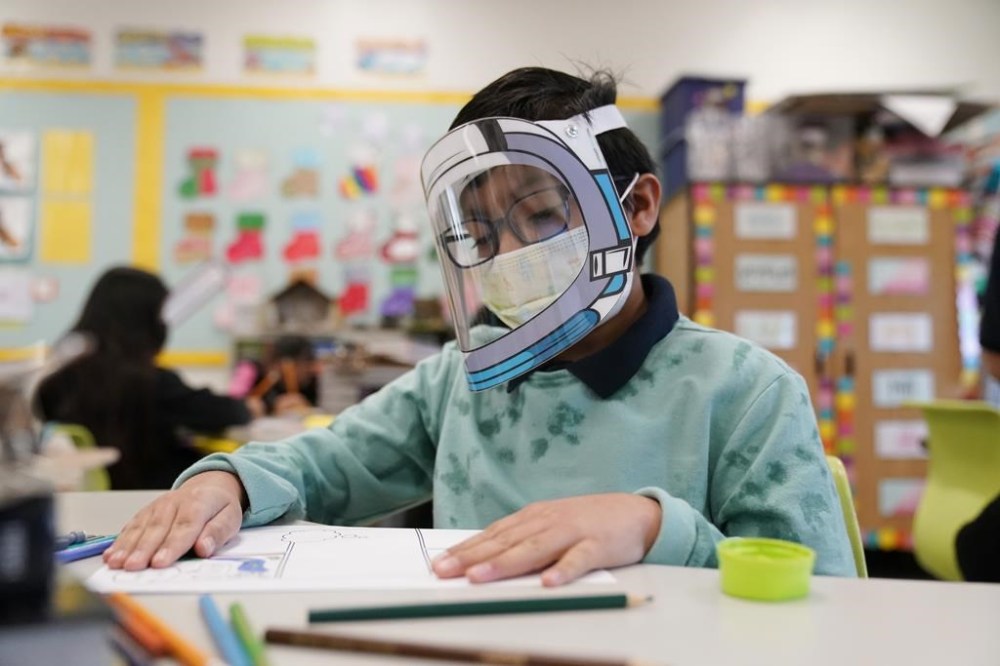
Now, with COVID deaths and hospitalizations dropping, the CDC says children can go back to school when their overall symptoms improve and they’re fever-free for 24 hours without taking medication. Students are “encouraged” to wear a mask when they return.
Still, the change may not affect how individual schools urge parents to react when their children fall sick. Schools and child care providers have a mixed record on following CDC recommendations and often look to local authorities for the ultimate word. And sometimes other goals, such as reducing absences, can influence a state or district’s decisions.
The result can be a confusing array of policies among states and districts, not to mention workplaces — confounding parents whose lives have long been upended by the virus.
“This is so confusing,” said Gloria Cunningham, a single mom in the Boston area. “I just don’t know what I should think of COVID now. Is it still a monster?”
Cunningham, who manages a local store for a national restaurant chain, said her company requires her to take off 10 days if she gets COVID-19. And the school system where her son is in second grade has still been sending home COVID test kits for kids to use before returning to school after long breaks.
“I feel like we should just do away with anything that treats COVID differently or keep all of the precautions,” she said.
The public education system has long held varying policies on COVID. During the 2021-2022 school year, only 18 states followed CDC recommendations for mask-wearing in class. When the CDC lifted its masking guidelines in February of 2022, states like Massachusetts followed suit, but California kept the mask requirement for schools.
And in the child care world, some providers have long used more stringent testing and isolation protocols than the CDC has recommended. Reasons have ranged from trying to prevent outbreaks to keeping staff healthy — both for their personal safety and to keep the day care open.
Some states moved to more lenient guidelines ahead of the CDC. California and Oregon recently rescinded COVID-19 isolation requirements, and many districts followed their advice.
In an attempt to minimize school absences and address an epidemic of chronic absenteeism, California has encouraged kids to come to school when mildly sick and said that students who test positive for coronavirus but are asymptomatic can attend school. Los Angeles and San Diego’s school systems, among others, have adopted that policy.
But the majority of big-city districts around the country still have asked parents to isolate children for at least five days before returning to school. Some, including Boston and Atlanta, have required students to mask for another five days and report positive COVID-19 test results to the school.
Some school leaders suggest the CDC’s previous five-day isolation requirement was already only loosely followed.
Official policy in Burlington, Massachusetts, has been to have students stay home for five days if they test positive. But Superintendent Eric Conti said the real policy, in effect, is: “It’s a virus. Deal with it.”
That’s because COVID is managed at home, using the honor system.
“Without school-based testing, no one can enforce a five-day COVID policy,” he said via text message.
Ridley School District in the Philadelphia suburbs was already using a policy similar to the new CDC guidelines, said Superintendent Lee Ann Wentzel. Students who test positive for COVID must be fever-free without medication for at least 24 hours before returning to school. When they come back, they must mask for five days. Wentzel said the district is now considering dropping the masking requirement because of the new CDC guidance.
A school or day care’s specific guidelines are consequential for working parents who must miss work if their child can’t go to school or child care. In October 2023, during simultaneous surges of COVID, respiratory syncytial virus and influenza, 104,000 adults reported missing work because of child care issues, the highest number in at least a decade. That number has fallen: Last month, child care problems meant 41,000 adults missed work, according to the Bureau of Labor Statistics.
Melissa Colagrosso’s child care center in West Virginia dropped special guidelines for COVID about a year ago, she said. Now, they’re the same as other illnesses: A child must be free of severe symptoms such as fever for at least 24 hours before returning to the center.
“We certainly are treating COVID just like we would treat flu or hand, foot and mouth” disease, said Colagrosso, CEO of A Place To Grow Children’s Center in Oak Hill.
As for kids without symptoms who test positive for COVID? Most parents have stopped testing kids unless they have symptoms, Colagrasso said, so it’s a quandary she has not encountered.
Still, some parents worry the relaxed rules put their communities at greater risk. Evelyn Alemán leads a group of Latino and Indigenous immigrant parents in Los Angeles County. The parents she represents, many of whom suffer from chronic illnesses and lack of access to health care, panicked when California did away with isolation requirements in January.
“I don’t think they’re considering what the impact will be for our families,” she said of California officials. “It feels like they don’t care – that we’re almost expendable.”
Other impacts of the pandemic linger, too, even as restrictions are lifted. In Ridley, the Philadelphia-area district, more students are reclusive and struggle to interact in-person with peers, said Wentzel, the superintendent. Interest in school dances has plummeted.
“Emotionally,” Wentzel said, “they’re having trouble.”
___
Balingit reported from Washington.
___
The Associated Press’ education coverage receives financial support from multiple private foundations. AP is solely responsible for all content. Find AP’s standards for working with philanthropies, a list of supporters and funded coverage areas at AP.org.