A blood test for colon cancer performed well in a study, expanding options for screening
Advertisement
Read this article for free:
or
Already have an account? Log in here »
To continue reading, please subscribe:

Digital Subscription
One year of digital access for only $205*
- Enjoy unlimited reading on winnipegfreepress.com
- Read the E-Edition, our digital replica newspaper
- Access News Break, our award-winning app
- Play interactive puzzles
*First annual payment billed as $205.00 + GST for one year. This annual subscription will automatically renew at $233.00 + GST every 52 weeks (10% off the regular annual price of $259.35). Offer available to new and qualified returning subscribers only. Cancel any time.
To continue reading, please subscribe:
Add Free Press access to your Brandon Sun subscription for only an additional
$1 for the first 4 weeks*
- Enjoy unlimited reading on winnipegfreepress.com
- Read the E-Edition, our digital replica newspaper
- Access News Break, our award-winning app
- Play interactive puzzles
*Your next Brandon Sun subscription payment will increase by $1.00 and you will be charged $17.95 plus GST for four weeks. After four weeks, your payment will increase to $24.95 plus GST every four weeks.
Read unlimited articles for free today:
or
Already have an account? Log in here »
Hey there, time traveller!
This article was published 13/03/2024 (918 days ago), so information in it may no longer be current.
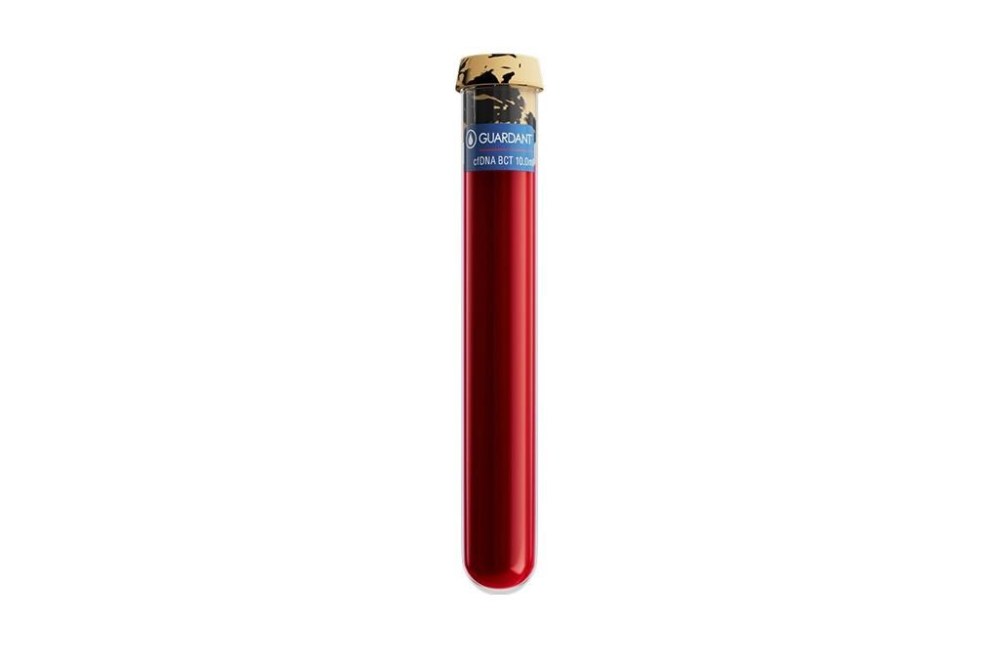
A blood test for colon cancer performed well in a study published Wednesday, offering a new kind of screening for a leading cause of cancer deaths.
The test looks for DNA fragments shed by tumor cells and precancerous growths. It’s already for sale in the U.S. for $895, but has not been approved by the Food and Drug Administration and most insurers do not cover it. The maker of the test, Guardant Health, anticipates an FDA decision this year.
In the study, the test caught 83% of the cancers but very few of the precancerous growths found by colonoscopy, the gold standard for colon cancer screening. Besides spotting tumors, colonoscopies can prevent the disease by removing precancerous growths called polyps.
But some people avoid the exam because of the hassle of getting time off work or the day-ahead preparation that involves drinking a strong laxative to empty the bowels.
A convenient alternative is an annual stool test, where people send a stool sample to a lab for analysis.
“The best test is the one someone will actually complete,” said Dr. Douglas Corley, chief research officer for Kaiser Permanente, Northern California, who was not involved in the study. “Giving people a choice increases the number of people who will get screened.”
In the U.S., screening is recommended for healthy adults ages 45 to 75 at average risk for colon cancer. Frequency depends on the test: a routine colonoscopy is every 10 years. Screening is inching up but falls well short of the 80% of age-eligible adults goal set by the American Cancer Society and other groups.
Guardant recommends testing with its blood test called Shield every three years. Like a stool test, the blood test requires a follow-up colonoscopy if there’s an abnormal result, which could lead to more out-of-pocket costs.
The study, sponsored by Guardant and published in the New England Journal of Medicine, involved 7,861 people in the U.S. who had both a colonoscopy and a blood test.
While the blood test caught 83% of the cancers found by colonoscopy, it missed 17%. That’s on par with stool-based tests.
There were also false alarms: For 10% of the people where the colonoscopy found nothing, the blood test falsely indicated they might have colon cancer. That means a sizeable number of people would face the anxiety of follow-up colonoscopies.
The blood test is tuned to pick up the signature of colon cancer but more research is needed to determine if it might pick up other cancers as well and give misleading results, Corley said.
Colorectal cancer is the second leading cause of cancer deaths in the United States and the third worldwide. In the U.S., more than 153,000 new cases and 53,000 deaths from the disease are expected this year.
More screening should result in fewer cancer deaths, said study co-author Dr. William Grady of the Fred Hutchinson Cancer Center in Seattle and a paid member of Guardant’s scientific advisory board.
In a separate study published Wednesday in the same journal, an updated version of the Cologuard stool test, which also looks for DNA fragments, seemed to improve its performance on false alarms, possibly leading to fewer follow-up colonoscopies. That study, involving more than 20,000 people, was sponsored by Exact Sciences, maker of the test.
“The more options we have for our patients, the better,” said Dr. Nabil Mansour of Baylor College of Medicine, who was not involved in either study. He’ll continue to recommend a colonoscopy for his patients but “I’m excited there will be a pretty good blood test option available.”
___
The Associated Press Health and Science Department receives support from the Howard Hughes Medical Institute’s Science and Educational Media Group. The AP is solely responsible for all content.