The eco-momentum is building
Sustainable Building Manitoba aims to help province lean into greener residential and commercial construction
Advertisement
Read this article for free:
or
Already have an account? Log in here »
To continue reading, please subscribe:

Digital Subscription
One year of digital access for only $205*
- Enjoy unlimited reading on winnipegfreepress.com
- Read the E-Edition, our digital replica newspaper
- Access News Break, our award-winning app
- Play interactive puzzles
*First annual payment billed as $205.00 + GST for one year. This annual subscription will automatically renew at $233.00 + GST every 52 weeks (10% off the regular annual price of $259.35). Offer available to new and qualified returning subscribers only. Cancel any time.
To continue reading, please subscribe:
Add Free Press access to your Brandon Sun subscription for only an additional
$1 for the first 4 weeks*
- Enjoy unlimited reading on winnipegfreepress.com
- Read the E-Edition, our digital replica newspaper
- Access News Break, our award-winning app
- Play interactive puzzles
*Your next Brandon Sun subscription payment will increase by $1.00 and you will be charged $17.95 plus GST for four weeks. After four weeks, your payment will increase to $24.95 plus GST every four weeks.
Read unlimited articles for free today:
or
Already have an account? Log in here »
Hey there, time traveller!
This article was published 16/03/2024 (887 days ago), so information in it may no longer be current.
These days we hear a lot about climate action, green policies, sustainable building and a host of other related terms. But what do these words really mean?
In a nutshell, they all gather under the umbrella of mindfulness, being aware that as with most — if not all — areas of life, every action we take will have a reaction. When looking at environmental issues, buildings, both commercial and residential, need to be included. How are they made? What are they made of? What are the effects of the related decisions both short term and long term?
From planning to design, construction, operation, maintenance, renovation and even demolition, building sustainably means constructed in a way that causes little or no damage to the environment, and being able to last a long time. Sometimes called green construction, or eco-friendly building, sustainable building focuses on being environmentally responsible and resource-efficient at every stage, using resources in ways that minimize environmental impact.
MIKAELA MACKENZIE / FREE PRESS
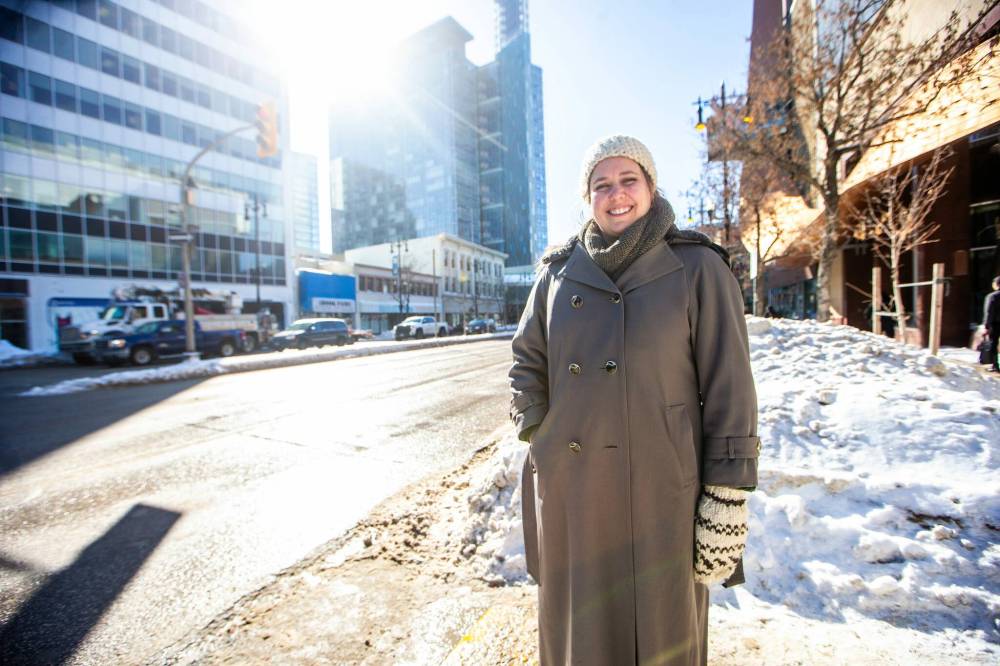
Laura Tyler became executive director of Sustainable Building Manitoba in 2019 in hopes of encouraging building-related climate conversations.
Sustainable Building Manitoba Inc. is a non-profit organization in Winnipeg that’s been around for almost 20 years with a mission to get the word out. Since incorporating in 2005, it has been focused on showcasing local innovation, and inspiring stakeholders to create life-enhancing environments. The organization offers networking and educational opportunities by promoting collaboration in the local industry and advocating for green building in Manitoba. Its focus is primarily on sustainable cities and communities, responsible consumption and production, climate action, affordable and clean energy, and clean water and sanitation.
Laura Tyler remembers sitting on the couch one day in her Halifax home, watching the Nunavut premier on the news, at a gathering of premiers, talk about not being able to walk the ancestral paths.
“It was the first time I heard about climate change, and asking what’s going on,” Tyler said.
“I got on the environmental train through a series of happenstances,” Tyler continued, regarding her move to Winnipeg and eventually taking on the role of executive director of Sustainable Building Manitoba in 2019.
“There’s a lot of power in citizen action, but only if we work together. Here we have a nice gathering of experts to help push the province. Buildings account for a significant amount of greenhouse gases,” she said, adding that making buildings more sustainable is a smart move towards economic development.
“Buildings are part of our everyday lives. We need to have the climate conversation. Sustainability is an amazing economic driver. We are in a really great position but we have to be smart about it.”
Winnipeg has its share of some well-known structures that have received recognition for being sustainable. Manitoba Hydro Place, at 360 Portage Ave. in downtown Winnipeg, was at one time considered to be one of the world’s most sustainable buildings. Awarded a platinum certification for meeting Leadership in Energy and Environmental Design (LEED) standards by the Canada Green Building Council, it’s one example of a sustainable structure. Mindfully created from start to finish, Manitoba Hydro Place features south-facing winter gardens, natural daylight, dimmable, programmable lighting and a solar chimney.
“LEED is one of a number of certifications you can get for a building to recognize its sustainability,” explained Tyler. “Platinum is the top ranking.”
LEED standards provide a framework for healthy, highly efficient, and cost-saving green buildings that offer environmental, social and governance benefits. Other similarly built structures can be found across the city.
“The Winnipeg Humane Society is the first animal shelter in Canada to receive LEED certification,” said Tyler, noting other examples of sustainable buildings including Amber Trails Community School, the new Stantec office and Red River College Polytechnic on Princess Street.
“There’s MEC, one of our earliest LEED buildings for exemplary materials reuse. The new RRC Polytech Innovation Centre (on Notre Dame Avenue) is very low energy with very interesting polychrome solar PV.”
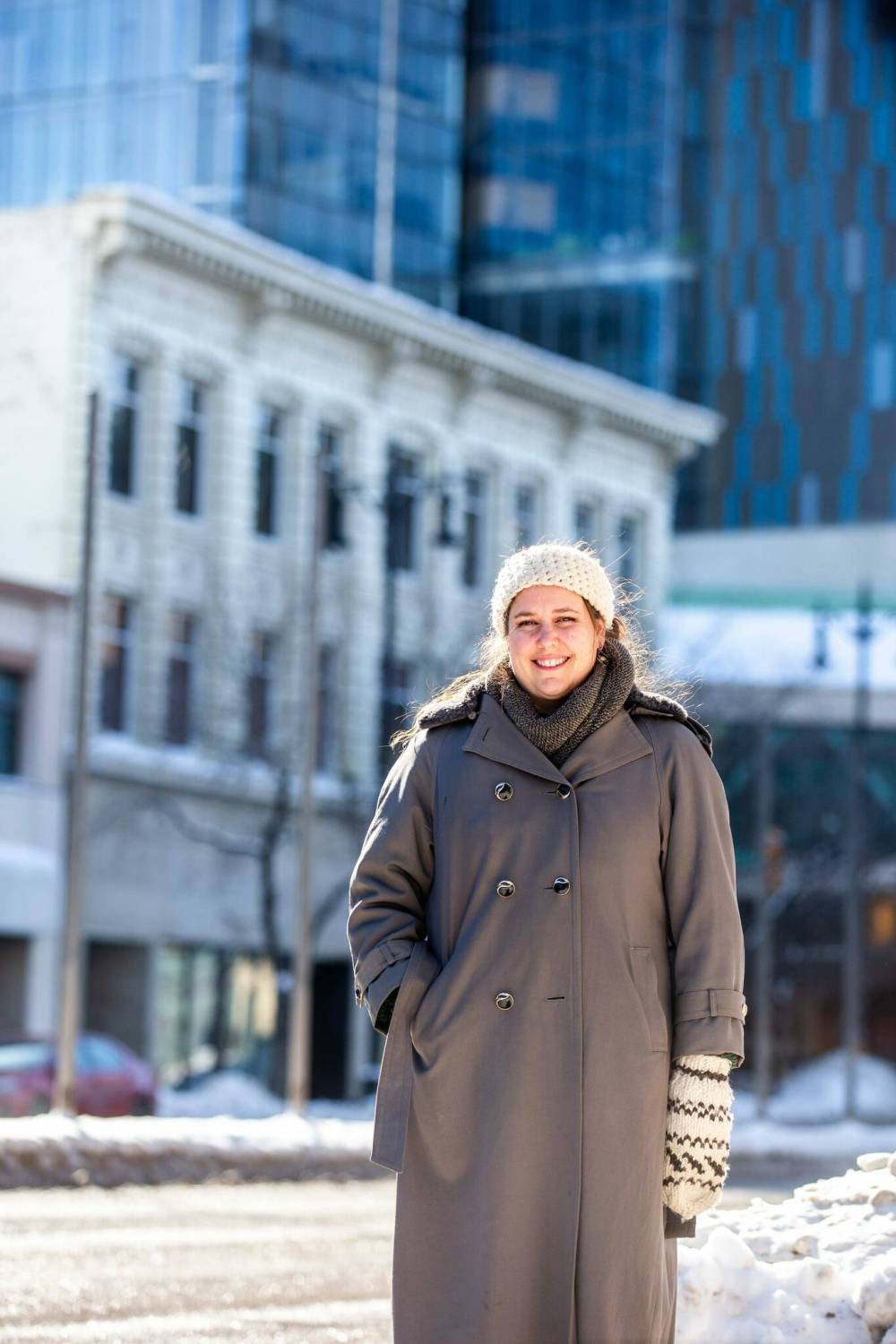
MIKAELA MACKENZIE / FREE PRESS
Sustainable Building Manitoba executive director Laura Tyler would like to see more conversations about building codes and the impact of different construction materials.
Tyler would like to see more conversation around building codes, mindfulness of environmental impact at every step of the building process, and helping people understand the impact of choices of materials.
“There is an affordability crisis going on. We need to maintain affordability, energy costs — we have to heat our houses. By not investing and not paying attention to energy we are sacrificing in the long run,” said Tyler.

With climate anxiety on the rise, especially in young people, it’s easy to feel overwhelmed when it comes to making improvements to your home, not always knowing the best strategies to cut greenhouse gases. But Tyler says it’s possible to make wise choices, and Sustainable Building Manitoba offers resources to help.
“We host webinars, informing the worker sector, making sure architects and engineers are brought up to date in best practices. We are bringing in different speakers. Right now we are working on two major projects, talking to home owners. You have decision-making power in your home. Retrofits are expensive (but) as more people start to do them, those costs will go down. We are also working on a series of guides, which will be accessible to all,” she said, adding that they will include information on permits, incentives, grants, energy impact comparisons, home energy labeling and understanding actual energy impact.
“To make the world a better place, we have to invest in it.”
On March 26 as part of SBM’s Lunch and Learns, Winnipeg’s iconic Hudson’s Bay Building and the role Indigenous architecture will play in its transformation will be discussed. Indigenous architecture is a process of reclamation, decolonization and place-making. Wehwehneh Bahgahkinahgohn (or “it is visible”) is a project with Southern Chiefs’ Organization to transform the heritage building into a facility for economic reconciliation and reclamation, specifically for First Nations in Manitoba. Presenter Reanna Merasty will discuss the process of Indigenous architecture, how it can contribute to the well-being and representation of First Nations in Manitoba, and how this practice highlights the importance of environmental and sustainable strategies.
Learn more at sustainablebuildingmanitoba.ca.