Should college essays touch on race? Some feel the affirmative action ruling leaves them no choice
Advertisement
Read this article for free:
or
Already have an account? Log in here »
To continue reading, please subscribe:

Digital Subscription
One year of digital access for only $205*
- Enjoy unlimited reading on winnipegfreepress.com
- Read the E-Edition, our digital replica newspaper
- Access News Break, our award-winning app
- Play interactive puzzles
*First annual payment billed as $205.00 + GST for one year. This annual subscription will automatically renew at $233.00 + GST every 52 weeks (10% off the regular annual price of $259.35). Offer available to new and qualified returning subscribers only. Cancel any time.
To continue reading, please subscribe:
Add Free Press access to your Brandon Sun subscription for only an additional
$1 for the first 4 weeks*
- Enjoy unlimited reading on winnipegfreepress.com
- Read the E-Edition, our digital replica newspaper
- Access News Break, our award-winning app
- Play interactive puzzles
*Your next Brandon Sun subscription payment will increase by $1.00 and you will be charged $17.95 plus GST for four weeks. After four weeks, your payment will increase to $24.95 plus GST every four weeks.
Read unlimited articles for free today:
or
Already have an account? Log in here »
Hey there, time traveller!
This article was published 26/03/2024 (929 days ago), so information in it may no longer be current.
CHICAGO (AP) — When she started writing her college essay, Hillary Amofa told the story she thought admissions offices wanted to hear. About being the daughter of immigrants from Ghana and growing up in a small apartment in Chicago. About hardship and struggle.
Then she deleted it all.
“I would just find myself kind of trauma-dumping,” said the 18-year-old senior at Lincoln Park High School in Chicago. “And I’m just like, this doesn’t really say anything about me as a person.”
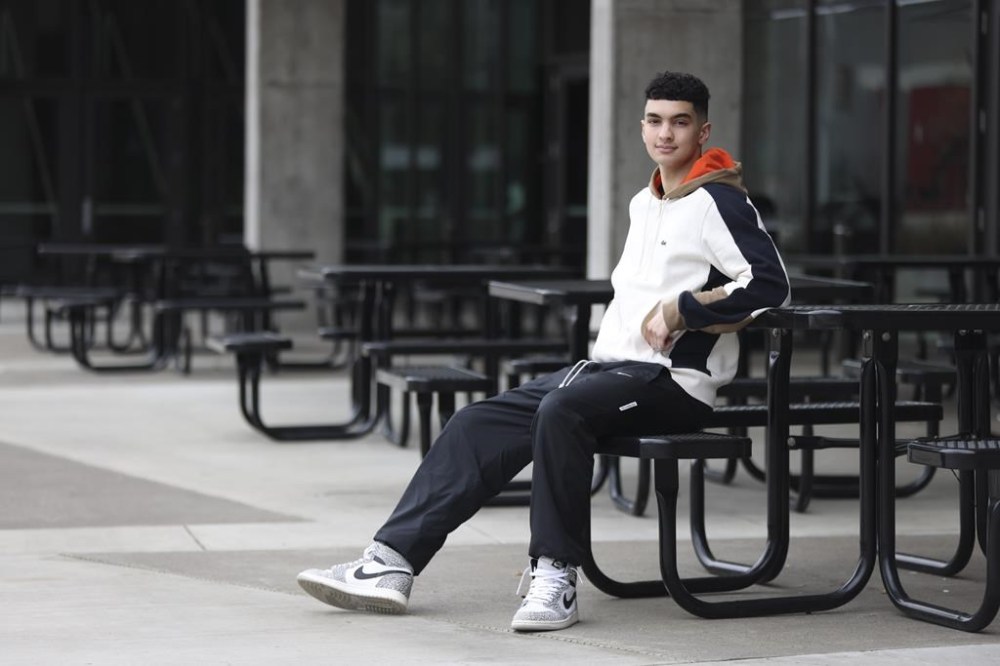
When the Supreme Court ended affirmative action in higher education, it left the college essay as one of few places where race can play a role in admissions decisions. For many students of color, instantly more was riding on the already high-stakes writing assignment. Some say they felt pressure to exploit their hardships as they competed for a spot on campus.
Amofa was just starting to think about her essay when the court issued its decision, and it left her with a wave of questions. Could she still write about her race? Could she be penalized for it? She wanted to tell colleges about her heritage but she didn’t want to be defined by it.
In English class, Amofa and her classmates read sample essays that all seemed to focus on some trauma or hardship. It left her with the impression she had to write about her life’s hardest moments to show how far she’d come. But she and some of her classmates wondered if their lives had been hard enough to catch the attention of admissions offices.
“For a lot of students, there’s a feeling of, like, having to go through something so horrible to feel worthy of going to school, which is kind of sad,” said Amofa, the daughter of a hospital technician and an Uber driver.
This year’s senior class is the first in decades to navigate college admissions without affirmative action. The Supreme Court upheld the practice in decisions going back to the 1970s, but this court’s conservative supermajority found it is unconstitutional for colleges to give students extra weight because of their race alone.
Still, the decision left room for race to play an indirect role: Chief Justice John Roberts wrote universities can still consider how an applicant’s life was shaped by their race, “so long as that discussion is concretely tied to a quality of character or unique ability.”
“A benefit to a student who overcame racial discrimination, for example, must be tied to that student’s courage and determination,” he wrote.
Scores of colleges responded with new essay prompts asking about students’ backgrounds. Brown University asked applicants how “an aspect of your growing up has inspired or challenged you.” Rice University asked students how their perspectives were shaped by their “background, experiences, upbringing, and/or racial identity.”
WONDERING IF SCHOOLS ‘EXPECT A SOB STORY’
When Darrian Merritt started writing his essay, he knew the stakes were higher than ever because of the court’s decision. His first instinct was to write about events that led to him going to live with his grandmother as a child.
Those were painful memories, but he thought they might play well at schools like Yale, Stanford and Vanderbilt.
“I feel like the admissions committee might expect a sob story or a tragic story,” said Merritt, a senior in Cleveland. “And if you don’t provide that, then maybe they’re not going to feel like you went through enough to deserve having a spot at the university. I wrestled with that a lot.”
He wrote drafts focusing on his childhood, but it never amounted to more than a collection of memories. Eventually he abandoned the idea and aimed for an essay that would stand out for its positivity.
Merritt wrote about a summer camp where he started to feel more comfortable in his own skin. He described embracing his personality and defying his tendency to please others. The essay had humor — it centered on a water gun fight where he had victory in sight but, in a comedic twist, slipped and fell. But the essay also reflects on his feelings of not being “Black enough” and getting made fun of for listening to “white people music.”

“I was like, ‘OK, I’m going to write this for me, and we’re just going to see how it goes,’” he said. “It just felt real, and it felt like an honest story.”
The essay describes a breakthrough as he learned “to take ownership of myself and my future by sharing my true personality with the people I encounter. … I realized that the first chapter of my own story had just been written.”
A RULING PROMPTS PIVOTS ON ESSAY TOPICS
Like many students, Max Decker of Portland, Oregon, had drafted a college essay on one topic, only to change direction after the Supreme Court ruling in June.
Decker initially wrote about his love for video games. In a childhood surrounded by constant change, navigating his parents’ divorce, the games he took from place to place on his Nintendo DS were a source of comfort.
But the essay he submitted to colleges focused on the community he found through Word is Bond, a leadership group for young Black men in Portland.
As the only biracial, Jewish kid with divorced parents in a predominantly white, Christian community, Decker wrote he constantly felt like the odd one out. On a trip with Word is Bond to Capitol Hill, he and friends who looked just like him shook hands with lawmakers. The experience, he wrote, changed how he saw himself.
“It’s because I’m different that I provide something precious to the world, not the other way around,” he wrote.
As a first-generation college student, Decker thought about the subtle ways his peers seemed to know more about navigating the admissions process. They made sure to get into advanced classes at the start of high school, and they knew how to secure glowing letters of recommendation.
If writing about race would give him a slight edge and show admissions officers a fuller picture of his achievements, he wanted to take that small advantage.
His first memory about race, Decker said, was when he went to get a haircut in elementary school and the barber made rude comments about his curly hair. Until recently, the insecurity that moment created led him to keep his hair buzzed short.
Through Word is Bond, Decker said he found a space to explore his identity as a Black man. It was one of the first times he was surrounded by Black peers and saw Black role models. It filled him with a sense of pride in his identity. No more buzzcut.
The pressure to write about race involved a tradeoff with other important things in his life, Decker said. That included his passion for journalism, like the piece he wrote on efforts to revive a once-thriving Black neighborhood in Portland. In the end, he squeezed in 100 characters about his journalism under the application’s activities section.

“My final essay, it felt true to myself. But the difference between that and my other essay was the fact that it wasn’t the truth that I necessarily wanted to share,” said Decker, whose top college choice is Tulane, in New Orleans, because of the region’s diversity. “It felt like I just had to limit the truth I was sharing to what I feel like the world is expecting of me.”
SPELLING OUT THE IMPACT OF RACE
Before the Supreme Court ruling, it seemed a given to Imani Laird that colleges would consider the ways that race had touched her life. But now, she felt like she had to spell it out.
As she started her essay, she reflected on how she had faced bias or felt overlooked as a Black student in predominantly white spaces.
There was the year in math class when the teacher kept calling her by the name of another Black student. There were the comments that she’d have an easier time getting into college because she was Black.
“I didn’t have it easier because of my race,” said Laird, a senior at Newton South High School in the Boston suburbs who was accepted at Wellesley and Howard University, and is waiting to hear from several Ivy League colleges. “I had stuff I had to overcome.”
In her final essays, she wrote about her grandfather, who served in the military but was denied access to GI Bill benefits because of his race.
She described how discrimination fueled her ambition to excel and pursue a career in public policy.
“So, I never settled for mediocrity,” she wrote. “Regardless of the subject, my goal in class was not just to participate but to excel. Beyond academics, I wanted to excel while remembering what started this motivation in the first place.”
WILL SCHOOLS LOSE RACIAL DIVERSITY?
Amofa used to think affirmative action was only a factor at schools like Harvard and Yale. After the court’s ruling, she was surprised to find that race was taken into account even at some public universities she was applying to.
Now, without affirmative action, she wondered if mostly white schools will become even whiter.
It’s been on her mind as she chooses between Indiana University and the University of Dayton, both of which have relatively few Black students. When she was one of the only Black students in her grade school, she could fall back on her family and Ghanaian friends at church. At college, she worries about loneliness.
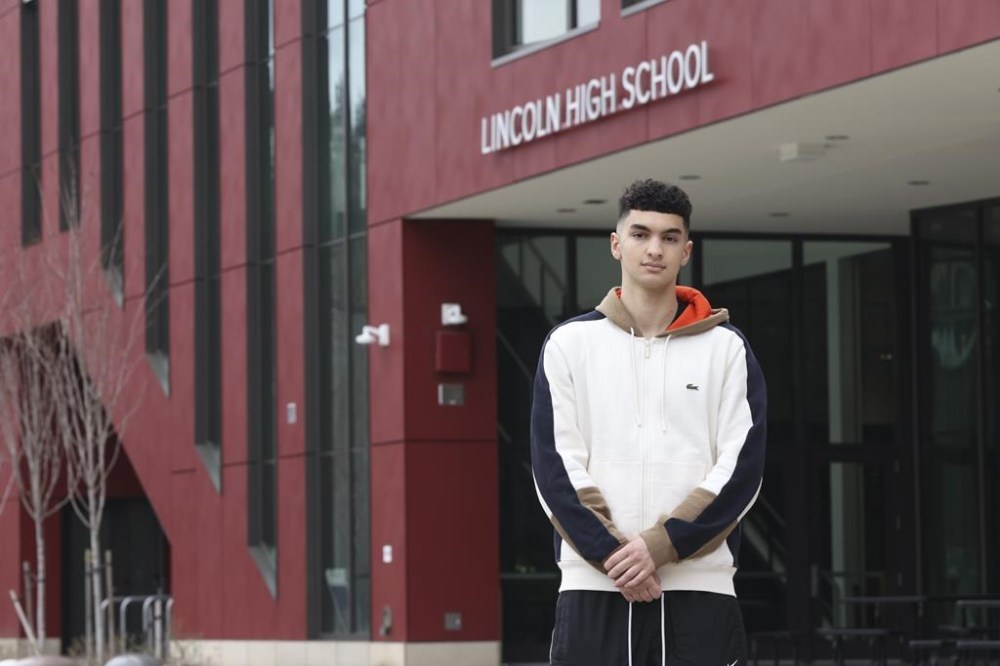
“That’s what I’m nervous about,” she said. “Going and just feeling so isolated, even though I’m constantly around people.”
The first drafts of her essay focused on growing up in a low-income family, sharing a bedroom with her brother and grandmother. But it didn’t tell colleges about who she is now, she said.
Her final essay tells how she came to embrace her natural hair. She wrote about going to a mostly white grade school where classmates made jokes about her afro. When her grandmother sent her back with braids or cornrows, they made fun of those too.
Over time, she ignored their insults and found beauty in the styles worn by women in her life. She now runs a business doing braids and other hairstyles in her neighborhood.
“I stopped seeing myself through the lens of the European traditional beauty standards and started seeing myself through the lens that I created,” Amofa wrote.
“Criticism will persist, but it loses its power when you know there’s a crown on your head!”
___
Ma reported from Portland, Oregon.
___
The Associated Press’ education coverage receives financial support from multiple private foundations. AP is solely responsible for all content. Find AP’s standards for working with philanthropies, a list of supporters and funded coverage areas at AP.org.