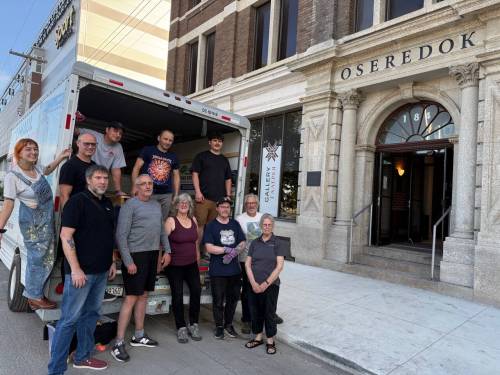
Breaking from routine with a mini sabbatical or ‘adult gap year’ can be rejuvenating
Advertisement
Read this article for free:
or
Already have an account? Log in here »
To continue reading, please subscribe:

Digital Subscription
One year of digital access for only $205*
- Enjoy unlimited reading on winnipegfreepress.com
- Read the E-Edition, our digital replica newspaper
- Access News Break, our award-winning app
- Play interactive puzzles
*First annual payment billed as $205.00 + GST for one year. This annual subscription will automatically renew at $233.00 + GST every 52 weeks (10% off the regular annual price of $259.35). Offer available to new and qualified returning subscribers only. Cancel any time.
To continue reading, please subscribe:
Add Free Press access to your Brandon Sun subscription for only an additional
$1 for the first 4 weeks*
- Enjoy unlimited reading on winnipegfreepress.com
- Read the E-Edition, our digital replica newspaper
- Access News Break, our award-winning app
- Play interactive puzzles
*Your next Brandon Sun subscription payment will increase by $1.00 and you will be charged $17.95 plus GST for four weeks. After four weeks, your payment will increase to $24.95 plus GST every four weeks.
Read unlimited articles for free today:
or
Already have an account? Log in here »
Hey there, time traveller!
This article was published 11/04/2024 (889 days ago), so information in it may no longer be current.
If you daydream about getting a break from stress, you might picture a restful week of vacation or a long weekend away. But some people opt for something bigger, finding ways to take longer or more varied time away from the routine.
Mini sabbaticals. Adult gap years. Or just gap months. The extended breaks range from quitting a job to taking a leave to just working remotely somewhere new to experience a different lifestyle. It’s about stepping out of the expected and recharging.
That’s not entirely new, of course, but the pandemic’s upheaval of work life caused more people to question whether they really wanted to work the way they had.
Barry Kluczyk, a public relations professional who lives in suburban Detroit, had long wanted to spend more time in Seattle. But it wasn’t until COVID pushed him to fully remote work that he felt able to spend a month there, along with his wife and daughter.
“I wish we could have done it sooner,” he said.
The Kluczyks liked it so much they went the opposite direction in 2022 for another mini sabbatical, in Portland, Maine.
AVOIDING BURNOUT
More companies are offering breaks as a low-cost way to address employee exhaustion, said Kira Schrabram, assistant professor of management and organization at the University of Washington. She is among leaders of the Sabbatical Project, which aims to create “a more humane relationship with work” by encouraging extended leaves.
“Companies are starting to realize burnout is an issue,” she said.
American attitudes toward taking time off are very different from European ones, which tend to put more value on vacation time and rest, said Schrabram, who is German.
BETWEEN JOBS
Roshida Dowe took advantage of the time she suddenly had when she got laid off. She wanted a break before looking for her next position, and was struck by how many people asked how she could take time away to travel. So she decided to hang out her shingle as a career-break coach.
Dowe partnered with Stephanie Perry to launch ExodUS Summit, a virtual conference and community for Black women “interested in developing your Location Freedom, Financial Freedom and/or Time Freedom plan.” They bring in experts to talk about practical issues surrounding extended travel, like finances, safety and health care, and more philosophical topics like the value of rest and breaking free of intergenerational trauma.
“When I coach women who are looking to take a sabbatical, the main thing they’re looking for is permission,” said Dowe, who moved to Mexico City as part of her reinvention.
She said it’s powerful to showcase women taking extended travel because, “A lot of us aren’t open to possibilities we haven’t been shown before.”
Perry experienced that herself when she took a vacation to Brazil in 2014 and met people staying in her hostel who were traveling for months, not days.
“I thought for sure people who traveled long term were all trust fund babies,” Perry said. She researched budget travel and found people making it work on $40 a day.
DOLLARS AND CENTS
Cost is a common obstacle for people considering a break. There are creative ways around that, Perry said.
“Housesitting is the reason I can work very little and travel a lot,” she said. She teaches an online class for travelers interested in getting started as a housesitter.
Alternatively, websites like HomeExchange, Homelink and Holiday Swap connect travelers who would like to trade homes.
Ashley Graham took a break from her work at a non-profit in Washington, D.C., and planned a road trip through the South. She visited friends along the way who could give her a free place to stay.
“It was a great way to connect with my past life,” said Graham, who subsequently relocated to New Orleans after loving the city during her sabbatical tour.
ONE TIME, OR A WAY OF LIFE
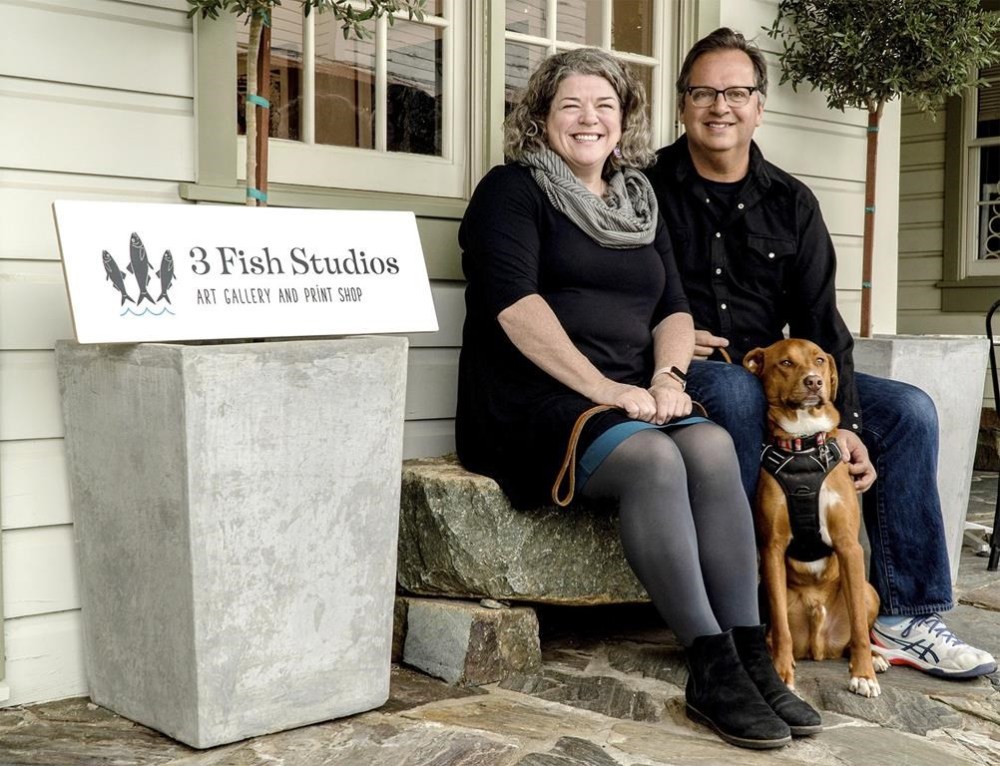
Eric Rewitzer and Annie Galvin put two employees in charge of their 3 Fish Studios art gallery in San Francisco to spend the summer in France and Ireland.
“It was terrifying,” said Rewitzer, who described himself as having been a workaholic and control freak. “It was a huge exercise in trust.”
When they returned to San Francisco, Rewitzer saw his hometown differently. He felt his life had been out of balance, too much work and too little time in nature.
That shift in perspective led the couple to buy what they thought would be a weekend home in the Sierra Nevada mountains. It turned into their full-time home when they shut down their gallery during the pandemic. Now they’re considering getting a studio space in San Francisco again.

“It all comes back to that same place of being willing to take chances,” Rewitzer said.
For Gregory Du Bois, one break from college to be a ski bum in Vail, Colorado, set him on a path of taking mini sabbaticals throughout his corporate IT career. Each time he took a new job, he negotiated for extended time off, explaining to his managers that to perform at his best, he needed breaks to recharge.
“It’s such a way of life that I almost don’t think of it as sabbaticals,” said Du Bois, now retired from tech and working as a life coach based in Sedona, Arizona. “For me, it’s a spiritual regeneration.”
—-
Colleen Newvine is the product manager of the AP Stylebook at The Associated Press. She is the author of “Your Mini Sabbatical.” She and her husband have lived temporarily in New Orleans, San Francisco and three small beach towns on Costa Rica’s Nicoya Peninsula, among other mini sabbatical locales.