Daily marijuana use outpaces daily drinking in the US, a new study says

Advertisement

Advertise with us

For the first time, the number of Americans who use marijuana just about every day has surpassed the number who drink that often, a shift some 40 years in the making as recreational pot use became more mainstream and legal in nearly half of U.S. states.

Read this article for free:


or

Already have an account? Log in here »

To continue reading, please subscribe:

Subscribe and receive a limited-edition Free Press branded hat or tote.

Digital Subscription

One year of digital access for only $205*

  • Enjoy unlimited reading on winnipegfreepress.com
  • Read the E-Edition, our digital replica newspaper
  • Access News Break, our award-winning app
  • Play interactive puzzles

*First annual payment billed as $205.00 + GST for one year. This annual subscription will automatically renew at $233.00 + GST every 52 weeks (10% off the regular annual price of $259.35). Offer available to new and qualified returning subscribers only. Cancel any time.

To continue reading, please subscribe:

Add Free Press access to your Brandon Sun subscription for only an additional

$1 for the first 4 weeks*

  • Enjoy unlimited reading on winnipegfreepress.com
  • Read the E-Edition, our digital replica newspaper
  • Access News Break, our award-winning app
  • Play interactive puzzles
Start now

*Your next Brandon Sun subscription payment will increase by $1.00 and you will be charged $17.95 plus GST for four weeks. After four weeks, your payment will increase to $24.95 plus GST every four weeks.

Hey there, time traveller!
This article was published 22/05/2024 (847 days ago), so information in it may no longer be current.

For the first time, the number of Americans who use marijuana just about every day has surpassed the number who drink that often, a shift some 40 years in the making as recreational pot use became more mainstream and legal in nearly half of U.S. states.

In 2022, an estimated 17.7 million people reported using marijuana daily or near-daily compared to 14.7 million daily or near-daily drinkers, according an analysis of national survey data. In 1992, when daily pot use hit a low point, less than 1 million people said they used marijuana nearly every day.

Alcohol is still more widely used, but 2022 was the first time this intensive level of marijuana use overtook daily and near-daily drinking, said the study’s author, Jonathan Caulkins, a cannabis policy researcher at Carnegie Mellon University.
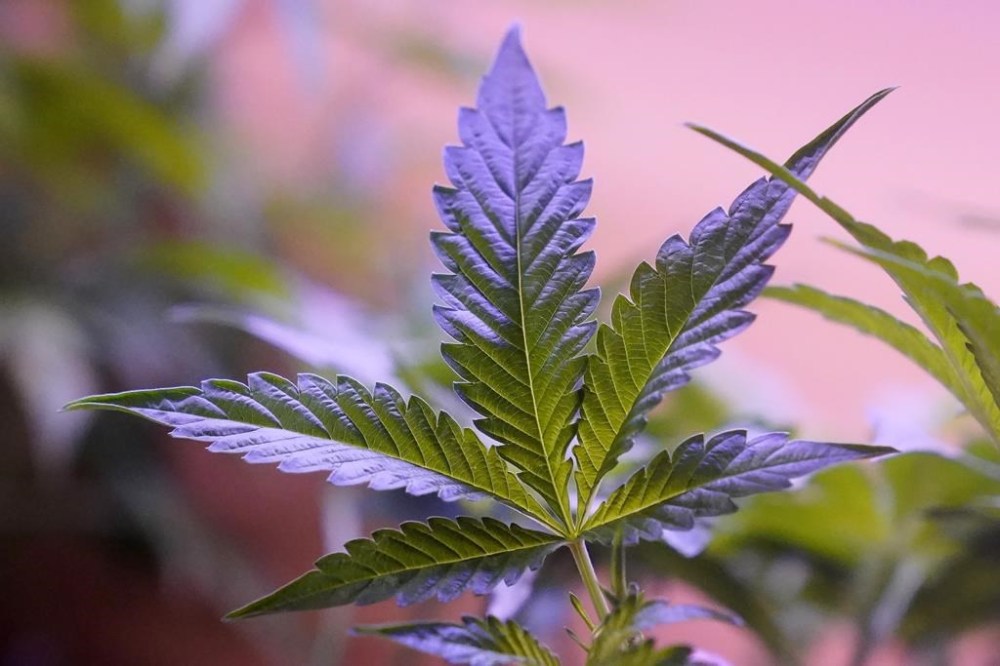
FILE - Marijuana plants are displayed at a shop in San Francisco, Monday, March 20, 2023. Daily and near-daily marijuana use is now more common than similar levels of high-frequency drinking in the U.S., according to an analysis of survey data over four decades, according to research published Wednesday, May 22, 2024, in the journal Addiction. (AP Photo/Jeff Chiu, File)ff

“A good 40% of current cannabis users are using it daily or near daily, a pattern that is more associated with tobacco use than typical alcohol use,” Caulkins said.

The research, based on data from the National Survey on Drug Use and Health, was published Wednesday in the journal Addiction. The survey is a highly regarded source of self-reported estimates of tobacco, alcohol and drug use in the United States.

From 1992 to 2022, the per capita rate of reporting daily or near-daily marijuana use increased 15-fold. Caulkins acknowledged in the study that people may be more willing to report marijuana use as public acceptance grows, which could boost the increase.

Most states now allow medical or recreational marijuana, though it remains illegal at the federal level. In November, Florida voters will decide on a constitutional amendment allowing recreational cannabis, and the federal government is moving to reclassify marijuana as a less dangerous drug.

Research shows that high-frequency users are more likely to become addicted to marijuana, said Dr. David A. Gorelick, a psychiatry professor at the University of Maryland School of Medicine, who was not involved in the study.

The number of daily users suggests that more people are at risk for developing problematic cannabis use or addiction, Gorelick said.

“High frequency use also increases the risk of developing cannabis-associated psychosis,” a severe condition where a person loses touch with reality, he said.

___

The Associated Press Health and Science Department receives support from the Howard Hughes Medical Institute’s Science and Educational Media Group. The AP is solely responsible for all content.


Report Error Submit a Tip

More Stories

Seven years sought for serial harasser

Dean Pritchard 5 minute read Preview

Seven years sought for serial harasser

Dean Pritchard 5 minute read 2:01 AM CDT

Alexander Beaton finished serving a two-year jail sentence for criminally harassing six women and didn’t last two days in the community before he was back at it, sending unwanted obscene messages and videos to a dozen women.

Now prosecutors are seeking a seven-year prison sentence for the 30-year-old Winnipeg man, whose latest string of victims includes a police officer who investigated his earlier crimes.

“He essentially continued (offending) unabated,” Crown attorney Brett Rach told provincial court Judge Malcolm McDonald at a sentencing hearing Friday. “It caused more than a nuisance to these victims — it caused them to fear for their safety.”

Beaton pleaded guilty to 14 charges of criminal harassment, sending indecent communications and breaching court orders for a campaign of harassment waged between 2015 and 2025.

Read
2:01 AM CDT

A development infused with personal memory

Brent Bellamy 6 minute read Preview

A development infused with personal memory

Brent Bellamy 6 minute read 2:00 AM CDT

I haven’t written here in a while. Early this summer, my mom was unfairly taken from us — from me. Healing, as much as it’s possible, takes time.

Read
2:00 AM CDT

Alert-system operator asks CRTC to consider ‘device-based geofencing’ to avoid unnecessary weather warnings

Malak Abas 4 minute read Preview

Alert-system operator asks CRTC to consider ‘device-based geofencing’ to avoid unnecessary weather warnings

Malak Abas 4 minute read Updated: 6:10 PM CDT

The Weather Network’s parent company wants Canada to consider changes to how it warns the public about dangerous weather after Manitobans received a landslide of emergency alerts in the midst of a massive June thunderstorm.

Read
Updated: 6:10 PM CDT

Astronaut’s solo photo exhibition is for the birds

Jen Zoratti 6 minute read Preview

Astronaut’s solo photo exhibition is for the birds

Jen Zoratti 6 minute read 6:25 PM CDT

Roberta Bondar’s solo exhibition Patterns and Parallels: The Great Imperative to Survive is on now at the Mennonite Heritage Centre Gallery at Canadian Mennonite University until Oct. 10.

Read
6:25 PM CDT

A father and son arrested last month are accused of travelling across Canada — and using courier services and Canada Post — to supply their Winnipeg drug-trafficking operation, a recent court filing shows.

Police cracking down on gangs, organized crime in bars and lounges

Nicole Buffie 4 minute read Preview

Police cracking down on gangs, organized crime in bars and lounges

Nicole Buffie 4 minute read Updated: 6:56 PM CDT

Patrons can expect to see more police officers in and around bars and lounges in the coming months as the Winnipeg Police Service plans to crack down on gangs and organized crime.

Uniformed officers will be patrolling bars, lounges and other licensed establishments, targeting gang members and people associated with organized crime. Priority will be given to those who pose the greatest risk to public safety, WPS said in a news release Tuesday.

“We’ve seen — time and time again — where people involved in gangs, in organized crime, attract violence or commit violence, on people who they would perceive as their rivals,” Insp. Josh Ewatski, who heads the service’s organized crime unit said, noting the plan was in the works for a while.

He said while there was no specific incident that resulted in the new push, but said violence — including stabbings, assaults and shootings — over the years is behind the move.

Read
Updated: 6:56 PM CDT