Here’s why the Olympics have a French connection (and it ain’t just Paris 2024)
Advertisement
Read this article for free:
or
Already have an account? Log in here »
To continue reading, please subscribe:

Digital Subscription
One year of digital access for only $205*
- Enjoy unlimited reading on winnipegfreepress.com
- Read the E-Edition, our digital replica newspaper
- Access News Break, our award-winning app
- Play interactive puzzles
*First annual payment billed as $205.00 + GST for one year. This annual subscription will automatically renew at $233.00 + GST every 52 weeks (10% off the regular annual price of $259.35). Offer available to new and qualified returning subscribers only. Cancel any time.
To continue reading, please subscribe:
Add Free Press access to your Brandon Sun subscription for only an additional
$1 for the first 4 weeks*
- Enjoy unlimited reading on winnipegfreepress.com
- Read the E-Edition, our digital replica newspaper
- Access News Break, our award-winning app
- Play interactive puzzles
*Your next Brandon Sun subscription payment will increase by $1.00 and you will be charged $17.95 plus GST for four weeks. After four weeks, your payment will increase to $24.95 plus GST every four weeks.
Read unlimited articles for free today:
or
Already have an account? Log in here »
Hey there, time traveller!
This article was published 28/06/2024 (834 days ago), so information in it may no longer be current.
PARIS (AP) — Ever wondered why French is spoken during medal announcements at the Olympic Games? The truth is that while the ancient Olympics originated in Greece, its modern incarnation is very much a French affair.
The Games were revived in the 1890s by a French nobleman, Baron Pierre de Coubertin, who now holds a questionable legacy. As Paris prepares to host the 2024 Olympics, 100 years since it last held them, here’s why so much about the modern Olympics is fundamentally French.
It’s connected to a French nobleman’s efforts
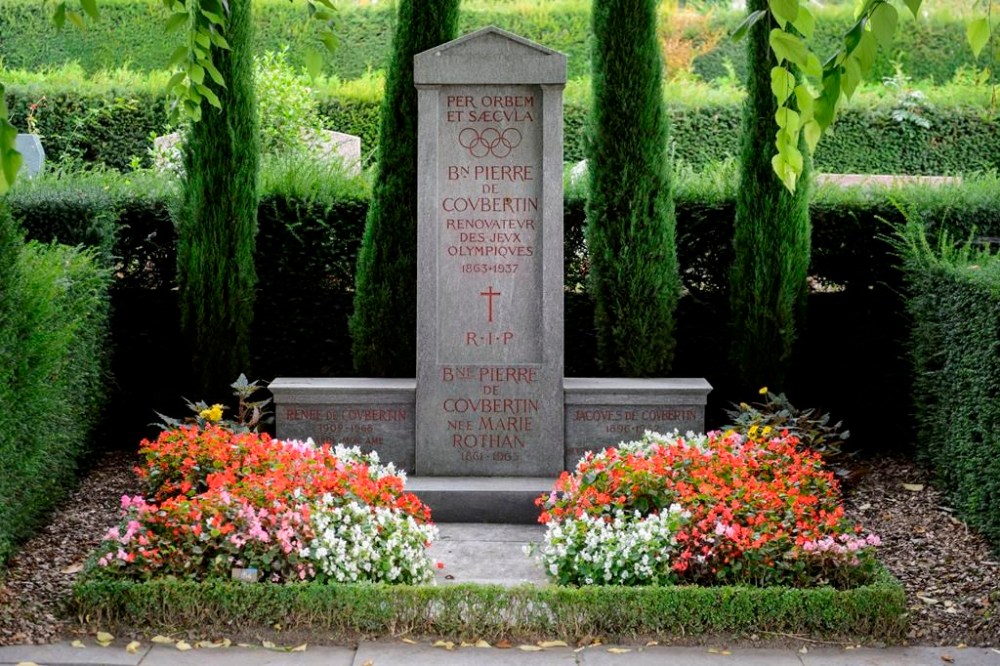
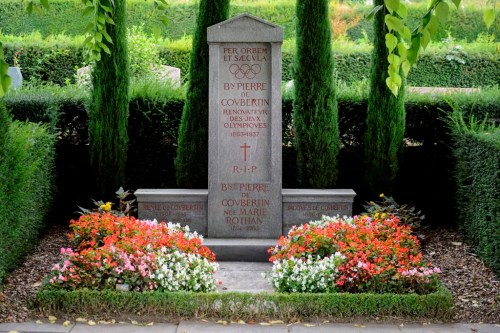
Born in Paris in 1863, Coubertin dedicated his life to rejuvenating the ancient Greek tradition. His heart, fittingly and rather gruesomely, rests in the Coubertin Grove in Olympia, Greece. Coubertin envisioned the Olympics as a pacifist exercise that could foster international cooperation and peace, especially after France’s defeat in the Franco-Prussian War.
The modern Olympics were officially relaunched from Paris at the Sorbonne University in 1894 — marked by a ceremony 130 years later there on June 23 — and for many years, French was the sole language of the Games. English was added only decades later, though French remains a language of the Olympics, preserving the legacy of its founding.
While the first modern Olympics were held in Greece in 1896 to honor their ancient roots, the second Olympiad in 1900 was hosted in Paris.
“At the start of the 20th century, France was the world center of art and sports,” says Patrick Clastres, a sport historian at the University of Lausanne.
The French influenced the connection between arts and the Olympics
Coubertin also believed in the combination of “muscles and mind,” seeing the blending of sports and art as a cornerstone of the Olympic ethos. It was inspired by the ancient Greeks, who celebrated both physical and artistic excellence.
Coubertin introduced arts to the Olympics in 1912 with the “Pentathlon of the Muses” — athletics-inspired competitions in literature, painting, music, sculpture and architecture.
For Paris 2024, Coubertin’s legacy is being evoked in arts competitions like the “Pentathlon of the Arts” at the Versailles Palace, and similar initiatives at the French National Sports Museum in Nice. Some 1,000 French towns and cities are taking part in the Cultural Olympiad, which promotes cultural events with an Olympics theme.
“The Ancient Greeks saw sports and the arts linked under the umbrella of the humanities. It’s important for Paris in particular as a culture capital to celebrate this,” says Dominique Hervieu, head of the Paris 2024 Culture Olympiad.
Coubertin’s intentions are questioned by some experts, however, as less than noble. He introduced arts to the Olympics “aiming to counteract what he thought was the vulgarization of the Games by American commercialization,” Clastres says. “Baron Pierre de Coubertin,” he says, “was a bit of a snob.”
The French Olympic legacy includes a questionable figure
Perhaps one reason why the French connection to the Olympics isn’t more widely recognized is that its founder is a persona non grata for many. Coubertin’s vision for the Olympics was inherently exclusionary, says Nicolas Bancel, a contemporary historian at the University of Lausanne. For example, he opposed the participation of women.
“He thought female Olympians would bring shame on the Games,” Bancel says.
Yet the worst charge against Coubertin was a personal letter he sent to Adolf Hitler praising the Nazi dictator and the Third Reich. Clastres notes that in the missive, Coubertin complimented Hitler on the 1936 Berlin Olympics.
The Coubertin family association says Hitler and Coubertin didn’t maintain regular correspondence. “Exchanges took place through third parties or were limited to a few polite letters,” a spokesperson for the association wrote in a statement to The Associated Press.
This week, an homage was held at the Sorbonne university in Paris to commemorate the speech Coubertin gave in 1894 to initiate the first modern Olympics Games.
International Olympic Committee President Thomas Bach took part, along with dignitaries including Coubertin’s fourth-generation niece, Alexandra de Navacelle de Coubertin, and Monaco’s Princess Charlene.
“What is sometimes missing in discussions about Coubertin is to put him into the context of his time. Every person is entitled to be judged only according to their time,” Bach asserted. “France can be really proud of Coubertin and of his legacy.”
Are the Olympics a pioneering tool of French soft power?
France has long understood the potential of the Olympics as a tool of soft power, arguably making it one of the first modern examples of this concept. Soft power refers to the ability of a country to influence others through cultural or ideological means rather than military force.
Clastres points out that the 1924 Paris Games were the first modern Olympics to use media and propaganda to project national prestige. The French government used newspapers, radio and even military resources to broadcast the Games, establishing a press center in the stadium for the first time.

In a pioneering move, France created a Sports Bureau within the French Foreign Ministry in 1920. “It was a French tool for sports propaganda for further French interests,” says Clastres. This initiative marked the first time bureaucrats were recruited to promote national interests through sports.
“The French sports power took the image monopoly. All images were produced by the French sports authority and sold to the press. The photographers were paid by the French Olympics committee,” Clastres explains.
France, devastated by World War I but retaining the prestige of a victor and considerable influence, sought to use soft power to further its international standing. “France was largely destroyed because of the war but was a victor, so had great influence in Europe. They also had control of the League of Nations and wanted to celebrate this new era in the Games in 1924,” Clastres notes.
___
Tom Nouvian in Paris contributed. Follow AP’s coverage of the Paris 2024 Olympics at https://apnews.com/hub/2024-paris-olympic-games
Related Articles
Jamaica's Fraser-Pryce, Jackson earn 100-meter spots at Paris Olympics Sprinter McKenzie Long advances to final of 200 meters at Olympic trials with mom in her heart




Advertisement Advertise With Us
Advertisement Advertise With Us