Truckers say U.S. border regulations on dogs misguided Strict rules designed to keep rabies out take effect Aug. 1
Read this article for free:
or
Already have an account? Log in here »
To continue reading, please subscribe:

Digital Subscription
One year of digital access for only $205*
- Enjoy unlimited reading on winnipegfreepress.com
- Read the E-Edition, our digital replica newspaper
- Access News Break, our award-winning app
- Play interactive puzzles
*First annual payment billed as $205.00 + GST for one year. This annual subscription will automatically renew at $233.00 + GST every 52 weeks (10% off the regular annual price of $259.35). Offer available to new and qualified returning subscribers only. Cancel any time.
To continue reading, please subscribe:
Add Free Press access to your Brandon Sun subscription for only an additional
$1 for the first 4 weeks*
- Enjoy unlimited reading on winnipegfreepress.com
- Read the E-Edition, our digital replica newspaper
- Access News Break, our award-winning app
- Play interactive puzzles
*Your next Brandon Sun subscription payment will increase by $1.00 and you will be charged $17.95 plus GST for four weeks. After four weeks, your payment will increase to $24.95 plus GST every four weeks.
Read unlimited articles for free today:
or
Already have an account? Log in here »
Hey there, time traveller!
This article was published 04/07/2024 (819 days ago), so information in it may no longer be current.
When long-haul trucker Devi Gershbain takes a load into the U.S., she has her faithful sidekicks, Ever and Radar, in her cab.
Gershbain, who has been a trucker for 36 years, journeys across the border as many as eight times a month.
She’s concerned new regulations in the U.S. that will take effect Aug. 1 will force her — and other truckers — to keep their beloved companions at home.
MIKAELA MACKENZIE / FREE PRESS “I fear that for some truck drivers, especially the older guys — they’ve got this little old dog and everything — and now they’ve got to navigate all this,” Devi Gershbain said at her St. Vital home, with Ever and Radar at her feet.
“I fear that for some truck drivers, especially the older guys — they’ve got this little old dog and everything — and now they’ve got to navigate all this,” Gershbain said at her St. Vital home, with Ever and Radar at her feet.
She’s also involved in the dog show business and has taken her Shar-Peis to the U.S. for competitions since 2007.
Rules introduced by the U.S. Centers for Disease Control and Prevention in the U.S., place stringent guidelines on the entry of dogs: they must be at least six months old, have a microchip and valid veterinary records. In addition, a CDC Dog Import Form must be completed online ideally two to 10 days before arrival.
The form requires a clear photo of the dog and information such as which port of entry the owner and dog will enter. The rules apply to all dogs including service dogs and dogs born in the U.S. who re-enter the country.
The Canadian Trucking Alliance reports that some fleets estimate more than 20 per cent of their drivers travel with their dogs. Not all companies allow dogs in their trucks, but Portage Transport, which employs Gershbain, does.
She’s worried companies will bar dogs from riding along if too many truckers get turned away because they don’t have the right paperwork for their pets, which would interrupt the flow of goods.
Where Gershbain works, if a truck gets to the border and is turned around, the driver is responsible for getting the load back, doesn’t get paid for it and is charged with late fees.
“It’s a privilege, not a right, to have your dog, but for some of us, it’s a condition of employment,” Gershbain said. “My dogs are my family.”
“It’s a privilege, not a right, to have your dog, but for some of us, it’s a condition of employment.”–Devi Gershbain
Aaron Dolyniuk, executive director of the Manitoba Trucking Association, said he would like the change to be postponed at least a month to give more time to educate and prepare dog owners.
The Canadian association has expressed concerns to the Centers for Disease Control on behalf of provincial trucking associations.
Dolyniuk said the clampdown is frustrating because it’s based on reducing the risk of rabies, but Canada is considered a low risk for dog rabies. The federal government says dog rabies is not present in the country.
The extra steps complicate the complex process for truck drivers who cross the border. He understands dogs are crucial for drivers who are on the road more than they are at home.
“I think to myself what a fantastic thing it would be to have my dog with me on the road if I were myself a truck driver,” Dolyniuk said. “We want to be able to provide the best quality of life possible for truck drivers. For some of them, that includes bringing their companions with them.”
MIKAELA MACKENZIE / FREE PRESS Devi Gershbain thinks the new rules will be difficult at first, but will become second nature once she and others get the hang of it.
Gershbain said some truckers keep dogs in their cab for protection but most do it for companionship in a profession that can get lonely.
“I don’t do it for protection at all. I don’t get lonely on the road,” she said. “A lot of drivers get lonely. It’s literally all they’ve got.”
Because Gershbain’s dogs are in the show community, they’ve been microchipped. It’s common practice in the industry to microchip them when a puppy is eight weeks old.
In her case, it’s a hobby, but for others, it’s a livelihood, which may be affected by the regulations.
Gershbain thinks the new rules will be difficult at first, but will become second nature once she and others get the hang of it.
She has talked to her veterinarian about the changes and stays up to date on the CDC website; Gershbain says it “changes constantly.”
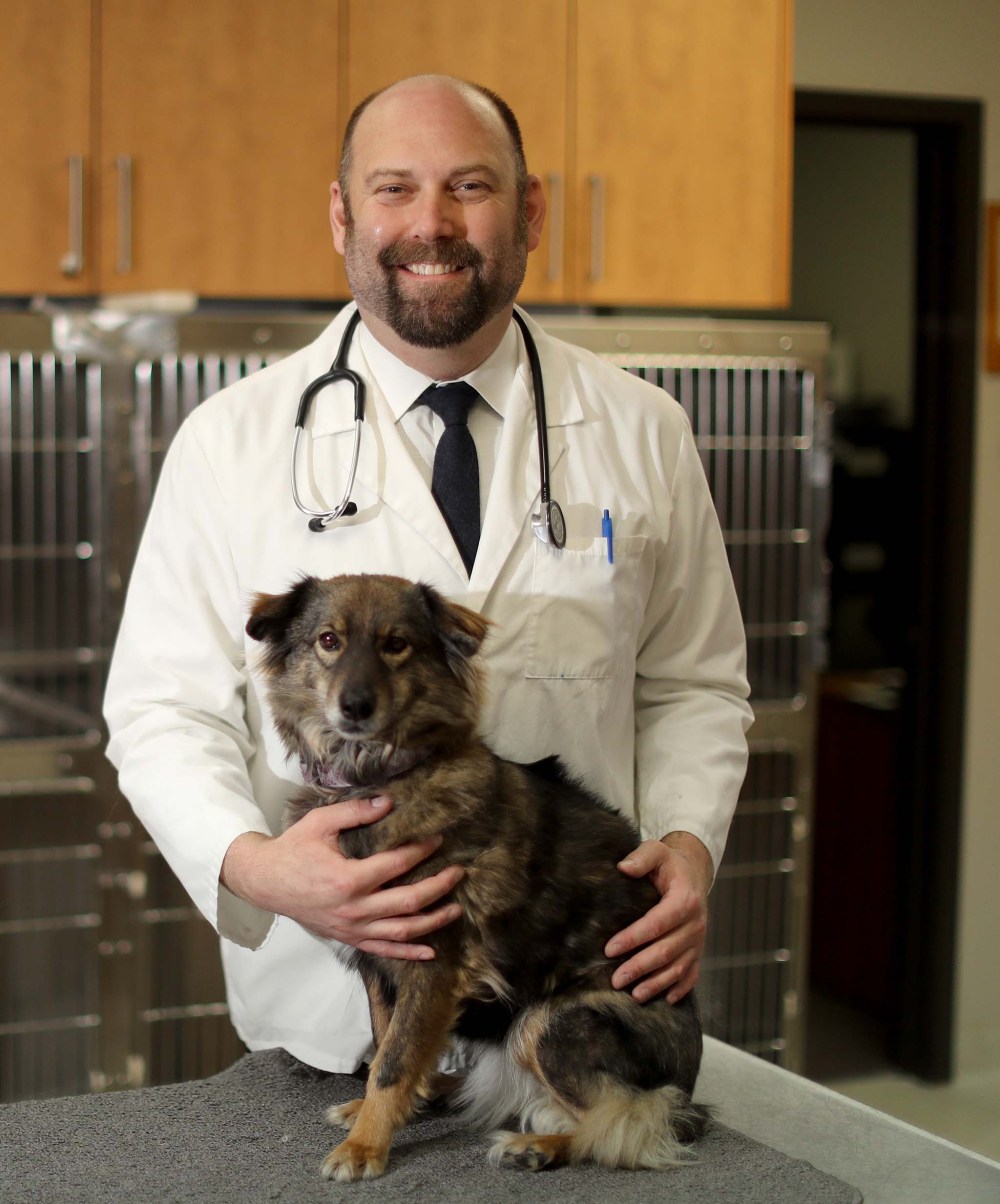
Gershbain’s veterinarian, Jonas Watson said it’s historically been “fairly easy” to travel between Canada and the U.S. with dogs. The new rules mean more boxes to check and will be “cumbersome” for vets and owners.
Watson, who co-owns the Grant Park Animal Hospital and is the former president of the Manitoba Veterinary Medical Association, said some people might stop travelling with their dogs altogether. For others, it will be an irritation.
“This is an effort to solve a problem that largely doesn’t exist,” Watson said. “I think this is an overreaction and overreach by the CDC in the U.S. and I suspect that much of the stringency of this will be eased up on as agencies start to realize how challenging it is to meet these requirements.”
Mandatory microchips are another snag in the plan, Watson said. Every dog should be up to date with the rabies vaccination, but not every dog has a microchip, he said.
Watson said he is worried about the effect the rules will have on animal welfare globally and Canadians who travel with their dogs for work, such as Gershbain.
In Manitoba, 134 cases of rabies in wild and domesticated animals were recorded from April 1, 2014, to March 31, 2024.
There were 81 confirmed cases in striped skunks during that period, while 12 dogs were infected, as per the provincial rabies surveillance data.
One positive case of rabies in a dog has been recorded in 2024.
Watson said rabies is a serious disease, but most cases involve wild animals and not pets.
“You can sort of stop all the people with the dogs in the station wagons, but the foxes and the wolves and the skunks — they don’t understand international borders and nobody’s going to look for their passports.”
jura.mcilraith@freepress.mb.ca


History
Updated on Friday, July 5, 2024 8:28 AM CDT: Updates photo cutline
Updated on Friday, July 5, 2024 8:51 AM CDT: Corrects that Dr. Jonas Watson is former president of the Manitoba Veterinary Medical Association