Even with restrictive rules, swimsuit wars heat up in an Olympic year
Advertisement
Read this article for free:
or
Already have an account? Log in here »
To continue reading, please subscribe:

Digital Subscription
One year of digital access for only $205*
- Enjoy unlimited reading on winnipegfreepress.com
- Read the E-Edition, our digital replica newspaper
- Access News Break, our award-winning app
- Play interactive puzzles
*First annual payment billed as $205.00 + GST for one year. This annual subscription will automatically renew at $233.00 + GST every 52 weeks (10% off the regular annual price of $259.35). Offer available to new and qualified returning subscribers only. Cancel any time.
To continue reading, please subscribe:
Add Free Press access to your Brandon Sun subscription for only an additional
$1 for the first 4 weeks*
- Enjoy unlimited reading on winnipegfreepress.com
- Read the E-Edition, our digital replica newspaper
- Access News Break, our award-winning app
- Play interactive puzzles
*Your next Brandon Sun subscription payment will increase by $1.00 and you will be charged $17.95 plus GST for four weeks. After four weeks, your payment will increase to $24.95 plus GST every four weeks.
Read unlimited articles for free today:
or
Already have an account? Log in here »
Hey there, time traveller!
This article was published 18/07/2024 (804 days ago), so information in it may no longer be current.
The iconic LZR Racer, the swimsuit that Michael Phelps wore while winning eight golds medals at the Beijing Olympics, is still revered around Speedo’s design center.
It serves as a reminder of just how much a suit can push a swimmer to greater heights.
“In so many ways, that was the golden era,” said Coora Lavezzo, the head of innovation at Speedo’s Aqualab in London. “We’ve got those suits upstairs, and even though I wasn’t there at the time, I’m fascinated by them and just how we can get back to a smidge of that former glory.”
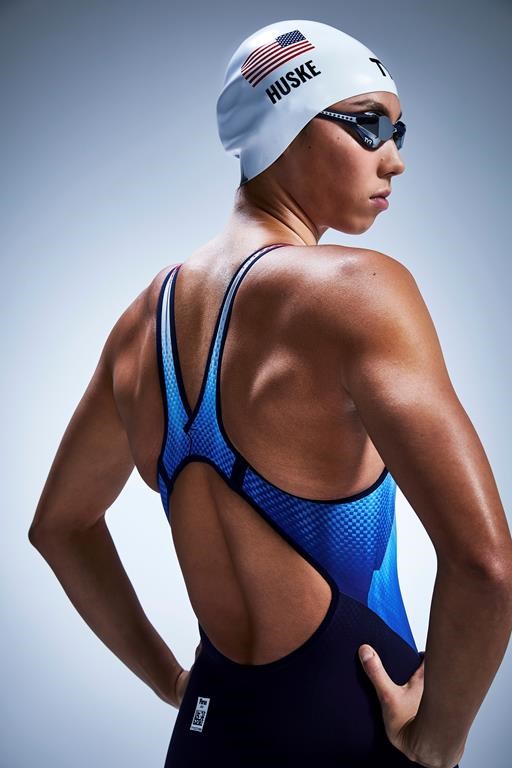
Of course, the rules these days are much more of a hindrance to swimsuit designers, the result of a wild summer 15 years ago in which rubberized attire was all the rage, leading to 43 world records being set at the championships in Rome.
The international governing body, now known as World Aquatics, decided the polyurethane suits — many of them covering nearly the entire body — were making a mockery of the sport. So the organization hastily imposed strict new rules requiring textile fabrics and limiting the amount of body coverage from the hip to just above the knees for men, while women’s racing attire cannot extend past the shoulder or cover the neck.
For coaches such as Bob Bowman, who worked with Phelps over his entire career and was on hand in Rome for a speed show that bordered on a farce, the rules are just fine the way they are.
“Everybody is on a level playing field,” he said. “We’re still breaking world records in these suits. The sport is moving forward.”
But major swimsuit designers such as Speedo, TYR and arena are pushing for the guidelines to be liberalized.
They pump millions of dollars into the sport, and would love nothing more than to be allowed to come up with revolutionary new designs that lead to vastly improved performances. But as things stand now, their hands are largely tied. Faster times come in tiny increments.
The suits remain an important element for any swimmer’s performance, but the impact is nothing like it was during the rubber era.
“I think a lot of our sport is just mental,” U.S. Olympian Hunter Armstrong said. “It’s just about feeling good in the water.”
The manufacturers are desperate to do more.
“When the pushback came after those world championships in Rome, (World Aquatics) freaked out and they said we need rules quickly, we need to do something,” said Greg Steyger, the head of innovation and design at Italian-based arena. “Unfortunately, that was in such a hurry that those rules are not the right rules for sure. But they’ve stuck to them, they’ve defended them, they’ve done everything to keep them.”
Rachel Ripley, the director of merchandising at TYR, said her company is constantly lobbying for an easing of the restrictions.
“It’s been pretty status quo for 15 years,” she said. “There hasn’t really been much push or shake-up. It’s something that I think we constantly talk about, but it requires more than just the manufacturers to make that change happen.”
Even with rules as they are, the swimsuit manufacturers say they are still able to come up with innovative creations that can make a crucial difference in a sport where races are often decided by mere hundredths of a second.
For Speedo, the new Fastskin LZR Intent and LZR Valor suits were developed through a partnership with Lamoral, a company better known for protective coatings that are used to extend the life of satellites in outer space.
Then there’s TYR’s Venzo suit, which is made with a frictionless yarn that evolved from military uses, most notably in socks worn by infantry soldiers who do a lot of marching.
Not to be outdone, arena has come up with the POWERSKIN Primo that it bills as the “world’s first tensoelastic suit,” made of a trademarked fabric known as Hyperforce that supposedly provides the maximum amount of body compression — a key element in buoyancy — but far more flexibility than previous designs.
“You’re talking about maybe a 1% difference in a race,” said Olympic gold medalist Ryan Murphy, America’s top men’s backstroke swimmer and a longtime Speedo-endorsed athlete. “Any little thing we can get to improve times, improve body position in the water, assist your technique, you’re really looking for that.”
Most swimmers seem content with the state of affairs, though everyone is looking for ways to go a bit faster to gain that little extra edge.
“The innovation should be in other areas, like maybe the starting blocks,” Italian swimmer Nicolò Martinenghi said.
Sarah Sjostrom of Sweden certainly had no complaints about the polyurethane suits allowed back in 2009, which she wore while winning the 100-meter butterfly in a world-record time a few weeks before her 16th birthday.
But she also remembers the down side.
“The biggest stress for me back then and as well as other swimmers was like getting the suit on,” Sjostrom said. “It’s a lot easier nowadays to put on the suit, but they still give a good compression, which is really important to have a good feeling in the water.”
She said the current guidelines also keep prices more affordable for a wider range of swimmers, though a high-tech female suit can still go for around $650.
“It’s good because the young kids can get the same kind of suit that I race in,” Sjostrom said. “It’s within reach for everyone.”
No matter the rules, it’s not a stretch to say an Olympic year is just as important to the manufacturers as it is to their swimmers.
Every time someone wearing their brand touches the wall first in Paris, it will help to move suits at the grassroots level. Certainly, there is no better endorsement of a product than a gold medal.
There’s even some good-natured trash-talking among the brands.
“I can fairly confidently say that we have been innovating over the years far in advance of Speedo and TYR,” Steyger said. “Speedo has always been extremely good at marketing,” he added with a smile.
While Speedo has long dominated the swimsuit wars, especially in the lucrative American market, the other companies are looking to carve out their own niche.
“The Olympics gets everyone involved,” said Mark Pinger, a former German Olympic medalist who now serves as U.S. general manager at arena. “For us, it’s a huge opportunity to get people that might not know who we are — especially in the U.S. — to take note of the brand.”
It will be interesting to see where things go in swimsuit design after the Paris Olympics.
While major changes seem unlikely, the companies will keep pushing for greater leeway. One thought is to allow men’s suits to provide the same skin coverage as the women’s style — and, therefore, a more prominent spot for a company’s logo across the chest rather than on the thigh.
“I think they can do little more,” Bowman said. “If they wanted more coverage with the same fabric, OK, that could be a thing.”

But, the coach quickly added, “we can’t back into rubber suits like before.”
___
AP Sports Writer Andrew Dampf in Rome contributed to this report.
___
AP Summer Olympics: https://apnews.com/hub/2024-paris-olympic-games
Related Articles
Johnson brothers join forces in wheelchair basketball





Advertisement Advertise With Us
Advertisement Advertise With Us