More money could result in fewer trips to ER, study suggests
Advertisement
Read this article for free:
or
Already have an account? Log in here »
To continue reading, please subscribe:

Digital Subscription
One year of digital access for only $205*
- Enjoy unlimited reading on winnipegfreepress.com
- Read the E-Edition, our digital replica newspaper
- Access News Break, our award-winning app
- Play interactive puzzles
*First annual payment billed as $205.00 + GST for one year. This annual subscription will automatically renew at $233.00 + GST every 52 weeks (10% off the regular annual price of $259.35). Offer available to new and qualified returning subscribers only. Cancel any time.
To continue reading, please subscribe:
Add Free Press access to your Brandon Sun subscription for only an additional
$1 for the first 4 weeks*
- Enjoy unlimited reading on winnipegfreepress.com
- Read the E-Edition, our digital replica newspaper
- Access News Break, our award-winning app
- Play interactive puzzles
*Your next Brandon Sun subscription payment will increase by $1.00 and you will be charged $17.95 plus GST for four weeks. After four weeks, your payment will increase to $24.95 plus GST every four weeks.
Read unlimited articles for free today:
or
Already have an account? Log in here »
Hey there, time traveller!
This article was published 22/07/2024 (786 days ago), so information in it may no longer be current.
Giving cash to poor people could result in fewer emergency department visits, a new study suggests.
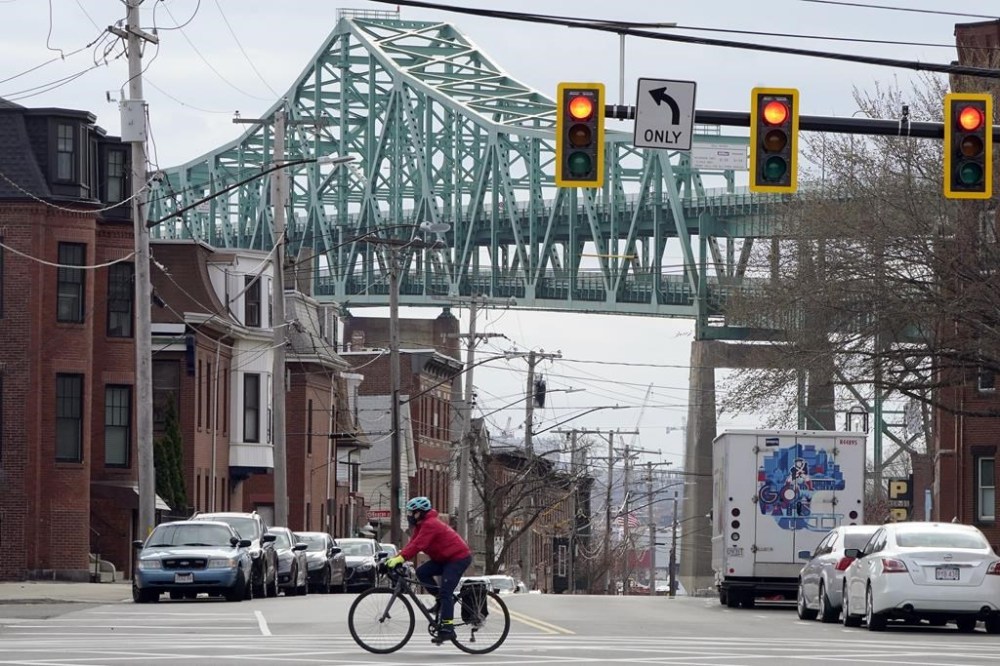
The study published Monday in the Journal of the American Medical Association looked at almost 2,900 low-income people who applied for a lottery in the Boston suburb of Chelsea, Massachusetts. Nearly 1,750 of them got up to $400 per month from November 2020 to August 2021.
The researchers then looked at health records and found that those who received the money had 27% fewer visits an emergency room in the nine-month period compared with those who didn’t receive the monthly payments.
“We can trust the poor with money,” said co-author Dr. Sumit Agarwal, a physician at Brigham and Women’s Hospital in Boston. “There’s this narrative out there that you give people cash and they spend it on drugs and alcohol. I think we’re one of the first studies to really rigorously and empirically show that’s not the case.”
The correlation between poverty and poor health outcomes is well-established. But it’s still unclear if increasing basic income in the U.S. could improve health outcomes.
People in the study who received money used the emergency room less for medical issues related to behavioral health and substance use. There were no significant differences between the two groups in regular doctor visits or prescriptions, the researchers found, though people with the added income used more outpatient specialty care.
The cash recipients’ financial stability seemed to decrease their stress levels, which generally improved their health, leading to fewer emergency room trips, Agarwal said.
Prior studies on income support have shown modest — or no — effects on health because they’ve largely looked at one-time payments, had fewer participants and relied on self-reported data, according to the authors.
In contrast, the Chelsea study uses administrative health data and took into account a longer time frame, which Agarwal said paints a more “complete picture.”
Sara Rosenbaum, of George Washington University’s School of Public Health and Health Services, was not involved in the study. She said the research appears to be one of the first papers to link the health benefits of higher income over time to a reduction in health care costs and spending.
The lottery was originally intended to ease all-around costs for residents of Chelsea, a densely populated city with many low-income immigrant residents. The city was particularly affected by the COVID-19 pandemic, said then-city manager Tom Ambrosino.
“We came up with this plan to just give people money,” he said. “Give them a debit card. Load it with cash, and it’ll be so much easier and more dignified for people.”
Ambrosino figured the program, which he said cost the city about $700,000 a month, would have positive effects, but he didn’t expect the direct impact on health.
“I was kind of pleasantly surprised,” he said. “It supports the proposition that universal basic income programs do work and they aren’t wasteful. People spend money on the things that we want them to spend money on: essentials.”
___
The Associated Press Health and Science Department receives support from the Robert Wood Johnson Foundation. The AP is solely responsible for all content.