Forbidden fruit: Don’t eat the food growing in downtown Ottawa planters, says NCC
Advertisement
Read this article for free:
or
Already have an account? Log in here »
To continue reading, please subscribe:
Digital Subscription
One year of digital access for only $1.44 a week*
- Enjoy unlimited reading on winnipegfreepress.com
- Read the E-Edition, our digital replica newspaper
- Access News Break, our award-winning app
- Play interactive puzzles
*Billed as $5.77 plus GST every four weeks. After 52 weeks, price increases to the regular rate of $19.95 plus GST every four weeks. Offer available to new and qualified returning subscribers only. Cancel any time.
To continue reading, please subscribe:
Add Free Press access to your Brandon Sun subscription for only an additional
$1 for the first 4 weeks*
- Enjoy unlimited reading on winnipegfreepress.com
- Read the E-Edition, our digital replica newspaper
- Access News Break, our award-winning app
- Play interactive puzzles
*Your next Brandon Sun subscription payment will increase by $1.00 and you will be charged $17.95 plus GST for four weeks. After four weeks, your payment will increase to $24.95 plus GST every four weeks.
Read unlimited articles for free today:
or
Already have an account? Log in here »
Hey there, time traveller!
This article was published 03/08/2024 (804 days ago), so information in it may no longer be current.
OTTAWA – On the western side of Major’s Hill Park, tall stalks of corn wave in the breeze from planters overlooking the place where the Rideau Canal empties into the Ottawa River.
Scarlet beans have wound their way up the corn, decorating it with bright orange flowers. A variety of squashes are just beginning to take shape on the soil below. Bees and other pollinators are drawn to the purple salvia flowers and wild strawberries that fill out the space.
And surrounding the picturesque and delectable display are crude steel barricades most commonly used for crowd control.
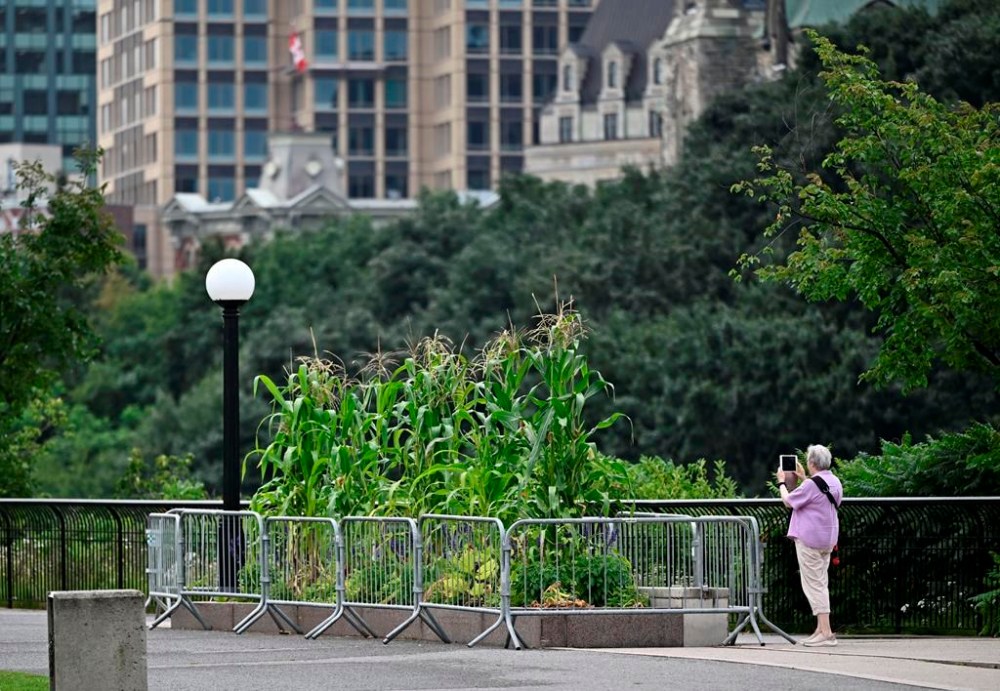
There’s no signage, but the message is pretty clear: don’t pick the food.
The federal Crown corporation responsible for the park wants people to know it’s possible to grow a variety of food crops in urban Ottawa as part of its goal to tackle food insecurity.
The National Capital Commission says the fruits and vegetables it’s cultivating in the downtown are not meant to be eaten.
“I think that showing food growing in urban spaces is inspiring. It’s a nice thing to see,” said Erin Beagle, the executive director of Roots Community Food Centre in Thunder Bay, Ont., an organization that advocates for dignified food access.
But to say the food is not for people to eat “absolutely destroys their message.”
“To tell people it’s for food insecurity and then to even tell people who are food insecure, ‘Actually, no, but you can’t touch that’ is like waving something in front of them that they need.”
The NCC said the fences are to prevent people from tampering with food that it says “could be unfit for consumption.”
“Some of our sites historically contained contaminated soil and the water source used for irrigation (varies) from site to site,” it said in a statement.
Not far from the symbolic display about food security, the city’s very real issues with inequality are evident.
In recent years, problems associated with poverty and drug use have become so acute in the ByWard Market that the local business association has hired private security and successfully lobbied the city to open a police operational centre so as to step up patrols.
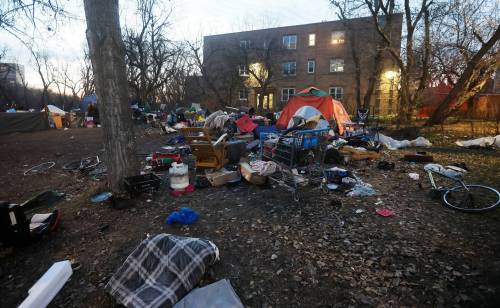
That has not kept people from living in makeshift encampments throughout the area. Panhandlers sit out the sweltering summer days in the shade of doorways, and community organizations drop by with bottles of water and sandwiches.
Food insecurity is not limited to people experiencing homelessness. Federal data show that in 2020, more than one in 10 Canadian households were experiencing moderate to severe food insecurity — and in the last four years, the cost of living has skyrocketed.
One of the NCC’s sustainable development goals is to invest in projects that increase access to food.
The agency says it’s doing that by opening more Greenbelt land to agriculture and community gardening, and exploring “the potential for food production on urban lands.”
The NCC also said its planters in Major’s Hill are meant to be ornamental and on display until November.
The commission’s senior landscape architect, Tina Liu, explained that she chose the plants to incorporate a celebration of Indigenous culture.
“This is the agricultural practice with the Three Sisters,” she said, referring to an Indigenous model of planting corn, beans and squash crops together to raise yields.
It’s not the first time Liu has grown edible plants in the city’s many gardens.
“The idea is also we can showcase (for) people how they can do that at home, you can mix planting food with flowers and it will still look nice,” she said.
The cement containers surrounding the Prime Minister’s Office are producing an abundance of groundcherries this summer. In recent years, they’ve also been home to kale and artichokes.
Liu said growing edible plants helps ensure harmony with urban wildlife like rabbits, groundhogs and birds, which do eat the displays.
The NCC said the metal barricades will come down when a nearby construction project is complete, and will be replaced with smaller fences.
It’s also planning to put up signs telling people the food may not be safe to eat.
Beagle is skeptical that the food grown on the NCC’s land is actually unsafe, pointing out that her organization helps grow food in First Nations communities that are living under long-standing federal boil-water advisories, and testing has shown that it is safe.
“Is that actually the reason?” she said. “Or is it inconvenient that people would eat it and then that would sort of ruin a display?”
If the soil and water are a concern, she said, that can be addressed.

Roots Community Food Centre runs a variety of programs including community meals, gardening and urban farming.
Beagle said many organizations like hers operate with the expectation that growing food in urban spaces means accepting that people and animals will interact with it.
“People can walk through at any time of the day and any time of the night, when we’re there, when we’re not there, and the vandalism is almost nothing. I’m sure people come in and taste and try and are involved in the food in ways that we don’t know about, but it is not concerning to us,” she said.
“Nobody wants to be seen climbing over a fence to steal food if they need it. So take the fence down.”
This report by The Canadian Press was first published Aug. 3, 2024.