Back to school means back to the spotlight for Big Tech
Advertisement
Read this article for free:
or
Already have an account? Log in here »
To continue reading, please subscribe:

Digital Subscription
One year of digital access for only $205*
- Enjoy unlimited reading on winnipegfreepress.com
- Read the E-Edition, our digital replica newspaper
- Access News Break, our award-winning app
- Play interactive puzzles
*First annual payment billed as $205.00 + GST for one year. This annual subscription will automatically renew at $233.00 + GST every 52 weeks (10% off the regular annual price of $259.35). Offer available to new and qualified returning subscribers only. Cancel any time.
To continue reading, please subscribe:
Add Free Press access to your Brandon Sun subscription for only an additional
$1 for the first 4 weeks*
- Enjoy unlimited reading on winnipegfreepress.com
- Read the E-Edition, our digital replica newspaper
- Access News Break, our award-winning app
- Play interactive puzzles
*Your next Brandon Sun subscription payment will increase by $1.00 and you will be charged $17.95 plus GST for four weeks. After four weeks, your payment will increase to $24.95 plus GST every four weeks.
Read unlimited articles for free today:
or
Already have an account? Log in here »
Hey there, time traveller!
This article was published 18/08/2024 (782 days ago), so information in it may no longer be current.
Back to school could mean back to the hot seat for Big Tech.
Social media platforms TikTok, Facebook, Instagram and Snapchat spent last school year embroiled in alawsuitaccusing them of disrupting learning, contributing to a mental health crisis among youth and leaving teachers to manage the fallout.
When students return to class this September, experts say the clash between tech and textbooks will be reignited — and perhaps even ratcheted up — as schools and parents reckon with the impacts social media is having on education.
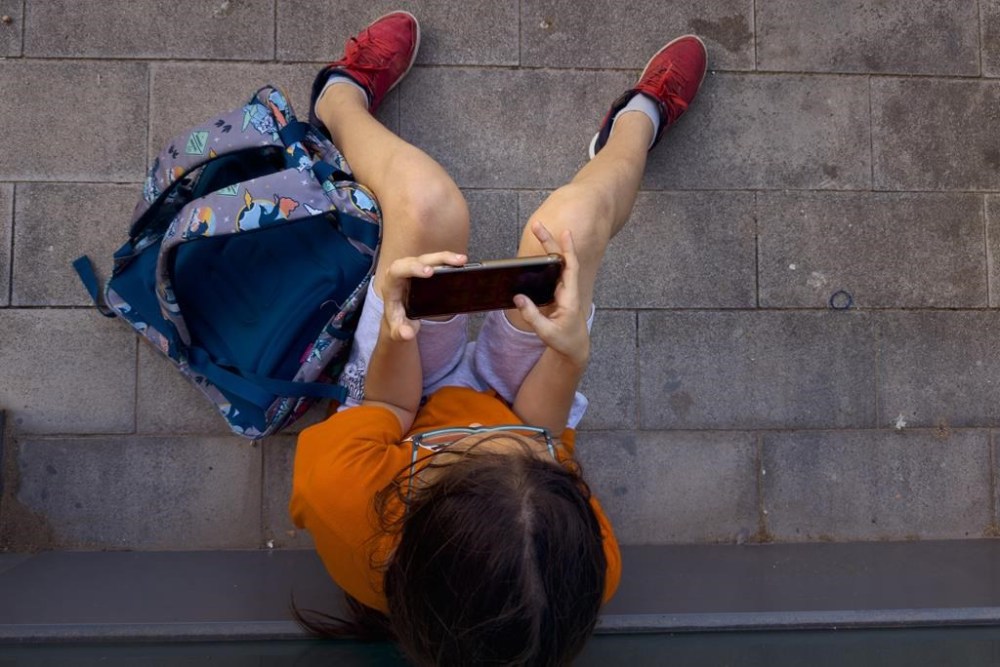
“Back to school is happening at a different time this year than was true two years ago, three years ago, four years ago,” said Richard Lachman, a digital media professor at Toronto Metropolitan University.
“It absolutely seems like as a society, we’re having more conversations about the harms of social media, but the companies themselves are in a position where they’re not necessarily doing more.”
Brett Caraway, a professor of media economics at the University of Toronto, said the situation the education system finds itself in this year is a consequence of the proliferation of mobile devices that began in 2007 with the advent of the iPhone. It has been exacerbated by camera capabilities, apps and social networks.
“I fully expect that this issue is going to persist because smartphone penetration among adolescents has not tapered off,” he said.
Just shy of 40 per cent of Canadian children between the ages of two and six used a mobile phone in April 2022, Statista data shows. That figure rose to 50 per cent for kids between seven and 11 years old and was even higher for those between 12 and 17 — at 87 per cent.
That same year, 42 per cent of those between the ages of 15 and 24 reported to Statistics Canada that they were spending 20 hours or more per week using the internet for “general purposes,” which includes using social media, browsing the web, online shopping and reading the news.
Much of those 20 hours are dedicated to the endless scroll of buzzy videos, posts and photos that come from the smattering of social media networks that have become household names in recent years.
Caraway recently heard from a family friend about a 14-year-old who averages six hours per day on TikTok. He found it “mindboggling.”
“I don’t understand how anybody has six hours a day to be on a smartphone like that, but this is what the platforms are designed to do,” he said.
“They make money by demonstrating to potential advertisers that they have high levels of user engagement … The platform is designed to literally capture the attention of the user and hold it for as long as possible.”
That can spell trouble for teachers just trying to get through a lesson or students needing to study but constantly being drawn in by the allure of social media.
Studies have linked more time on social media to lower self-esteem and academic performance as well as more exposure to hateful, violent and mature content.
A 2018 study by the World Health Organization concluded 6.85 per cent of students were classified as having problematic social media use, which is considered to be when behavioural and psychological symptoms of addiction to social media manifest. Some 33.14 per cent of students were at moderate risk for problematic social media use and another 60 per cent faced low risk, the study found.
Four Ontario school boards decided to take the matter to court last March, suing TikTok, Snap and Instagram and Facebook-owner Meta for $4.5 billion. The suit accused them of negligently designing their products for compulsive use and rewiring the way children think, behave and learn.
By August, the group taking action against the tech giants had grown to 12 boards and two private schools seeking more than $8 billion, lawsuit organizers School Boards for Change said.
The allegations in the lawsuits have not been proven in court.
“Our children are literally falling apart and we have to spend extra resources in order to keep up with our obligation, which is to provide education,” Caraway said. “So this lawsuit is an attempt to make someone pay for this.”
Asked about the lawsuit and suggestions that the social media companies aren’t doing enough to protect kids online, Snapchat spokesperson Tonya Johnson said her company’s app was designed to be different from other platforms because it tries not to put pressure on users to be perfect or popular.
“We care deeply about the mental health of young people, and while we will always have more work to do, we feel good about the role Snapchat plays in helping close friends feel connected, happy and prepared as they face the many challenges of adolescence,” she said in an email.
Meta did not respond to a request for comment. TikTok declined to share a statement.
However, at a July safety session TikTok hosted for media, it described several actions it has taken to protect young users. They include family pairing, which allows parents to link their accounts directly with their teens’ and ensure their kids’ TikTok settings are agreed upon as a family, and one-hour screen time limits for users under 18 that can only be bypassed with a code.
Because students remain distracted despite the features, some provinces, including Ontario, Saskatchewan, Nova Scotia, Manitoba and Alberta, will ban cellphones from classes this year.
But many say it’s not a panacea. Even if students can’t use phones in class, they are sneaking the use of them into “every nook and cranny” in their schedule, Caraway said.
They power them up as soon as they awake, check them between classes and then head back to them at home until bedtime.
Some teachers bristle at the idea of them being kept out of class, too.

“Banning phones and banning technology for me has never been the answer because you’re banning the discussion then in the classroom,” said Joanna Johnson, the Ontario educator behind the popular @unlearn16 account, at the TikTok safety session.
Lachman doesn’t like the “abstinence” approach provinces with bans have taken, but says the real issue is that social media companies have a “business model … to make us desire to be on as long as possible.”
“If you really cared to make something less addictive … are you going to give young people a different interface? Are you going to give them a completely different algorithm?” he questioned.
“Are you going to give them something that is designed to be less appealing, less one click, less infinite scroll?”
This report by The Canadian Press was first published Aug. 18, 2024.


Advertisement Advertise With Us
Advertisement Advertise With Us